
Oman and Iran agreed to a temporary joint maritime corridor through the Strait of Hormuz, sending Brent crude down 4 percent to $86.9 a barrel.
Oman and Iran agreed to a temporary joint maritime corridor through the Strait of Hormuz, sending Brent crude down 4 percent to $86.9 a barrel.
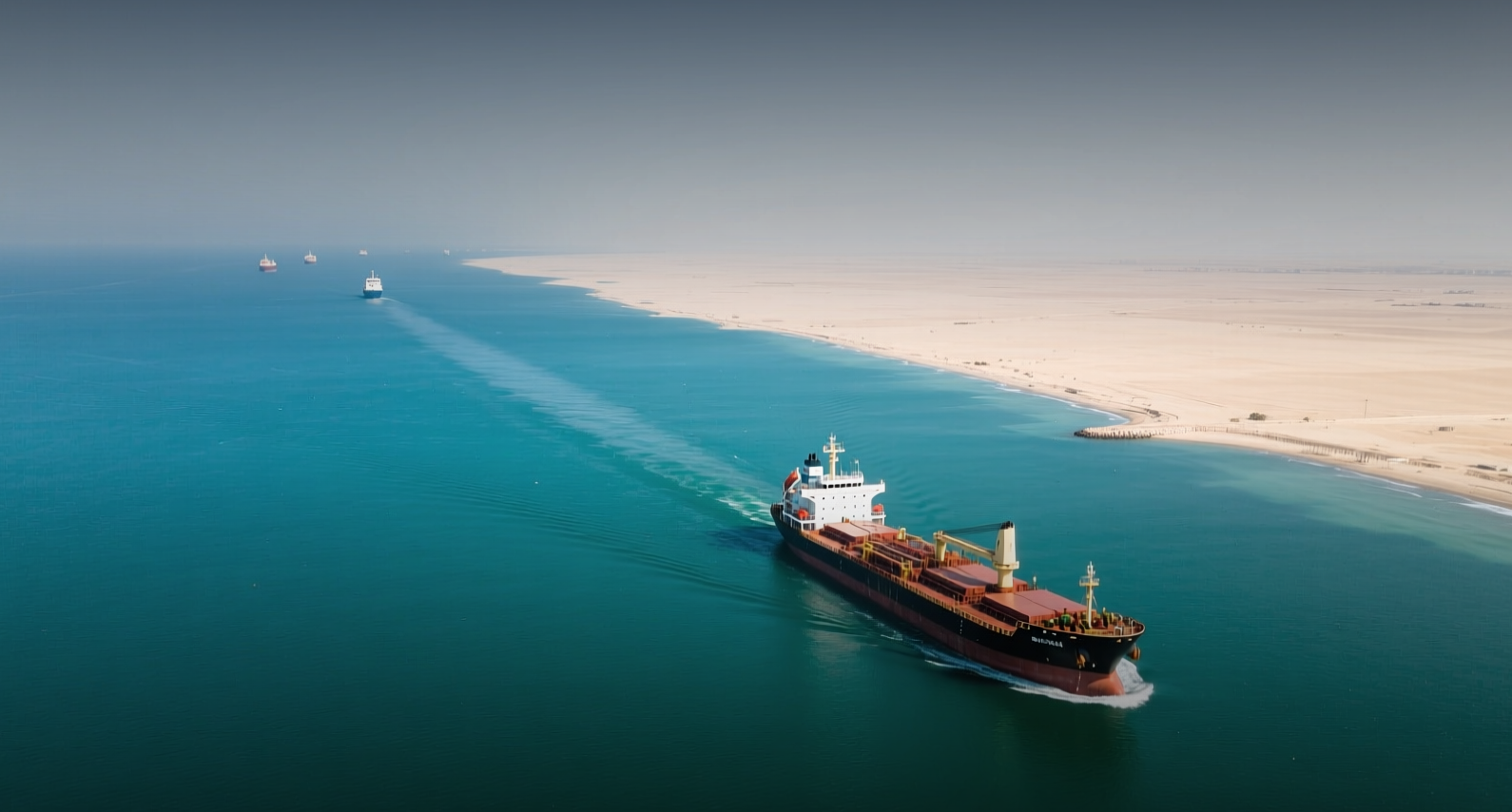
Brent crude slid 4 percent to $86.9 a barrel after Oman and Iran proposed a temporary joint shipping lane through the Strait of Hormuz, easing the geopolitical risk premium that has gripped the waterway since the war began in February.
"The proposed framework includes the establishment of a temporary joint maritime navigation corridor through the Strait of Hormuz, as well as an agreement to carry out a joint project to clear mines from the Strait," the two countries said in a joint statement after Omani Foreign Minister Sayyid Badr bin Hamad bin Hamood Al Busaidi met his Iranian counterpart, Abbas Araghchi.
The proposal marks the first concrete de-escalation step since the June memorandum of understanding collapsed in July, when Iran's Islamic Revolutionary Guard Corps struck three commercial vessels. Commodity carrier traffic through the strait has averaged just 15 transits a day since July 8, versus 95 a day in February, according to Kpler data. Iran's Guards have warned of a "danger zone" covering 1,400 square kilometers where mines may be present.
The strait carries about 20 percent of the world's oil, and its disruption pushed crude from about $70 a barrel before the war to an average of $103 in March. A functioning corridor would restore supply flows to Asian buyers and unwind the risk premium still embedded in prices, though technical negotiations on a permanent navigation regime remain unresolved.
Before Iran closed the strait on March 1, roughly one-fifth of global oil and liquefied natural gas exports passed through the waterway. Commodity carrier traffic has since fallen to an average of 10 transits a day, compared with 95 a day in February, according to an analysis of Kpler data. The June agreement signed by President Donald Trump and Iranian President Masoud Pezeshkian produced a temporary rebound to 36 transits a day before volumes dropped back to 15 between July 8 and August 22.
Navigation has split into two rival routes: one to the north near the Iranian coast, the only lane Tehran approves, and another to the south between the Omani coast and potentially mined areas. Since the ceasefire collapsed on July 8, two-thirds of transits have become "dark" — vessels whose routes cannot be confirmed because of disabled transponders, jammed signals or missing satellite imagery — compared with less than 1 percent before the war, Kpler data show.
Some 6,000 sailors and 500 ships remain stuck in the Gulf since the conflict began, the International Maritime Organization told AFP. The IMO had begun an initiative in June to evacuate more than 11,000 seafarers, but suspended the effort after an attack on a vessel. At least 20 sailors and dockworkers have been killed in incidents or attacks in the region over the past six months, according to the IMO.
The joint Oman-Iran proposal, which also calls for a mechanism to exchange information and manage maritime traffic, would need buy-in from other Gulf littoral states to take effect. The two sides said they would hold joint discussions with countries bordering the Gulf's waters and stressed adherence to international law and the sovereign rights of coastal states. Trump appeared to front-run the announcement, saying mines were already clear.
For oil markets, the question is whether the corridor translates into sustained volumes. The last time the strait reopened after a disruption — following the June memorandum — transits recovered to 36 a day before hostilities resumed. If the temporary lane holds, Brent could shed more of its war premium; if talks stall, the 1,400-square-kilometer mined zone keeps the waterway's recovery hostage to the same brinkmanship that has defined the past six months.
This article is for informational purposes only and does not constitute investment advice.
