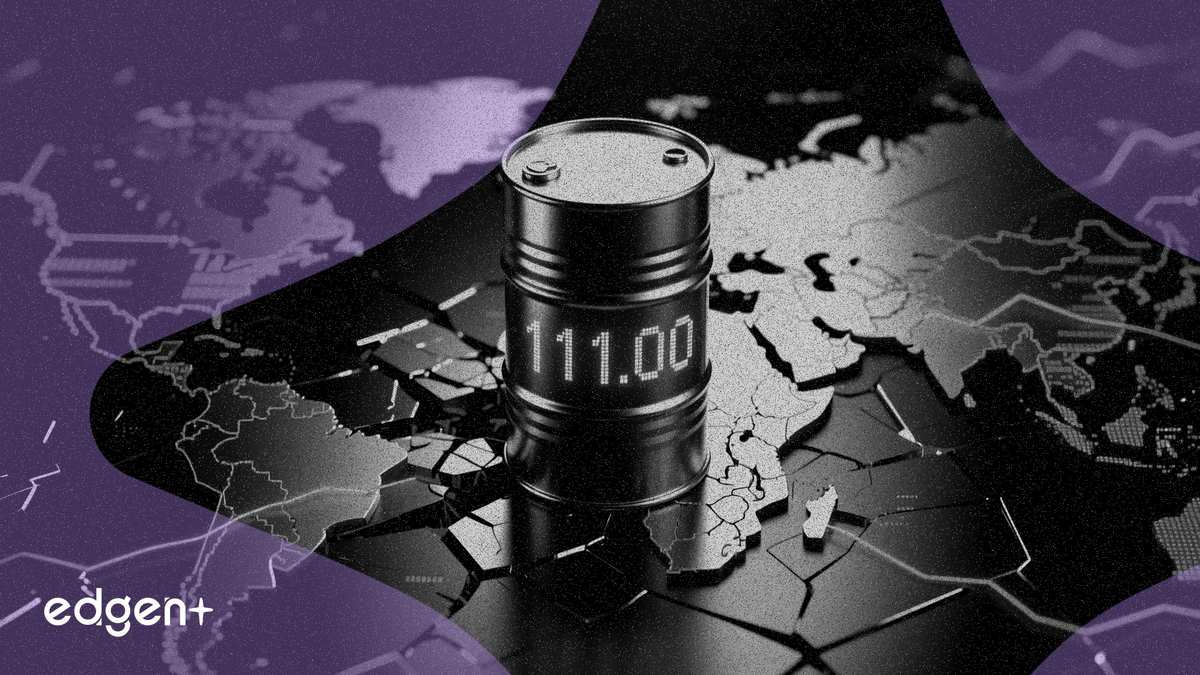
Global oil prices surged Tuesday with Brent crude futures topping $111 a barrel after reports that former US President Trump was unhappy with a proposal from Iran to end the ongoing conflict, renewing fears of a prolonged disruption to energy supplies.
"The Middle East situation deteriorated and traders went back to the dollar," said James Hyerczyk, a technical analyst with over 40 years of experience. "That’s the whole trade right now. Geopolitical risk stays elevated and dips in the U.S. Dollar Index are going to find buyers."
The move put the risk premium squarely back into the market. Spot Brent crude pushed above $100 a barrel after Iran seized two ships in the Strait of Hormuz. The U.S. Dollar Index (DXY) climbed to 98.806 for its first weekly gain in a month, while the euro fell to $1.1682 and the British pound slipped to $1.3464. The Japanese yen is approaching the 160-per-dollar level where traders expect intervention.
The sustained oil price above $110 could exacerbate global inflationary pressures, potentially leading to more aggressive monetary tightening by central banks. This increases market volatility and could drive a further flight to safe-haven assets, negatively impacting corporate earnings as higher energy costs squeeze margins.
The technical picture for the dollar shows an imminent breakout, with the DXY trading between its 50-day moving average at 98.834 and its 200-day moving average at 98.530. According to Hyerczyk’s analysis, a convincing break above the 50-day moving average could trigger an acceleration toward the 99.138 to 99.493 resistance zone.
A week ago, traders were optimistic about a ceasefire, but sentiment shifted rapidly. The broad-based currency moves, with the euro, pound, and yen all weakening simultaneously, confirm that the bid for the dollar is real and not just a short squeeze.
The energy-led inflation risk has altered rate expectations, with markets now pricing in only a 25% chance of a Federal Reserve rate cut this year. The Fed does not typically cut rates into that kind of inflationary pressure, putting it at odds with Europe, where rate hike discussions are still present. While these forces work against the dollar's longer-term trend, they are providing strong support in the current environment.
This article is for informational purposes only and does not constitute investment advice.