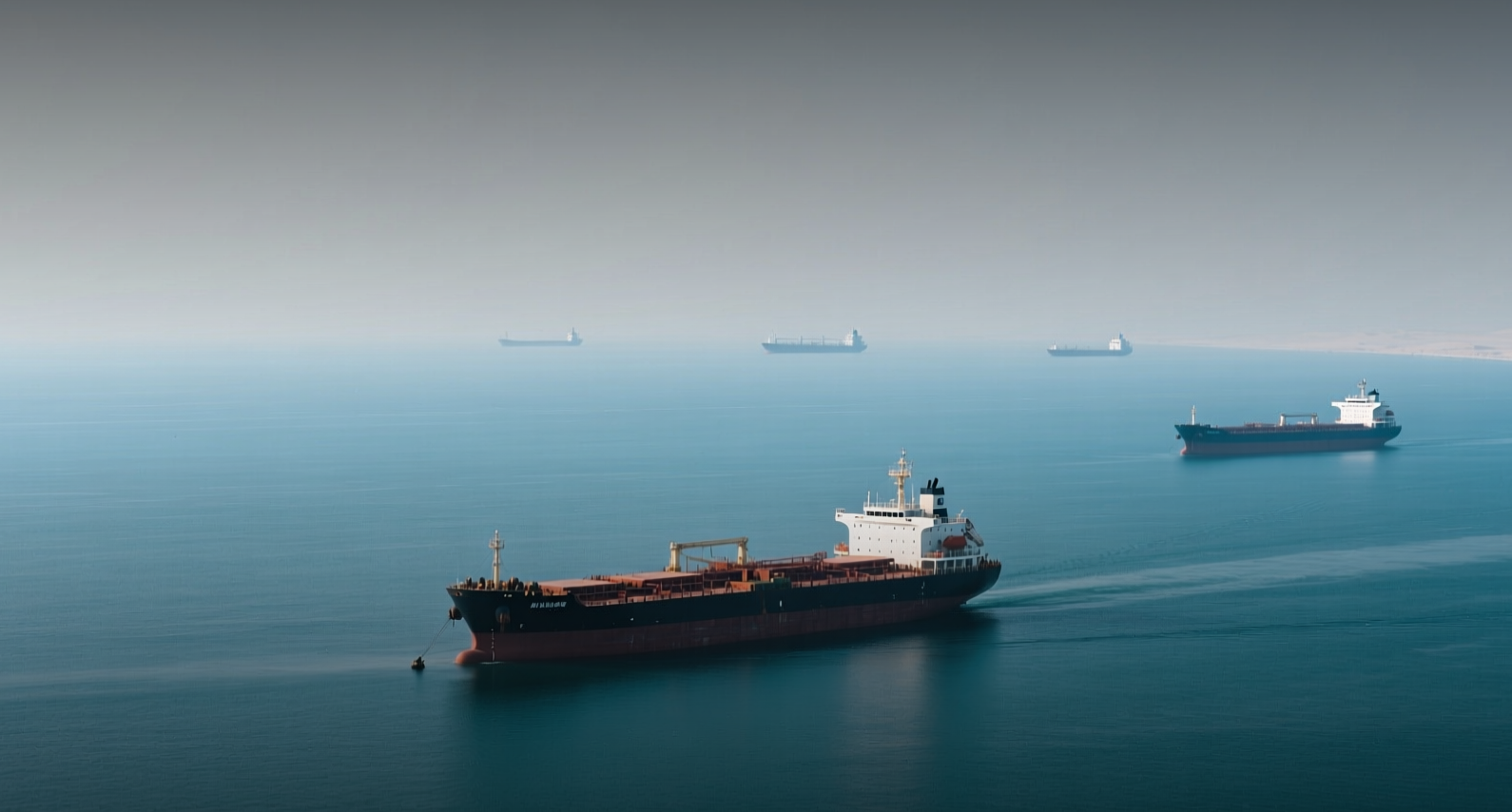
Brent crude climbed toward $100 a barrel as US-Iran tanker strikes and falling Strait of Hormuz traffic kept a supply-risk premium bid, while OPEC+ left October output unchanged. West Texas Intermediate crude gained 66 cents, or 0.72 percent, to $92.14 a barrel, with Brent up 52 cents, or 0.54 percent, to $96.80.
"OPEC+ production adjustments are more a matter of paper quota changes rather than real shifts in the flow of the physical market," said Jorge Leon, head of geopolitical analysis at Rystad Energy and a former OPEC Secretariat official. "The real impact will depend on when the Strait of Hormuz fully reopens—at that time, the alliance may need to quickly switch from the supply-management mode, which governs limited exports, to a risk-mitigation mode to deal with potential supply surpluses."
US forces struck three Iranian oil tankers on Saturday, and Iran's Islamic Revolutionary Guard Corps said it had targeted six vessels in retaliation, extending a tit-for-tat campaign that has pushed both benchmarks to their highest levels since the conflict escalated. Shipping activity through the waterway has already weakened: data from commodity analytics firm Kpler showed Hormuz traffic had fallen to its lowest level since May, and Iran is expected to announce a restricted maritime zone outside the strait, according to media reports.
The seven OPEC+ producers—Saudi Arabia, Russia, Iraq, Kuwait, Kazakhstan, Algeria and Oman—agreed at a virtual meeting on September 6 to hold their required production levels for October, reaffirming full conformity with the Declaration of Cooperation. The hold removes any expectation that the group would add barrels to offset the disruption, even as the alliance has nominally completed a full reversal of the 2023 output cuts during the hostilities.
Paper Quotas Versus Physical Barrels
The gap between announced policy and actual flows has widened because the conflict has impaired the very infrastructure OPEC+ relies on to export. Alternate pipelines and covert shuttle transport have kept some Persian Gulf crude moving, but analysts argue the group holds limited sway over the market while Hormuz passage remains impaired. Real resumption of output is proving difficult beyond the war itself: since the production-restriction agreement began, the capacity of many member states has declined substantially, complicating any quick return to full volumes.
The last time tanker traffic through the strait fell to comparable lows, freight costs jumped and refiners scrambled for alternative cargoes from the Atlantic Basin, a pattern traders now expect to repeat if the disruption persists. A sustained reduction in traffic could force buyers to source barrels from farther afield, lifting freight rates and adding a second layer of upward pressure on crude prices on top of the geopolitical premium already embedded in the benchmarks.
The 2027 Quota Fight Looms
OPEC+'s next task is a comprehensive audit of each member's actual production capacity, the results of which will anchor the 2027 quota calculations. The review is scheduled for completion by the end of this month and will be submitted for final discussion at the full ministerial meeting in late November.
"The market's main focus is shifting from monthly production fine-tuning to the more crucial and far-reaching struggle over 2027 capacity quotas," Leon said. "This round of assessment will be much more complex than before and extremely politically sensitive."
For now, the direction of crude hinges on the strait. If tanker traffic keeps sliding and further strikes hit commercial vessels, Brent could test the $100 mark as buyers price in sustained supply losses. If Hormuz passage normalizes, the geopolitical premium would unwind quickly, leaving OPEC+ to manage a potential surplus with the spare capacity it has nominally restored. The next Joint Ministerial Monitoring Committee meeting on October 4 offers the first scheduled checkpoint for how the group reads that balance.
This article is for informational purposes only and does not constitute investment advice.