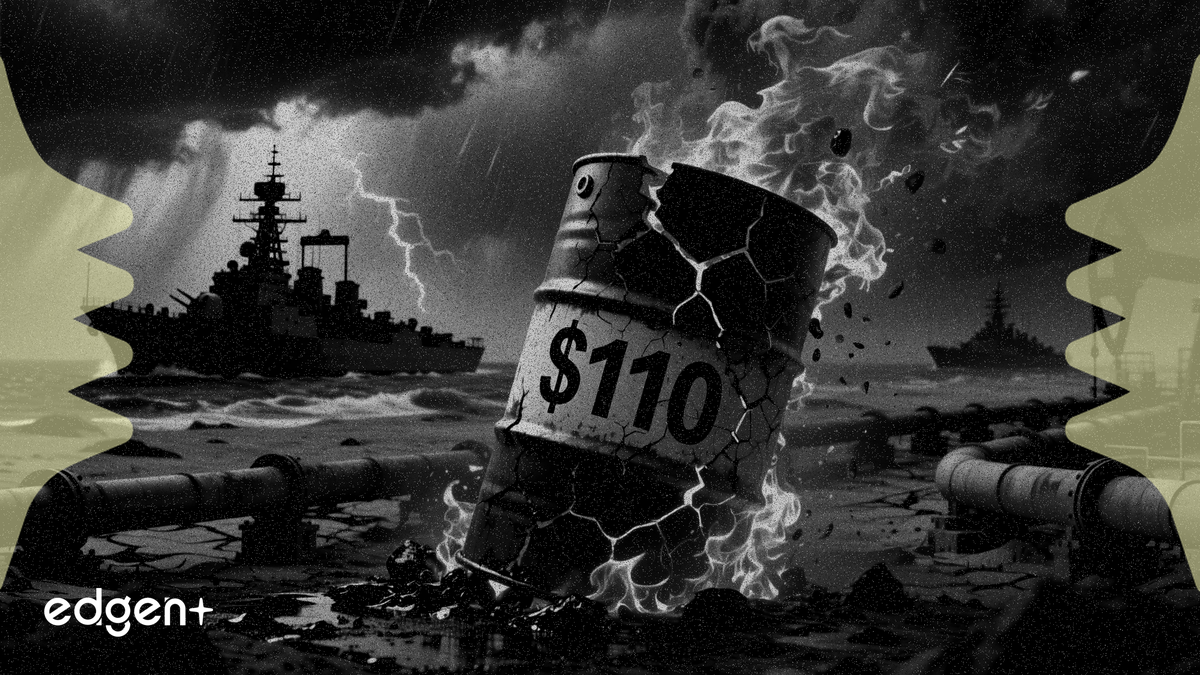
Brent crude oil futures surged past $110 a barrel on Tuesday for the first time in three weeks, as stalled negotiations between the U.S. and Iran intensified concerns over the ongoing blockade of the Strait of Hormuz and its impact on global energy supplies. The international benchmark hit a high of $112.70 before closing at $111.26, reflecting mounting anxiety over a supply shock that is rippling across the global economy.
"The market has been grasping for any signs of a breakthrough in talks, and the absence of progress is fueling fears of a protracted disruption," said Jim Reid, head of macro research at Deutsche Bank. "Given that Brent has been above $100 for nearly a week, broader inflation concerns are clearly returning to the agenda, driving weakness in bond markets."
The latest price surge was triggered by confirmation that diplomatic efforts to reopen the critical waterway have faltered. The White House confirmed it was reviewing a new proposal from Iran but maintained that President Trump's "red lines" on nuclear issues remain firm. The uncertainty sent Brent futures up 2.8% on the day, while West Texas Intermediate (WTI) crude rose 3.7% to close at $99.93 per barrel. The impact was also felt in bond markets, with the UK's 10-year government bond yield rising to 5% for the first time since late March.
The prolonged closure of the Strait of Hormuz, a chokepoint for about one-fifth of global oil shipments, is creating an unprecedented supply deficit. A report from Goldman Sachs published April 26 noted the blockade is driving a record global inventory drawdown of 11 million to 12 million barrels per day. This rapid depletion is flipping the market from a surplus of 1.8 million barrels per day in 2025 to a projected deficit of 9.4 million barrels per day in the second quarter of 2026.
Economic Fallout Spreads from Fuel Pumps to Airlines
The consequences of the supply shock are becoming increasingly visible. In the U.S., average gasoline prices are climbing, with cities like Cincinnati seeing prices jump above $4 per gallon overnight, according to AAA. The pressure is even more acute in energy-importing nations. India's aviation sector is facing a crisis, with the Federation of Indian Airlines (FIA) formally warning the government that carriers like Air India and IndiGo are on the verge of suspending operations.
The FIA cited a crippling increase in Aviation Turbine Fuel (ATF) prices, which have reportedly risen by Rs 73 per litre for international flights. In a letter to the Civil Aviation Ministry, the federation warned that without "immediate and meaningful financial support," the grounding of aircraft and widespread flight cancellations are imminent. Airlines are requesting the reintroduction of a "crack band" pricing mechanism to stabilize fuel costs and a temporary deferment of the 11 percent excise duty on ATF to survive the crisis.
This article is for informational purposes only and does not constitute investment advice.