

A new era in naval aviation begins as Boeing's autonomous MQ-25A Stingray tanker completes its first successful test flight, a major milestone for the U.S. Navy.
A new era in naval aviation begins as Boeing's autonomous MQ-25A Stingray tanker completes its first successful test flight, a major milestone for the U.S. Navy.
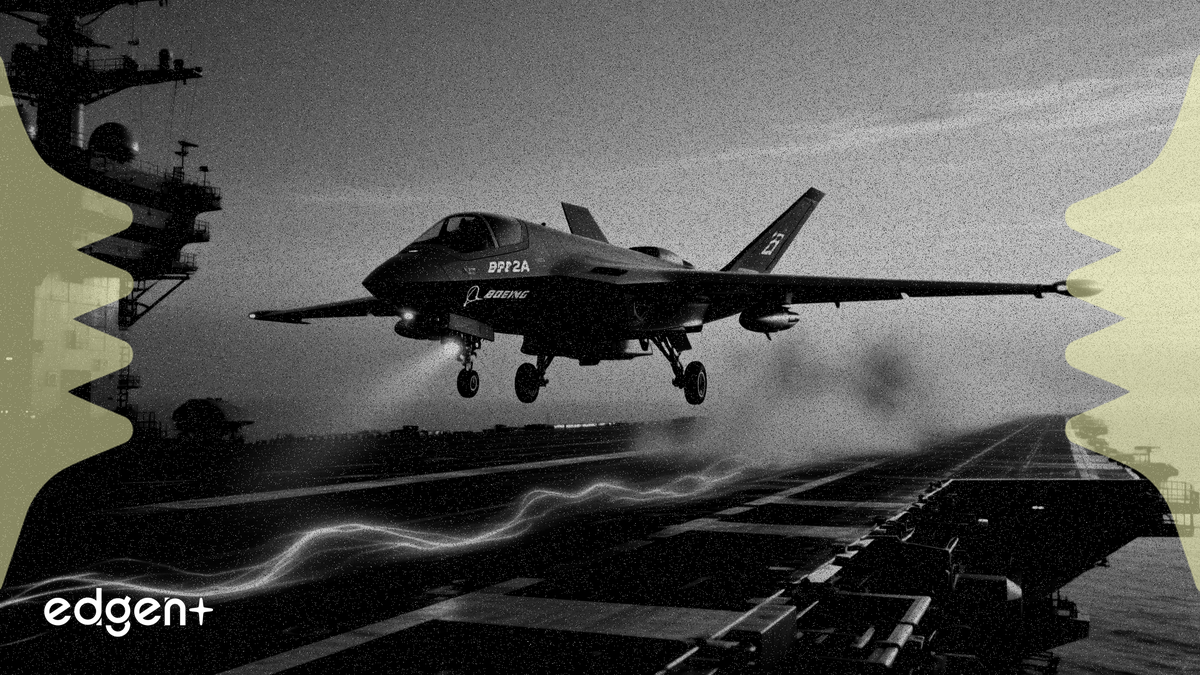
A new era in naval aviation begins as Boeing's autonomous MQ-25A Stingray tanker completes its first successful test flight, a major milestone for the U.S. Navy.
Boeing and the U.S. Navy successfully completed the first test flight of an operational MQ-25A Stingray, an unmanned aerial refueling drone, advancing the program toward integration into aircraft carrier operations and freeing up manned fighter jets for combat missions.
"The first flight of the MQ-25A is a landmark achievement for the Navy-Boeing team and a critical step toward the future of the carrier air wing," said Rear Adm. Tony Rossi, who oversees the Program Executive Office for Unmanned Aviation and Strike Weapons. "This flight demonstrates our progress in delivering a carrier-based refueling capability that will significantly extend the reach and lethality of our fleet."
The two-hour flight, conducted at MidAmerica St. Louis Airport, saw the MQ-25A autonomously taxi, take off, and land while responding to commands from a ground control station. The aircraft is the first of four Engineering Development Model aircraft being built under an initial $805 million contract. The ground control system, known as the Unmanned Carrier Aviation Mission Control System MD-5, includes Lockheed Martin’s MDCX™ system.
The MQ-25A program is pivotal for Boeing's defense segment and the U.S. Navy's force projection. By taking over the aerial refueling role currently performed by F/A-18 Super Hornets, the Stingray will allow those fighters to return to their primary strike role, effectively increasing the striking power of a carrier air wing. This successful test de-risks a major development program for Boeing, potentially bolstering investor confidence in its defense unit's execution.
The successful flight on April 25 marks a significant maturation of the MQ-25A program, building on years of learning from the T1 prototype. The Stingray is designed to be the most complex autonomous system ever developed for the demanding carrier environment.
During the test, pilots from both Boeing and the U.S. Navy controlled the aircraft from the ground, validating its flight controls, navigation, and safe integration with the control system. The flight plan was pre-determined and executed flawlessly, according to a company statement.
"Watching our first Navy aircraft complete an autonomous flight underscores what disciplined teamwork and rigorous testing deliver," said Troy Rutherford, vice president of the Boeing MQ-25 program.
The development of the MQ-25A is a key component of the Navy's broader strategy to integrate unmanned systems into its carrier air wings, enabling manned-unmanned teaming. This capability is seen as essential for maintaining a technological edge over potential adversaries. The Navy's goal is to have the MQ-25A handle the bulk of aerial refueling, a mission that currently consumes about 20-30% of F/A-18 Super Hornet flight hours.
Freeing the Super Hornets from this duty will not only extend the operational range of the carrier's strike aircraft but also preserve the airframe life of the manned fighters. With Boeing set to end Super Hornet production in 2027, extending the life and effectiveness of the existing fleet of roughly 550 jets is a top priority for the Navy. The service is currently upgrading its Super Hornets to the new Block III configuration to ensure they remain capable into the 2040s.
Following this successful first flight, Boeing and the Navy will conduct further tests at the MidAmerica St. Louis Airport to expand the aircraft's flight envelope. The program will then transition to Naval Air Station Patuxent River in Maryland for the next phase of testing, which will include preparations for actual carrier-based qualifications.
The successful test flight is a positive development for Boeing's defense division, which has faced scrutiny over delays and cost overruns on other programs. The MQ-25A contract, while modest in its initial phase, represents a long-term revenue stream and a strategic foothold in the growing market for unmanned military systems.
This article is for informational purposes only and does not constitute investment advice.
