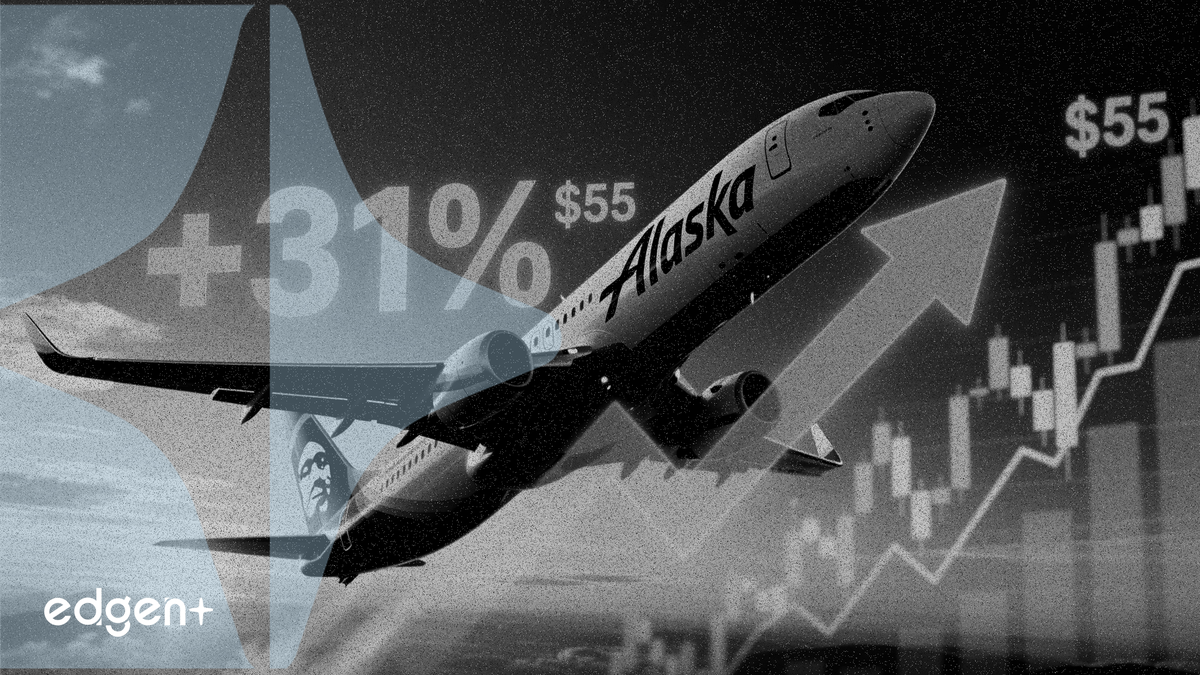
Bank of Montreal raised its price target on Alaska Air Group (ALK) by 31% to $55 from $42, suggesting a positive shift in valuation perspective even as the carrier navigates significant operational headwinds.
The upgrade comes just a day after Alaska Air suspended its full-year profit forecast, citing a sharp increase in jet fuel costs. Thomas Hayes, chairman at Great Hill Capital, said strong results were overpowering broader concerns, a sign that earnings remained central to market direction.
Shares of Alaska Air fell 4.8% to $43.54 on Tuesday after the company also reported a wider-than-expected first-quarter loss of $1.68 per share. The airline now expects second-quarter fuel expenses to increase by approximately $600 million, creating a significant headwind to profitability.
Headwinds from Fuel Costs
The primary driver behind the airline's revised outlook is the surge in jet fuel prices, which have nearly doubled since the onset of the Iran war. Alaska Air anticipates paying an average of $4.50 per gallon in the second quarter, with April's prices hitting as high as $4.75 per gallon. This spike in a key operational cost has forced the company to absorb higher expenses on tickets that were sold before the price increase.
In response to the challenging cost environment, Alaska Air is taking steps to rein in costs, including reducing its planned second-quarter capacity growth by nearly one percentage point. The airline's CEO, Benito Minicucci, had previously mentioned efforts to shift fuel supply away from the pricier U.S. West Coast market to mitigate the impact of high refinery margins.
The challenges faced by Alaska Air are not unique, as airlines globally are grappling with the impact of geopolitical instability on fuel prices. Germany's Lufthansa and Britain's easyJet have also signaled difficulties, with Lufthansa grounding aircraft and easyJet reporting lagging bookings.
The upgrade from Bank of Montreal indicates a belief that Alaska Air's current stock price may have already factored in the negative impacts of higher fuel costs and operational disruptions. Investors will be closely watching the airline's ability to manage its costs and protect pricing in the coming quarters. The next major catalyst will be the company's second-quarter earnings report, which will provide further insight into the financial impact of the current headwinds.
This article is for informational purposes only and does not constitute investment advice.