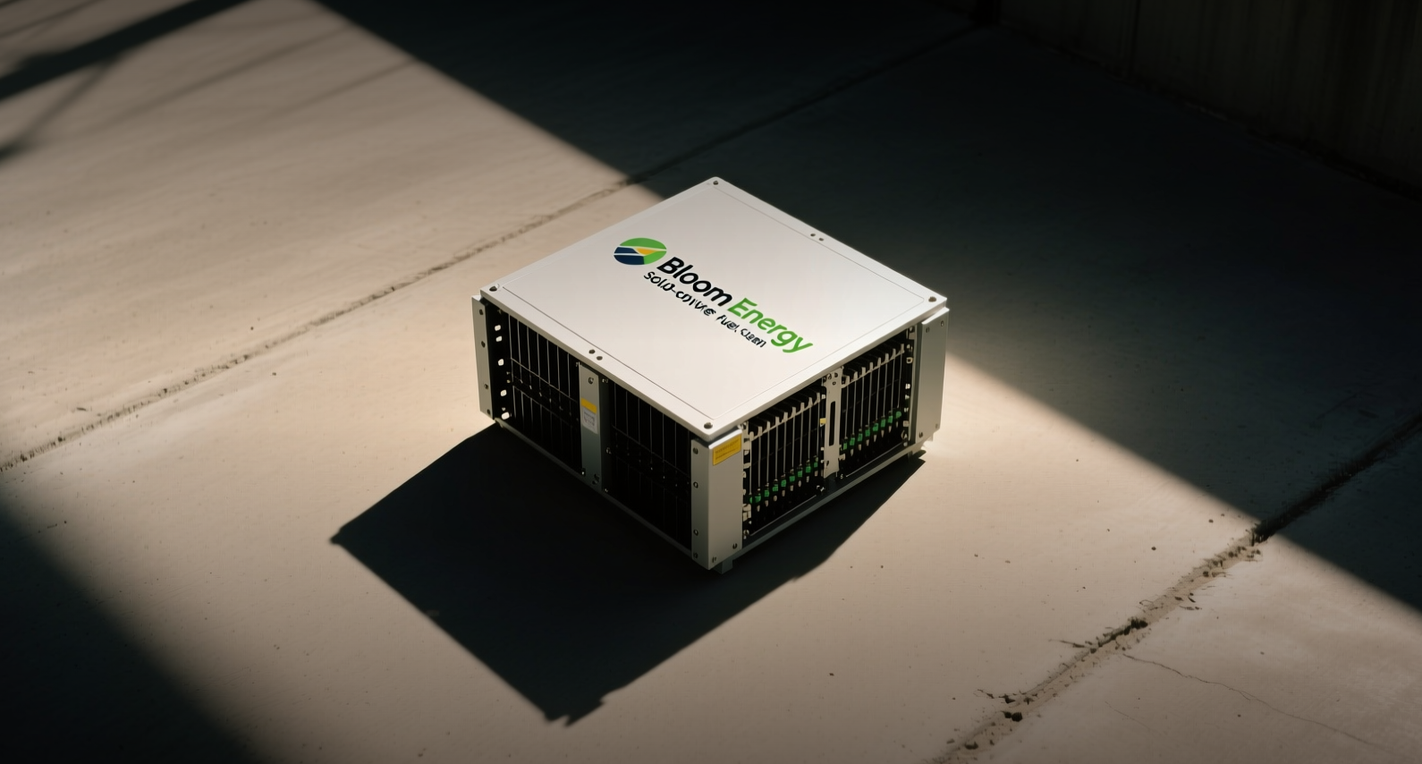
AI hyperscalers face three-to-five-year grid interconnection delays, fueling demand for on-site power solutions like Bloom Energy's fuel cells.
Bloom Energy's partnership with Brookfield Asset Management swelled fivefold to $25 billion, as AI data center operators race to secure on-site power amid grid interconnection delays of three to five years.
"When we formed this partnership, we said it was the first phase of a much larger vision," Aman Joshi, Chief Commercial Officer of Bloom Energy, said. "Today's commitment reflects the momentum we are seeing in the market, as evidenced by recently announced large-scale deals."
The expanded commitment, up from $5 billion announced in October 2025, operates within Brookfield's AI Infrastructure Fund, which launched in November with a $100 billion target. BE stock surged 10.1% to $302.70 in Tuesday's regular session and added another 9% in extended trading, after hitting a record $351.28 on June 25. Brookfield Asset Management shares rose 1.9% on Tuesday.
The deal marks a structural shift in AI infrastructure financing. Utilities routinely quote three-to-five-year interconnection timelines, forcing hyperscalers to secure independent power sources. A Turbine Logic study estimated global data center electricity load may more than double to 945 terawatt hours by 2030, potentially attracting more than $1 trillion in private investment for edge power generation, according to McKinsey.
Fuel Cells as a Grid Bypass
Bloom Energy's solid-oxide fuel cells convert natural gas or hydrogen into electricity through an electrochemical process, producing lower emissions than conventional gas-fired generation. The technology offers data center operators a path around grid constraints: on-site fuel cells can be deployed in months rather than years, with no transmission infrastructure required.
The company has been scaling its backlog of fuel-cell projects for AI factories. Earlier this year, Oracle expanded its partnership with Bloom Energy to procure up to 2.8 gigawatts of fuel-cell power capacity for its digital infrastructure. AI cloud provider Nebius also committed to deploying Bloom's technology.
Sikander Rashid, head of AI Infrastructure at Brookfield, described the partnership as delivering "end-to-end solutions, from electrons to tokens, for some of the world's most sophisticated customers." The strategy integrates power generation, compute resources, facility design and investment capital into a single package.
Wall Street Weighs In
UBS analyst Manav Gupta raised his Bloom Energy price target to $350 from $322, maintaining a Buy rating and establishing the highest target on Wall Street. The consensus stands at a Moderate Buy with a mean price target of $283.95, based on nine Buy and 10 Hold ratings.
Gupta argued the market is evaluating Bloom using the wrong metric. Most analysts focus on levelized cost of electricity generation, but hyperscale operators prioritize total delivered power expenditure. When factoring in storage, redundancy systems and grid interconnection costs, cheaper renewable sources can become more expensive overall, he said. Bloom's on-site fuel cells eliminate many of those supplementary costs while delivering higher reliability.
Gupta's track record on BE is notable: an 82% accuracy rate with an average return of 266.87% per recommendation over a one-year period, according to TipRanks.
The Federal Energy Regulatory Commission recently acted to expedite grid interconnections for large data center loads, a policy shift that may further encourage operators to secure independent power sources rather than relying on grid availability.
Bloom Energy is listed on the IBD 50. The stock has surged more than 1,260% over the past 12 months, with revenue expanding 56.5% in the trailing twelve months.
This article is for informational purposes only and does not constitute investment advice.