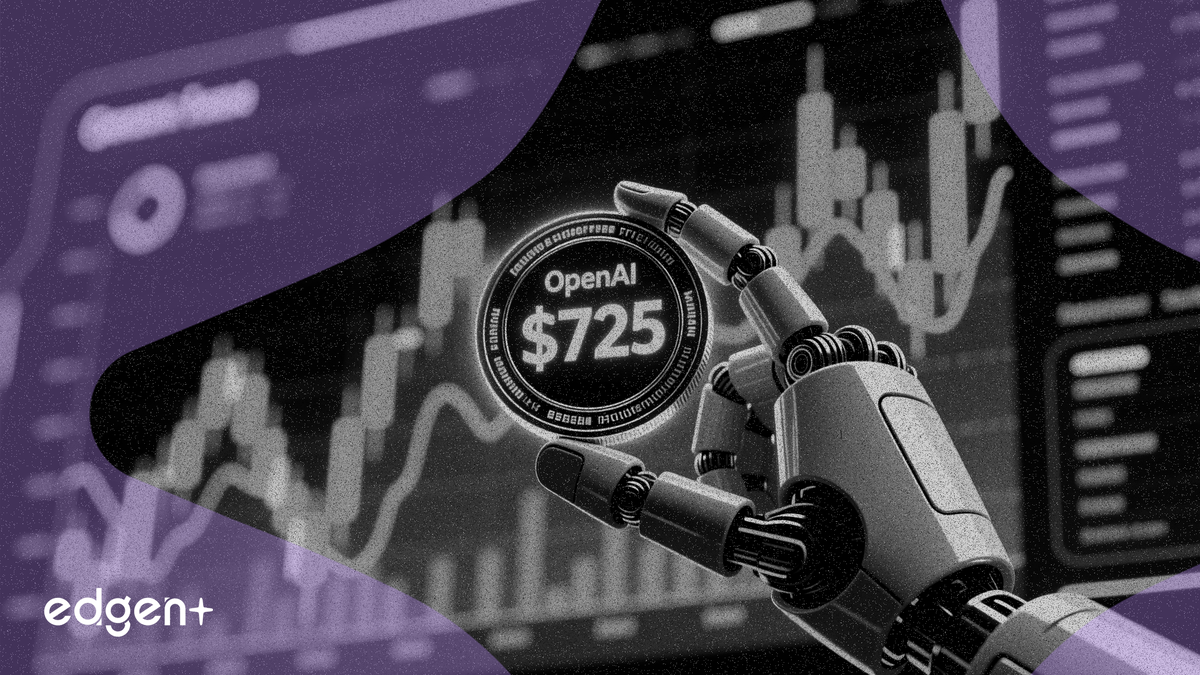
L'échange de cryptomonnaies Bitget a lancé une offre pré-IPO tokenisée pour OpenAI, au prix de 725 $ par action, offrant aux investisseurs particuliers un accès indirect à l'une des entreprises technologiques privées les plus convoitées au monde.
« Cette offre pourrait accroître la liquidité du marché pré-IPO et créer un précédent pour l'accès des particuliers au capital-investissement à forte demande », a déclaré Bitget dans son annonce du produit, nommé « preOAI ». L'offre permet la participation d'investisseurs non accrédités avant toute cotation publique officielle.
Ce lancement intervient alors que la demande des investisseurs pour les entreprises d'IA à un stade avancé atteint un sommet. Selon une note d'analyse récente de PitchBook, les startups américaines d'IA et d'apprentissage automatique en série D ou ultérieure affichaient une valorisation pré-monétaire médiane de 4,7 milliards de dollars au premier trimestre, soit une augmentation de 447,8 % par rapport à 2024. Pour chaque tranche de 0,90 $ que ces startups d'IA cherchaient à lever au premier trimestre, les investisseurs disposaient de 1 $ à investir, selon les données de PitchBook.
Le produit de Bitget vise à capturer cette peur de manquer (FOMO) des particuliers, mais la nature dérivée du jeton et les risques croissants chez OpenAI même présentent des obstacles importants. Les investisseurs de « preOAI » bénéficient d'une exposition au prix mais pas d'une propriété directe des actions, tandis qu'OpenAI fait l'objet d'une enquête de la Commission de surveillance de la Chambre des représentants sur d'éventuels conflits d'intérêts impliquant son PDG Sam Altman.
Un marché défini par la rareté
Le marché des fonds propres dans l'IA fondamentale se caractérise par des tours de table institutionnels massifs inaccessibles à la plupart des investisseurs. La participation de la Qatar Investment Authority à la série E de 20 milliards de dollars d'xAI et le co-pilotage par GIC d'un tour de table de 30 milliards de dollars pour Anthropic soulignent l'ampleur des capitaux en compétition pour un petit nombre d'actifs. L'offre tokenisée de Bitget est une tentative directe de répondre à la demande des particuliers exclus de ces transactions.
Valorisations et risques à la loupe
Bien que l'enthousiasme soit grand, les investisseurs potentiels sont confrontés à des risques considérables. L'introduction en bourse récente du fabricant de puces d'IA Cerebras Systems (NASDAQ : CBRS) sert d'avertissement sur la concentration de la clientèle ; sa déclaration d'enregistrement a révélé que deux entités liées représentaient environ 86 % de son chiffre d'affaires 2025. Des risques inconnus similaires pourraient guetter OpenAI lorsqu'elle déposera finalement son dossier d'entrée en bourse.
Plus spécifiquement pour OpenAI, une enquête de la Commission de surveillance de la Chambre cherche à obtenir des documents liés aux investissements personnels du PDG Sam Altman. Selon un rapport du Wall Street Journal cité par des procureurs généraux républicains, Altman a encouragé OpenAI à financer des entreprises auxquelles il est lié financièrement, notamment la startup de fusion nucléaire Helion. Ces questions de gouvernance non résolues, combinées à la structure de propriété indirecte d'un produit pré-IPO tokenisé, ajoutent des couches de risque à une valorisation déjà très élevée sur le marché privé. Le volume de transactions pour le jeton preOAI n'a pas encore été divulgué.
Cet article est à titre informatif uniquement et ne constitue pas un conseil en investissement.