
Bessent's Operation Economic Outcast aims to sever every economic lifeline sustaining Iran as the rial collapses past 2 million to the dollar.
Bessent's Operation Economic Outcast aims to sever every economic lifeline sustaining Iran as the rial collapses past 2 million to the dollar.
Bessent's Operation Economic Outcast aims to sever every economic lifeline sustaining Iran as the rial collapses past 2 million to the dollar.
Treasury Secretary Scott Bessent launched Operation Economic Outcast on Monday, targeting roughly 60 entities that help Iran evade sanctions, as the rial collapsed past 2 million to the dollar.
"Those who tether themselves to Tehran should expect to share in the isolation of a withering regime," Bessent said at a Treasury Department press conference, comparing the effort to D-Day during World War II.
The designations target front and shell companies in Hong Kong, China, Malaysia, the UAE, Singapore, and other third countries believed to have helped sanctioned Iranian firms launder oil proceeds and procure sensitive technology. Iran's currency has plunged from 1.4 million rials to the dollar at the start of the year and 70,000 when Trump exited the nuclear deal in 2018. The US naval blockade has driven Iran's oil exports to zero, according to Iran's central bank governor, while inflation runs near 90 percent.
Bessent warned of a "major announcement of a financial institution being sanctioned by the end of this week," raising the question of whether Washington will target Chinese state-owned banks that sustain Iran's oil trade. With Chinese refineries absorbing nearly 90 percent of Iranian oil and a Trump-Xi meeting weeks away, the campaign's success hinges on Beijing's response — and whether the administration can sustain pressure without blowing up the global financial system, a risk Bessent himself acknowledged.
The sanctions follow a months-long US naval blockade that has cut off most goods to Iran from the outside world. Last week, the UAE said it would halt all trade and financial transactions with Iran — a step Bessent called "not a coincidence." The UAE had previously announced crackdowns on Iran's evasion networks, making the extent of its follow-through an early test of the campaign's credibility.
Beijing is the biggest question. Chinese refineries have absorbed nearly 90 percent of Iranian oil, and Treasury has yet to sanction any major Chinese financial institution. Bessent said the administration would target entities "that are part of the ecosystem that turns Iranian oil into money into repression," but when asked why he hadn't imposed major sanctions on Monday, he replied: "Why would I want to blow up the global financial system?"
The one-year US-China truce that paused tariffs on Chinese goods and Chinese bans on critical minerals is set to expire this fall. Any perceived economic escalation by Washington could prompt Chinese countermeasures in critical minerals, a risk that complicates the administration's calculus ahead of the Trump-Xi meeting.
Iran has signaled it will not absorb the pressure quietly. Mohsen Rezaei, Iran's new security chief and former Revolutionary Guard commander, said Tehran would retaliate in a "seismic manner," warning Gulf states that any country partnering in the new restrictions would be considered a target. Iran has already attacked US bases in Jordan and Gulf countries including the UAE, Kuwait, and Saudi Arabia since the war began in February.
The last time Washington pursued maximum pressure against Iran, in Trump's first term, oil exports fell to historic lows but the regime survived. The difference now is the blockade: with oil exports already at zero and the rial at record lows, the economic pain is more acute. Iranian officials are showing signs of strain. President Masoud Pezeshkian said Friday that "the war must come to an end at some point," while parliamentary speaker Mohammad Bagher Ghalibaf acknowledged that "if people are hungry and we don't have financial circulation, economic growth and domestic production, we will not endure."
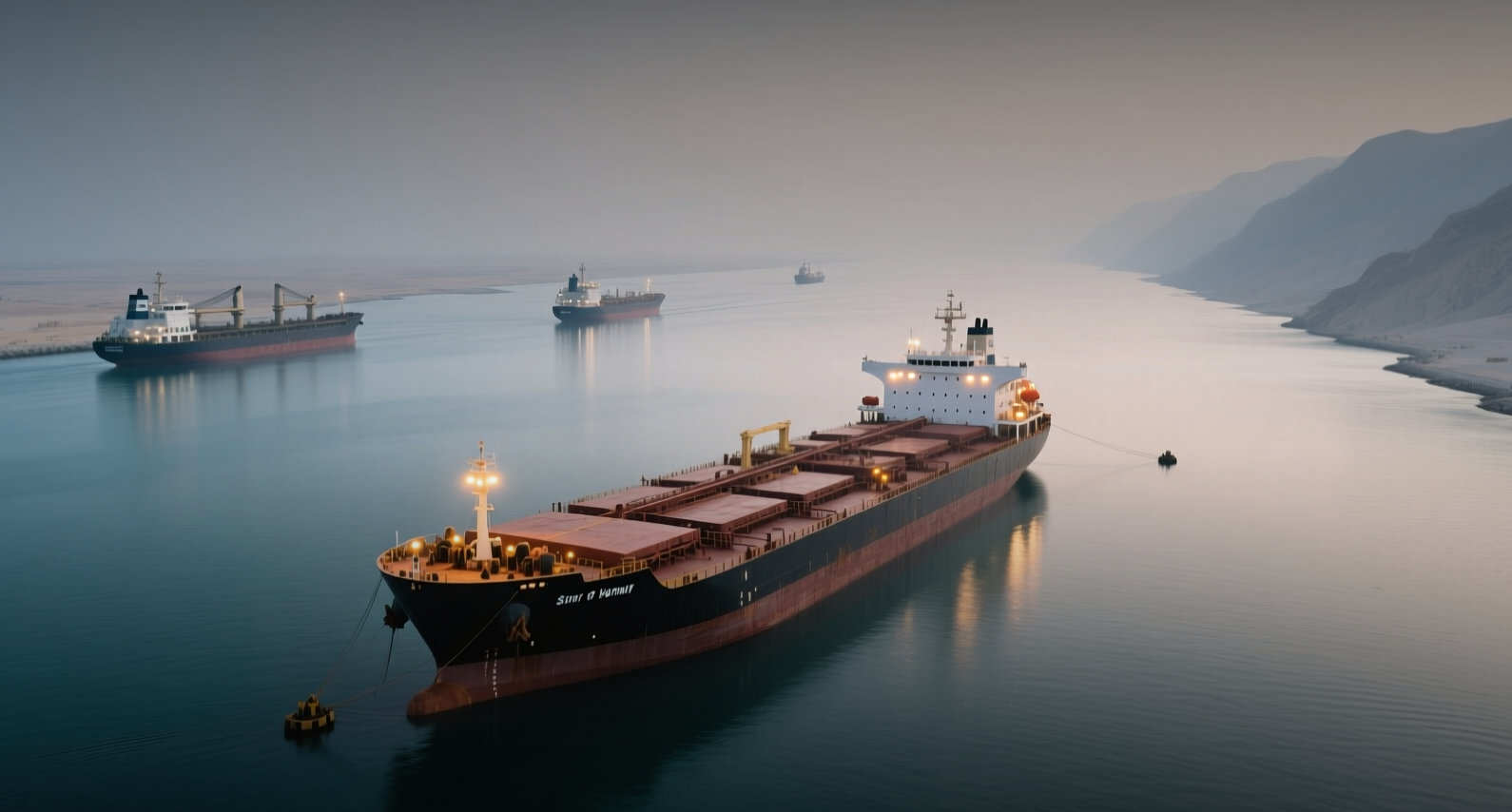
The Strait of Hormuz remains the flashpoint. The waterway handles about 21 percent of global oil trade, and Iran's closure earlier in the war caused the biggest disruption to Gulf energy exports in history. Rezaei has threatened that "not even a single drop of oil will leave the region." The US has been escorting increasing quantities of oil through the strait, and with crude below $100 a barrel, Washington may be able to sustain the blockade longer than Tehran can bear the economic cost.
The campaign's effectiveness ultimately depends on whether Washington is willing to escalate against Chinese entities. Treasury warned in April about targeting Chinese banks and refiners but has not followed through. Bessent's threat of a major financial institution sanction by the end of this week will test whether the administration is prepared to risk the trade détente with Beijing.
Gulf states face an impossible predicament. If they comply with US demands to isolate Iran, Tehran is likely to restart attacks on regional energy infrastructure. If they don't, they face US sanctions. All GCC states except Kuwait peg their currencies to the dollar, giving Washington leverage — but also creating resentment that could push Gulf capitals closer to Beijing.
Bessent said every country has "a defined timeline to shut down activities we have identified," though he declined to specify the deadlines. The administration's credibility will be tested by whether it follows through on the promised financial institution sanction and whether it can maintain consistency — a challenge given Trump's history of reversing course, including the memorandum of understanding signed months ago that would have released significant funds to Iran.
For markets, the key variables are oil prices and the Strait of Hormuz. Energy exports from the Gulf have already suffered the biggest disruption in history, and any Iranian retaliation against tankers or Gulf infrastructure would push crude higher. The UN has proposed monitoring civilian shipping in the strait, but the parties have yet to agree.
This article is for informational purposes only and does not constitute investment advice.
