Chinese technology stocks listed in New York extended their slide on Sept. 8, with the Golden Dragon China Index deepening its loss to 2% as Baidu shed nearly 9% and Kingsoft Cloud retreated more than 6%.
The decline arrives one day after Baidu's Class A shares became tradable through the Shanghai-Hong Kong Stock Connect on Sept. 7, with projected southbound inflows of $3 billion to $6.8 billion over 12 months, according to PomiNews. The pattern mirrors the company's Sept. 1 dual-primary listing conversion, when Hong Kong shares fell more than 3% to an intraday low of HK$92.95 despite the structural milestone. The divergence illustrates a familiar dynamic in event-driven equity trades: the announcement prices in the forward expectation, while actual execution triggers profit-taking by investors who accumulated positions ahead of the event.
Baidu's ADRs had surged about 6% when the dual-primary listing plan was first announced in July, setting up potential profit-taking as the listing materialized. The company's Hong Kong shares traded at HK$96.20 with a market capitalization of approximately HK$256.8 billion, according to PomiNews data. Baidu now trades across three venues: Nasdaq under BIDU, HKEX HKD counter and HKEX RMB counter as 9888. The dual-currency structure offers both HKD and RMB trading counters on HKEX, providing settlement flexibility for mainland investors.
The selloff extends beyond Baidu to other Chinese cloud and technology names, with Kingsoft Cloud falling more than 6%. The declines come 15 days before the Sept. 23 Trump-Xi summit at the White House, where semiconductor export controls and technology licensing are expected to be key agenda items. Baidu, which depends on access to advanced compute for AI model training and operates its AI services entirely within China's regulatory environment, faces material upside or downside risk depending on summit outcomes. The May summit produced reported clearance for Nvidia H200 chip sales to China, a development that triggered a significant rally across Chinese AI equities.
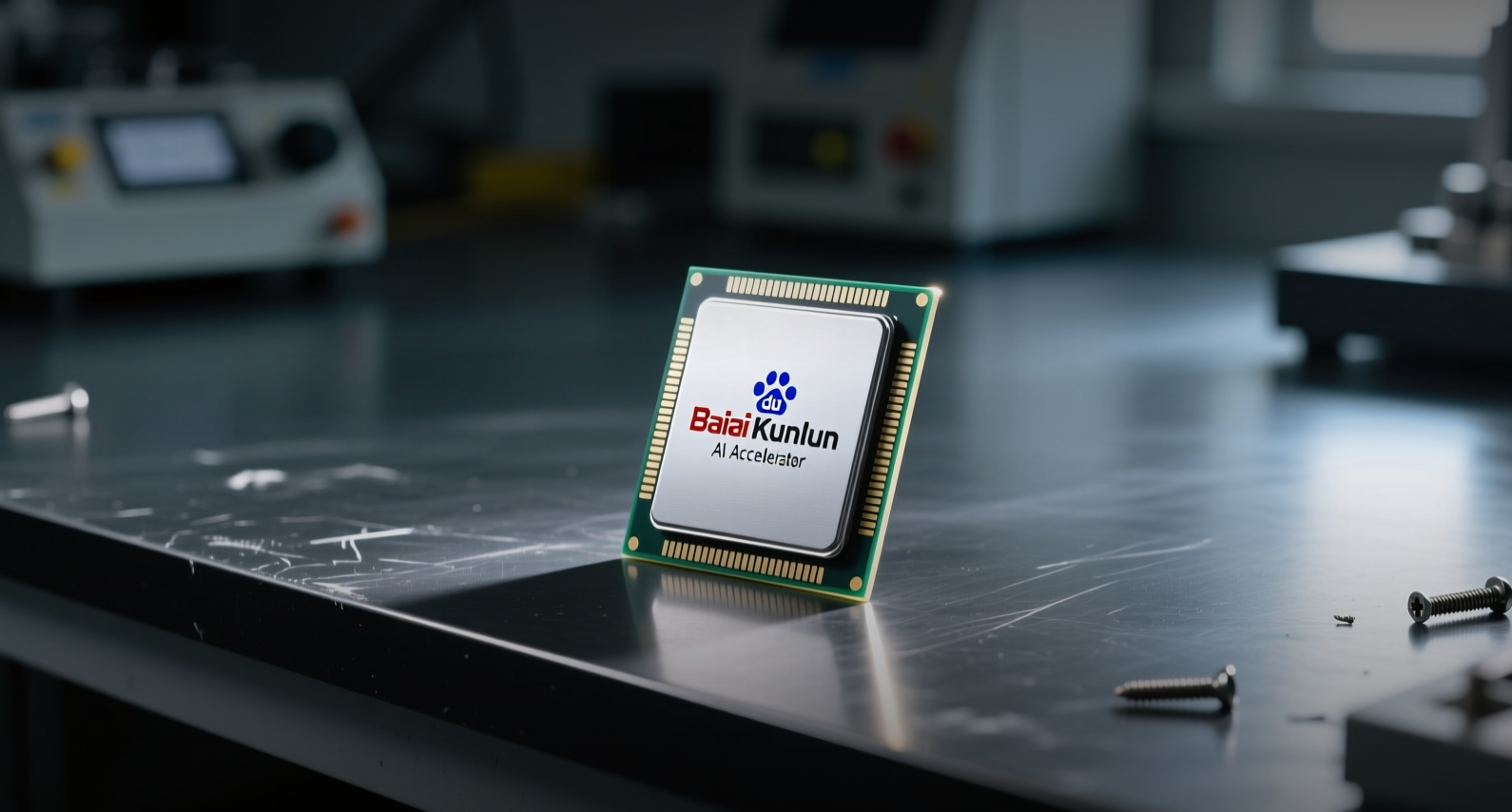
Baidu has positioned its AI transition as central to its investment thesis, reporting that AI revenue now exceeds 50% of total revenue for the first time. The company markets itself as the world's first "full-stack AI stock," operating across hardware through its Kunlunxin AI chip unit, cloud infrastructure, foundation models, and consumer applications. Kunlunxin separately is targeting a $50 billion initial public offering in Hong Kong, which would extend the Baidu group's capital market footprint and fund independent AI chip development at scale.
This article is for informational purposes only and does not constitute investment advice.