Arm Holdings has shed 35% from its June record, but the case for its data center CPU dominance remains intact at $315.
Arm Holdings has fallen 35% from its June peak of $452.70, yet the company's push to become the default CPU architecture for agentic AI data centers keeps the bull case alive at $344.98 per share, according to 24/7 Wall St.'s proprietary model.
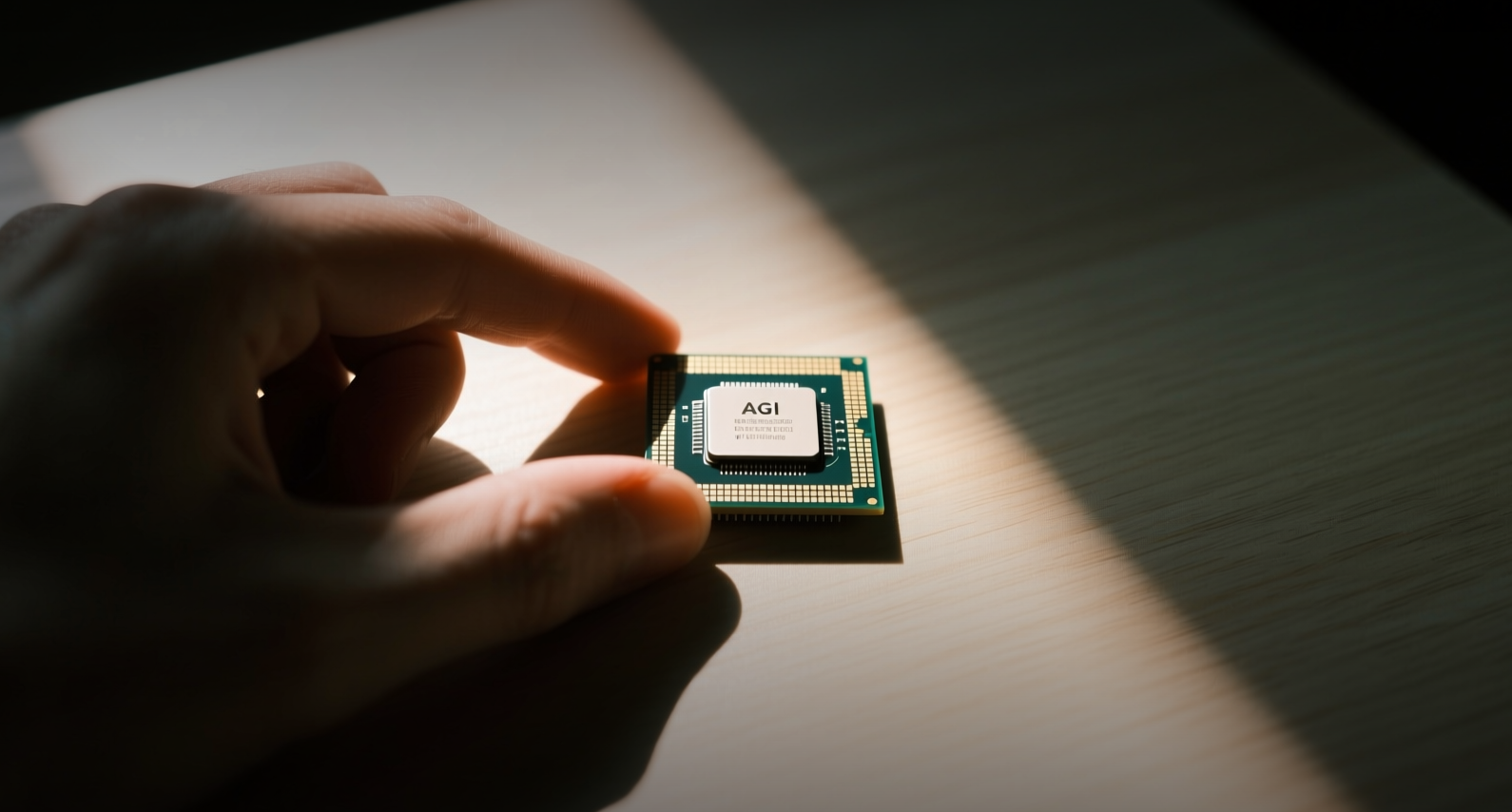
"Arm's AGI CPU has more than $2 billion in customer demand already booked across fiscal 2027 and 2028," the company said in its most recent earnings call, describing the chip as the foundational compute layer for next-generation AI workloads.
The stock trades at $315.28, down 21.71% over the past 30 days after a 10.1% single-day drop on June 23 triggered by a broader semiconductor rout, a New Street Research downgrade to Neutral, and executive insider selling. Full-year fiscal 2026 revenue reached $4.92 billion, up 22.79% year over year, marking a third consecutive year of 20% growth. Non-GAAP operating margin compressed to 49.1% from 52.8% as research and development spending surged 43% to $1.911 billion — a deliberate investment, bulls argue, to capture the agentic AI opportunity.
The bull case targets $448.25, a 42% return, driven by Arm AGI CPU — the company's first production data center silicon. Meta is the lead partner, with Google, NVIDIA, Microsoft, Oracle, and OpenAI all building Arm-based chips targeting a $100 billion data center CPU total addressable market by 2030. Wall Street analysts have raised targets accordingly: TD Cowen at $475, UBS at $470, and Mizuho at $500.
The Bear Case Puts a Floor at $268
Valuation remains the central risk. Arm trades at a trailing price-to-earnings ratio of 402 and a forward P/E of 154. The bear case lands at $268.49, a 14.84% loss from current levels. Beyond valuation, three specific threats loom: the Qualcomm/Nuvia trial scheduled for the fourth quarter of calendar 2026, a 25% U.S. semiconductor tariff proposal, and a Federal Trade Commission antitrust investigation reported in May.
Bulls counter that the high valuation reflects deliberate reinvestment. Free cash flow jumped 395.5% in fiscal 2026, supporting the argument that Arm is investing ahead of a revenue inflection rather than burning capital. The company's royalty model, tied to Armv9 architecture adoption, provides a recurring revenue base that traditional chipmakers lack.
What the July 29 Earnings Report Will Settle
Arm reports fiscal first-quarter results on July 29, with management guiding for $1.26 billion in revenue. The bull thesis strengthens if hyperscaler CPU market share holds near 50% and the company validates its $2 billion demand pipeline. The thesis weakens if margins compress further without a clear royalty rate inflection or if the Qualcomm ruling goes against Arm's licensing model.
Arm shares, trading at 154 times forward earnings, already price in significant AI CPU adoption. The 35% pullback from the June high has improved the risk-reward profile, but the stock remains expensive by any traditional metric. Mizuho's $500 target implies the company can generate $15 billion in agentic AI CPU revenue by fiscal 2031 — a bet on Arm becoming the x86 replacement in the data center. The July 29 earnings report will provide the first real test of whether that thesis is gaining traction or losing steam.
This article is for informational purposes only and does not constitute investment advice.