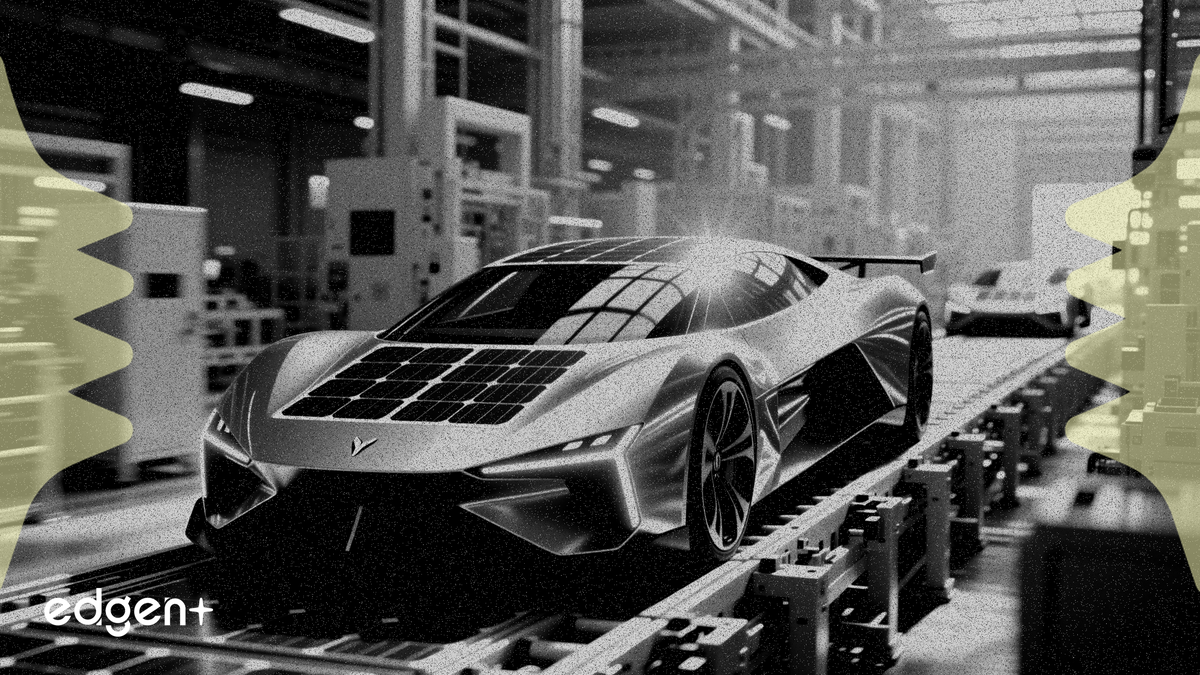
Solar mobility startup Aptera Motors Corp. (Nasdaq: SEV) drove its first five validation vehicles off its California assembly line on May 12, a critical manufacturing step that aims to prove its unique three-wheeled solar electric vehicle can be produced at scale. The successful builds are a crucial step for the startup as it moves from design to commercial production.
"Five validation vehicles have been driven off its newly established low-volume validation assembly line," the company announced in a statement, confirming the milestone. The announcement marks a significant achievement in a capital-intensive industry where many electric vehicle startups have struggled to translate ambitious designs into physical products.
The completed units are the final pre-production versions of the Aptera vehicle, a lightweight, three-wheeled car covered with solar panels designed for extreme energy efficiency. These vehicles will now undergo extensive testing and validation to ensure they meet quality, durability, and safety standards ahead of a planned ramp-up to mass production. The company’s Carlsbad facility is currently focused on low-volume assembly to refine manufacturing processes before a larger, higher-volume production phase is initiated.
A Key Milestone for a Crowded Market
For investors, the completion of these vehicles is a major de-risking event. It provides tangible proof of progress and signals that Aptera is moving from concept to reality, a hurdle where many EV startups have failed. The news could boost confidence in Aptera's ability to meet its production timeline and carve out a niche in the competitive EV market.
While not a direct competitor to mainstream electric cars like those from Tesla Inc. (Nasdaq: TSLA) or Ford Motor Co. (NYSE: F), Aptera is targeting a specific segment of the market focused on hyper-efficiency and sustainability. Its solar-powered design, which allows the vehicle to regain up to 40 miles of range per day from sunlight alone, sets it apart from traditional battery-electric vehicles that rely solely on grid charging. Successfully bringing this technology to market could validate the company's novel approach and attract a dedicated customer base. The company's stock, trading under the ticker SEV, has been closely watched by investors looking for the next innovator in the EV space.
This article is for informational purposes only and does not constitute investment advice.