

Apple's first foldable iPhone has entered mass production, with suppliers racing to build as many as 8 million units by year-end — but early supply will be so constrained that the device may not ship until weeks after its September unveiling.
Apple's first foldable iPhone has entered mass production, with suppliers racing to build as many as 8 million units by year-end — but early supply will be so constrained that the device may not ship until weeks after its September unveiling.
Apple's first foldable iPhone has entered mass production, with suppliers racing to build as many as 8 million units by year-end — but early supply will be so constrained that the device may not ship until weeks after its September unveiling.
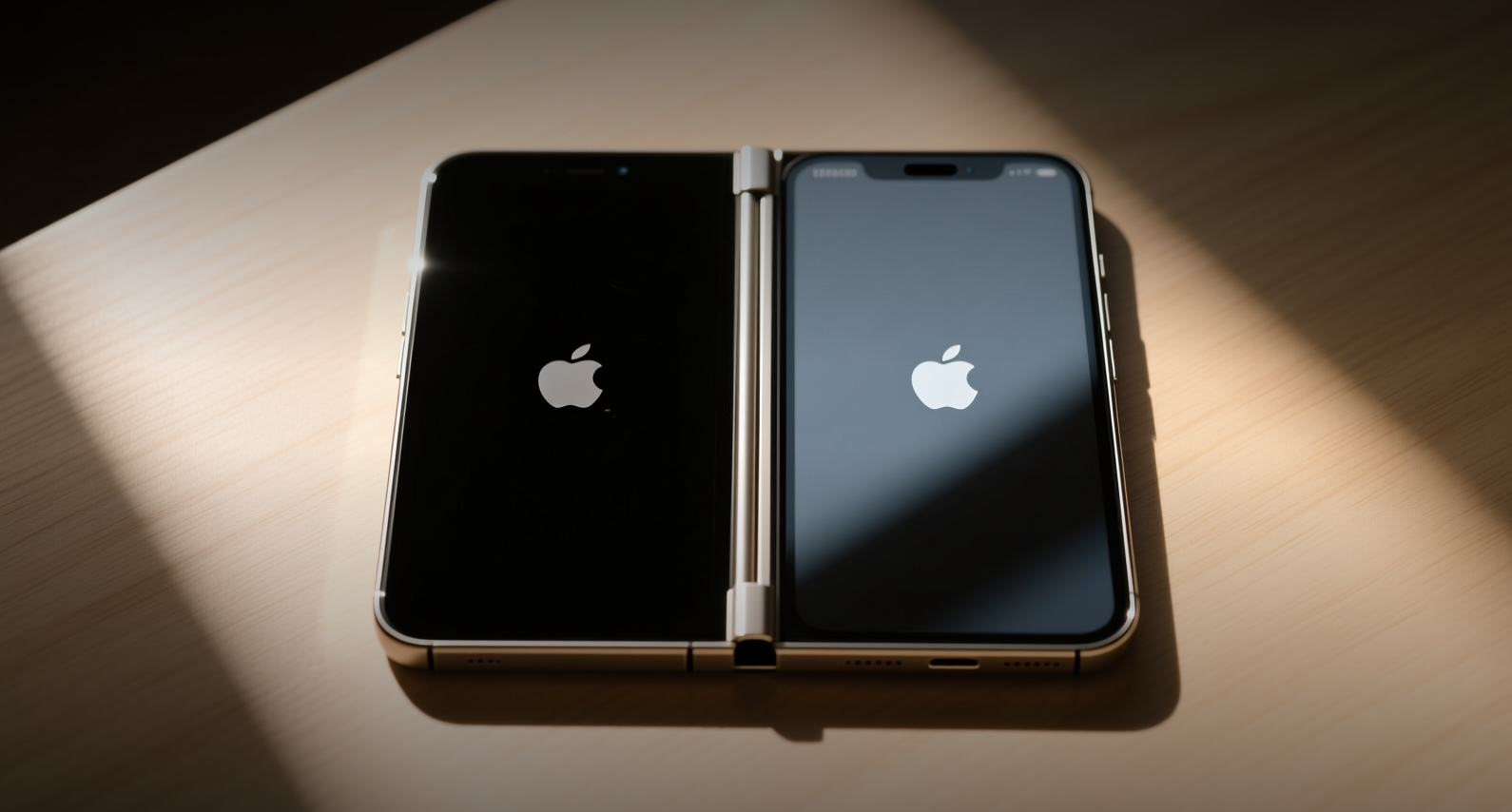
Apple's long-rumored foldable iPhone, expected to be called iPhone Ultra, has moved into volume production at Foxconn facilities in Shenzhen and Ganzhou, according to people familiar with the matter. The device features a 5.5-inch outer display that opens to a 7.8-inch inner screen with a 4:3 aspect ratio, similar to an iPad mini, and measures under 5mm thick when unfolded.
"The foldable iPhone may repeat the iPhone X story — announced alongside the other new models, but with pre-orders and official sales both coming later," Ming-Chi Kuo, a longtime Apple supply chain analyst, wrote in a blog post. Kuo estimates Apple's suppliers will ship 7 million to 8 million foldable iPhones in the second half of 2026, with just 500,000 to 1 million units available in the third quarter — roughly 10% of the total. By comparison, the iPhone 18 Pro and Pro Max combined are expected to ship 20 million to 22 million units in the same period.
The production bottleneck stems from the Ultra's advanced design, which introduces manufacturing challenges similar to what Apple faced with the iPhone X in 2017. That device was announced alongside the iPhone 8 and 8 Plus in September but didn't open for pre-orders until late October. Kuo expects the foldable iPhone to sell out "immediately after pre-orders open," with delivery lead times stretching to four to six weeks or longer, and predicts scalpers could command a 50% to 100% premium above the retail price.
Kuo pegs the starting price at $2,299 to $2,499 in the US, making it the most expensive iPhone ever. Bloomberg's Mark Gurman has also reported the device will "cross the $2,000 threshold." Apple last month raised prices on iPads and Macs by as much as $400 due to rising memory costs but has so far kept iPhone pricing unchanged.
Supply chain gears up
Chinese upstream suppliers have begun disclosing delivery commitments tied to the foldable iPhone ramp. Lens Technology, a key supplier of ultra-thin glass (UTG) and glass support plates, said on the investor platform Interactive Easy that it began shipping components to its major customer in the second quarter and has "sufficient capacity to meet optimistic market demand this year and beyond." UTG is the most critical material in foldable displays — it must be thin enough to bend repeatedly without cracking while maintaining scratch resistance comparable to standard smartphone glass.
Triumph Science & Technology, another UTG supplier, said it has begun volume shipments to downstream customers. The company's production chain covers the full process from high-strength glass through ultra-thin processing to precision lamination, and its UTG is already used in the world's top foldable smartphone brands.
Yian Technology, which produces liquid metal hinge spindles, confirmed it has passed qualification certification from both domestic and international OEMs and has begun batch deliveries. Liquid metal — an amorphous alloy with high strength and fatigue resistance — is increasingly favored for foldable hinges because it can be precision-molded into complex shapes that maintain structural integrity over hundreds of thousands of folds.
Jingyan Technology, a precision components manufacturer, is investing 400 million yuan ($55 million) in a new project to develop high-strength powder titanium alloy and precision injection-molded components for foldable devices. Lyn Precision Technology, a structural components leader, said it supplies foldable terminal hardware including stainless steel, titanium alloy, and carbon fiber support structures, as well as hinge modules and vapor chambers.
What it means for investors
For Apple, the foldable iPhone represents both a new revenue stream and a strategic ceiling-raiser. At $2,500 per unit, 8 million units would generate roughly $20 billion in annual revenue — a meaningful addition to the iPhone segment that generated $57 billion in the March quarter alone. More importantly, the Ultra could pull upgraders into a higher price tier, resetting the ceiling on iPhone ASPs in a maturing smartphone market.
The real test, however, will come in early 2027. Kuo said the best window to assess genuine foldable iPhone demand is the fourth quarter of 2026 through the first quarter of 2027, after initial supply constraints ease. Apple shares trade at about 37 times earnings, a premium that already reflects expectations of a strong product cycle. The foldable's success — or lack thereof — will determine whether that premium is justified.
This article is for informational purposes only and does not constitute investment advice.
