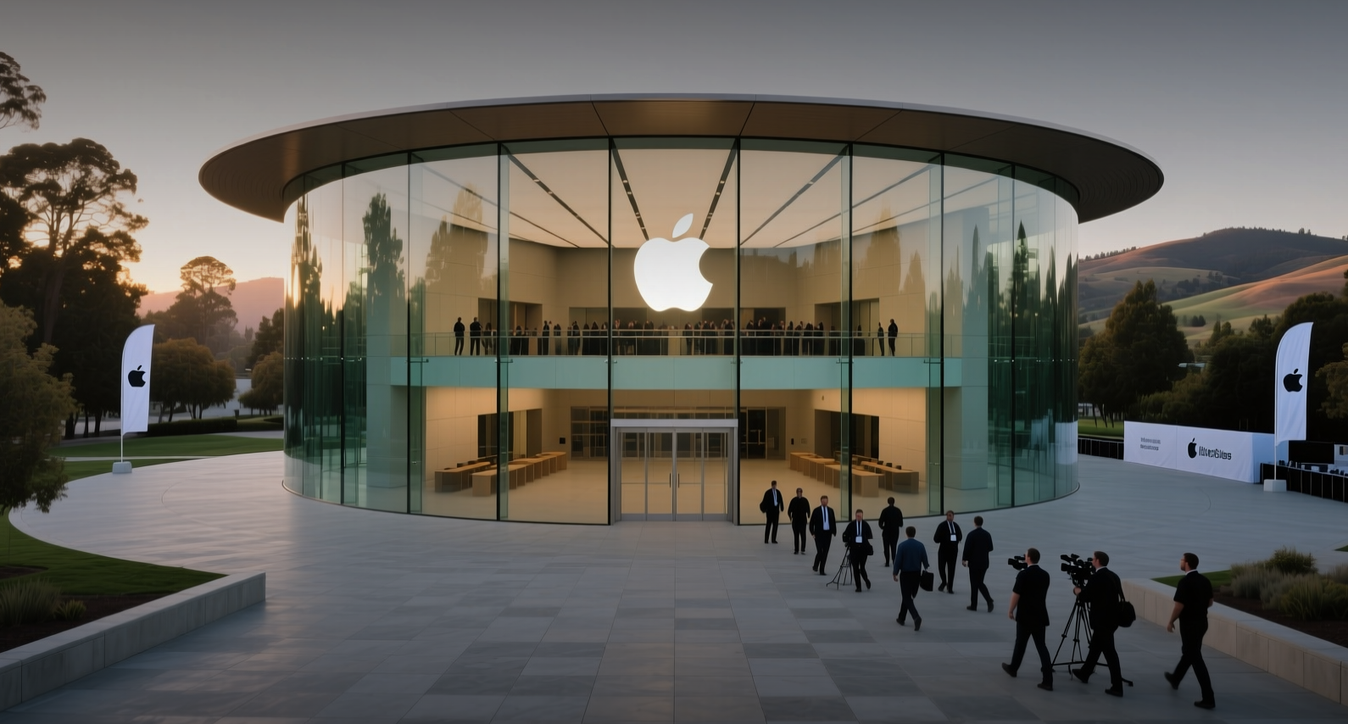
Apple is set to unveil its first foldable iPhone on Wednesday at its "Surprise and Shine" event, a product launch that will serve as the earliest gauge of whether new CEO John Ternus can restore the company's hardware momentum after years of incremental upgrades and the Vision Pro's lukewarm reception. The device, expected to be branded "iPhone Ultra" and priced from roughly $1,999, arrives just eight days after Ternus succeeded Tim Cook as chief executive.
"This is the first real test of whether Apple can still surprise people," said Mark Gurman, technology correspondent at Bloomberg, who has reported extensively on the device's development. "The foldable is the most ambitious hardware project Apple has shipped since the Apple Watch, and it's landing on Ternus' desk at a moment when the company needs a win."
The foldable iPhone is expected to feature a book-style design with a 7.7- to 7.8-inch internal display and a 5.3- to 5.5-inch outer screen at a 4:3 aspect ratio, roughly the size of an iPad mini when opened. Reports from Ming-Chi Kuo and TrendForce indicate the device will run Apple's A20 Pro chip with 12GB of RAM, pack a combined 5,000- to 5,500mAh battery across two cells, and include two 48-megapixel rear cameras. Apple has reportedly prioritized crease reduction through variable-thickness glass and a LiquidMetal hinge, with Samsung Display developing a near-creaseless OLED panel specifically to meet Apple's standards.
The launch carries significant financial stakes. Analysts at TrendForce project a starting price between $2,099 and $2,299, with top configurations potentially exceeding $3,000. That positions the iPhone Ultra well above Samsung's Galaxy Z Fold series, which starts around $1,900, and raises questions about whether Apple can justify a premium of roughly 25 percent over its closest competitor in a category that remains niche. Barclays analyst Tim Long has cautioned that supply constraints could push retail availability to December, while Tim Cook warned on Apple's Q3 earnings call that supply chain impacts would "increase significantly."
The event also marks a strategic inflection point for Apple beyond the foldable itself. The company is expected to debut the iPhone 18 Pro and Pro Max with its new A20 chip, camera upgrades and higher prices, while the standard iPhone 18 and a successor to the iPhone Air are reportedly pushed to spring 2027 as Apple splits its launch cycle. Apple raised prices on iPads, Macs and home products over the summer as an AI-driven memory shortage lifted component costs, and the iPhone 18 Pro lineup is expected to follow suit.
The leadership question
Ternus, a 50-year-old Apple veteran who previously ran the hardware engineering division, inherits a company wrestling with questions about its artificial intelligence strategy. The long-delayed overhaul of Siri remains unfinished, and the Vision Pro headset that debuted to fanfare in 2024 has failed to find a mainstream audience. The foldable iPhone represents Apple's most direct attempt to answer whether it can still deliver a blockbuster hardware category.
The device reportedly makes several compromises that could test consumer patience at its price point. It may replace Face ID with a side-mounted Touch ID sensor, omit a dedicated telephoto camera, and ship as eSIM-only worldwide. Apple has also reportedly focused on making the device exceptionally thin — around 4.5mm when unfolded and 9.5mm when closed, per leaks from Jon Prosser — which could affect durability and dust resistance compared with conventional iPhones.
Competitive stakes
Samsung has dominated the foldable market since introducing the Galaxy Fold in 2019, shipping multiple generations and refining the category. The Korean electronics giant is reportedly developing a "Galaxy Z Fold 8 Wide" with a similar 4:3 aspect ratio, positioning it as a direct rival to Apple's entry. Google's Pixel 9 Pro Fold also competes in the segment, though at lower volumes.
Apple's approach mirrors its historical pattern of entering mature categories late but with a focus on polish. The company waited years for display technology, hinge durability and consumer interest to mature before committing to a foldable iPhone. Whether that patience pays off will depend on execution — and on whether customers accept a $2,000-plus price tag for a device that may not include every feature of the iPhone 18 Pro Max.
For investors, the launch is a near-term catalyst for Apple shares, which have traded at roughly 30 times forward earnings as the company's growth has slowed. A successful foldable debut could reignite upgrade demand among the installed base of more than 2 billion active devices, while a lukewarm reception would reinforce concerns that Apple's best innovation days are behind it. The event also carries implications for supply chain partners including Samsung Display, which stands to benefit from foldable panel orders, and TSMC, which manufactures the A20 Pro chip.
Wednesday's event will reveal pricing, availability dates and final specifications. The reception over the following weeks — pre-order volumes, early reviews and supply chain commentary — will determine whether the foldable iPhone becomes Apple's next growth engine or another cautionary tale in the company's post-Jobs era.
This article is for informational purposes only and does not constitute investment advice.