


In a rare alliance, Apple is backing rival Google in its fight against a new European Union regulation, citing what it calls "profound risks" to user privacy and security from artificial intelligence systems.
In a rare alliance, Apple is backing rival Google in its fight against a new European Union regulation, citing what it calls "profound risks" to user privacy and security from artificial intelligence systems.
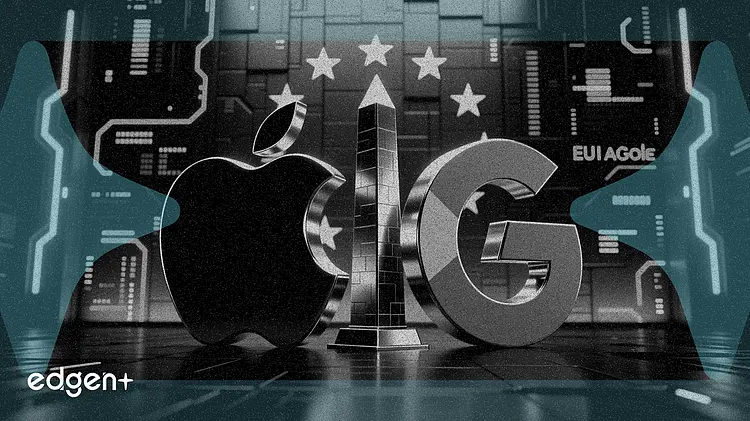
Apple Inc. has formally objected to the European Commission's draft measures designed to enforce the Digital Markets Act (DMA), which would compel Google to grant AI rivals broad access to its Android operating system, a move that could set a precedent for Apple's own platforms.
"The DMs (draft measures) raise urgent and serious concerns," Apple said in its submission to the EU, according to Reuters. "If confirmed, they would create profound risks for user privacy, security, and safety as well as device integrity and performance."
The proposed rules are part of the EU's landmark DMA, a regulation in force since November 2022 that targets seven "gatekeeper" tech giants, including both Apple and Google. The measures would allow third-party AI services to interact with Android apps for tasks like sending emails or ordering food, which Google has argued would undermine key security safeguards for its more than 45 million monthly active users in the EU.
At stake is the future of AI platform regulation in Europe, a decision that will have billion-dollar consequences for how tech giants operate. Apple's intervention highlights its concern that any mandate forcing open access on Android could eventually be applied to its own iOS, iPadOS, and macOS ecosystems, potentially disrupting its tightly controlled business model. The European Commission must make its final decision by July 27, 2026.
While Apple is publicly defending its rival's position, the company has a clear self-interest in the outcome. As a designated gatekeeper under the DMA, Apple is also subject to EU proposals to open up its ecosystem. The company has a long history of clashing with EU regulators over the act, having challenged the regulation in court and argued it has created security vulnerabilities and worsened the user experience.
In its submission, Apple noted it has a strong interest in the case given its own operating systems for iPhones, iPads, and Mac computers. Any regulatory framework that forces Google to open Android to third-party AI could create a direct precedent that regulators would be keen to apply to Apple's App Store and iOS, a far more lucrative and closed system than Google's Android.
Apple's feedback took a sharp tone, directly questioning the European Commission's technical expertise in drafting the proposals. The company argued that the risks of opening up the operating system are "especially acute in the context of rapidly evolving AI systems whose capabilities, behaviours, and threat vectors remain unpredictable."
"The EC is redesigning an OS... it is substituting judgments made by Google's engineers for its own judgment based on less than three months of work," Apple stated in its submission. It suggested the only discernible goal of the draft measures appears to be "open and unfettered access."
The feedback period for the proposals ran from April 27 to May 13. The European Commission has said it will carefully assess all submissions and may adjust the proposed measures. However, the EU also concluded in May 2026 that the DMA has had a positive impact overall, signaling it is unlikely to back down from its core principles despite intense lobbying from Silicon Valley.
This article is for informational purposes only and does not constitute investment advice.
