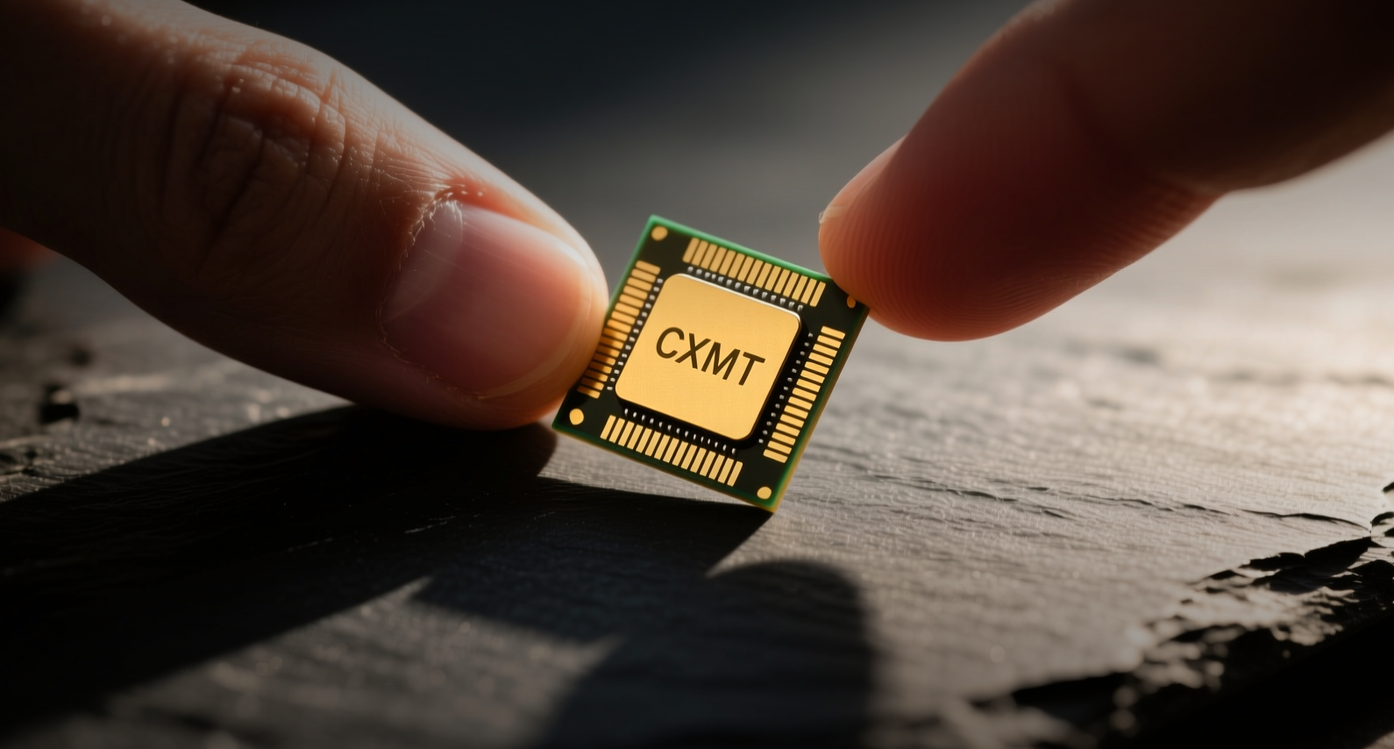
Apple is lobbying the Trump administration for clearance to buy memory chips from ChangXin Memory Technologies, a Chinese company blacklisted by the Pentagon, as soaring semiconductor costs pressure the iPhone maker's margins.
The iPhone maker approached the Commerce Department more than a month ago and has engaged other administration officials and allies in Washington, the Financial Times reported Friday, citing unnamed sources. Apple declined to comment.
CXMT, China's top memory chipmaker, was designated as a Chinese military company by the Defense Department under the Biden administration and approved for addition to the Commerce Department's Entity List. U.S. companies cannot ship goods, software or technology to entities on the list without a license that is likely to be denied. The lobbying push comes as CXMT plans a 29.5 billion yuan ($4.4 billion) Shanghai IPO, which would be China's largest this year, according to LSEG data.
The request highlights the bind facing major U.S. technology companies as soaring memory chip costs — driven by the AI industry's data center buildout — collide with Washington's national security restrictions on Chinese chipmakers. Apple raised iPad and MacBook prices on Thursday, saying it could no longer shield customers from rising memory and storage chip costs. The company did not disclose the size of the price increases.
Blacklist Challenges Mount
The Pentagon blacklist has become a growing flashpoint in U.S.-China technology relations. Alibaba filed a federal lawsuit against the Defense Department on Tuesday seeking removal from the same list, arguing the designation is "arbitrary and capricious" with "no basis in fact or law." WuXi AppTec filed a similar lawsuit on June 11.
Legal challenges have succeeded before: Xiaomi Corp. and chipmaker Advanced Micro-Fabrication Equipment Inc. both secured their removal from the Pentagon list through litigation. Baidu and BYD, designated at the same time as Alibaba, have also signaled they may pursue legal action.
The blacklist also carries practical consequences beyond direct trade restrictions. A provision of U.S. law that takes effect June 30 bars the Pentagon from entering into contracts with blacklisted firms, while a separate restriction on purchasing their products through third parties follows in 2027. Lobbyists and advocates who had represented Alibaba for years have already informed the company they can no longer do so.
What's at Stake
If approved, Apple's request could ease supply chain constraints and potentially lower memory chip costs for the company, which relies on memory components across its iPhone, iPad and Mac product lines. But it would also represent a significant softening of U.S. export controls on Chinese semiconductor companies — a move that could face opposition from national security hawks in Congress.
If denied, Apple would need to continue sourcing memory chips from other suppliers, including South Korea's Samsung Electronics and SK Hynix, at a time when AI-driven demand has pushed memory prices higher. The last time memory chip prices rose sharply in 2021-2022, Apple's gross margins contracted by roughly 200 basis points over two quarters, according to company filings.
The broader U.S.-China chip war has also reshaped capital markets. Chinese technology companies have raised $3.1 billion from onshore IPOs this year through June 18, more than five times the volume in the same period last year, as Beijing pushes for tech self-reliance. Nearly 50 companies, including robotics startups and semiconductor firms, have applied for listings in Shanghai and Shenzhen with combined fundraising plans of at least 126.1 billion yuan ($18.7 billion).
The Commerce Department has not indicated when it will rule on Apple's request. The Pentagon declined to comment on the matter.
This article is for informational purposes only and does not constitute investment advice.