


Key Takeaways:
- Microsoft will deploy AMD's Helios AI rack platform for frontier model inference
- AMD shares trade near 68x forward earnings, more than double Nvidia's 25x
- Q2 revenue rose 50 percent to $11.54 billion as data center demand accelerates
Key Takeaways:
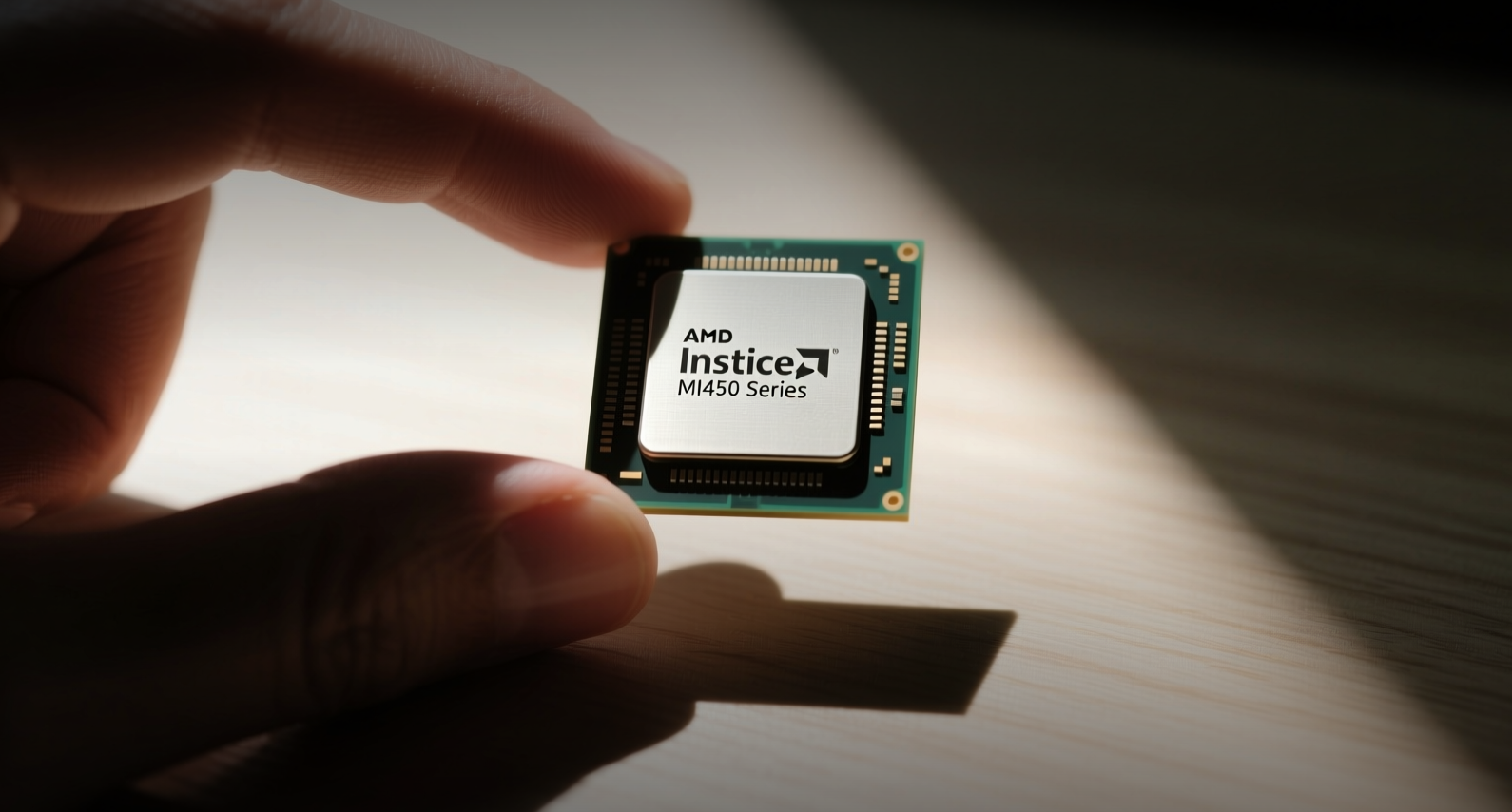
AMD's new partnership with Microsoft to deploy its Helios AI rack platform marks the chipmaker's deepest push yet into the inference market, where Nvidia's grip is weakest — but the deal lands as AMD shares trade at roughly 68 times forward earnings, more than double Nvidia's multiple.
"Microsoft has long looked to diversify its relationship with computing unit suppliers, and its latest deal with AMD is a sure sign of that," Keithen Drury, who holds positions in Microsoft and Nvidia, wrote in a note published Monday. The partnership puts AMD's Helios system — an all-encompassing rack combining graphics processing units, central processing units, networking and software — inside Microsoft's frontier model inference workloads, a segment that lets customers move away from Nvidia products entirely.
Helios is AMD's answer to Nvidia's rack-scale DGX systems, bundling its Instinct GPUs with EPYC server CPUs and networking into a single deployable unit. Microsoft's decision to run frontier model inference on the platform is significant on two fronts: it signals confidence in AMD's hardware for the most advanced models, and it targets inference rather than training, a workload where cost efficiency matters more than peak performance. AMD's MI450 Series GPUs, which power the racks, are also central to a separate strategic partnership with Anthropic covering deployments of up to 2 gigawatts of capacity.
The inference angle is the strategic prize. As the initial AI buildout matures, inference is expected to account for the majority of compute workloads versus training, and AMD is positioning its cheaper products to capture that demand. The company's data center business is already accelerating — record second-quarter revenue of $11.54 billion rose 50 percent year over year, with non-GAAP operating income up 245 percent to $3.09 billion. A 20-year data center deal between Anthropic and Riot Platforms, which currently runs 25 megawatts of capacity for AMD with another 25 under construction and potential to reach 200, adds to the momentum, with Wedbush calling the tie-up positive for AMD and the broader AI hardware sector.
Valuation leaves little room for error
The question is whether the market has already priced in this success. AMD shares have more than doubled in 2026, climbing 224.8 percent from a 52-week low of $149.22, and the stock trades at roughly 68 to 73 times forward earnings — against Nvidia's 25 times — and about 22 times price-to-sales. The company's market capitalization stands near $774 billion, and investors are betting heavily that Instinct GPUs, EPYC server CPUs and Helios solutions will deliver the growth needed to justify the premium.
The Microsoft deal is a strong start, but AMD needs additional marquee clients to grow into its valuation. Drury said he would rather own Nvidia, which is growing faster, remains the industry's top option and trades at a far cheaper multiple. "The stock has run up too far, too fast without any major, needle-moving deals," he wrote. "I'd much rather invest in Nvidia." With AMD's pricey starting point, it could take multiple years of strong growth to return the stock to a normal valuation level — a red flag that leaves little room for execution mistakes as the inference race intensifies.
This article is for informational purposes only and does not constitute investment advice.
