
Amazon's Zoox began charging passengers for driverless rides in Las Vegas on Monday, the first paid service for a purpose-built robotaxi in the US.
Amazon's Zoox began charging passengers for driverless rides in Las Vegas on Monday, the first paid service for a purpose-built robotaxi in the US.
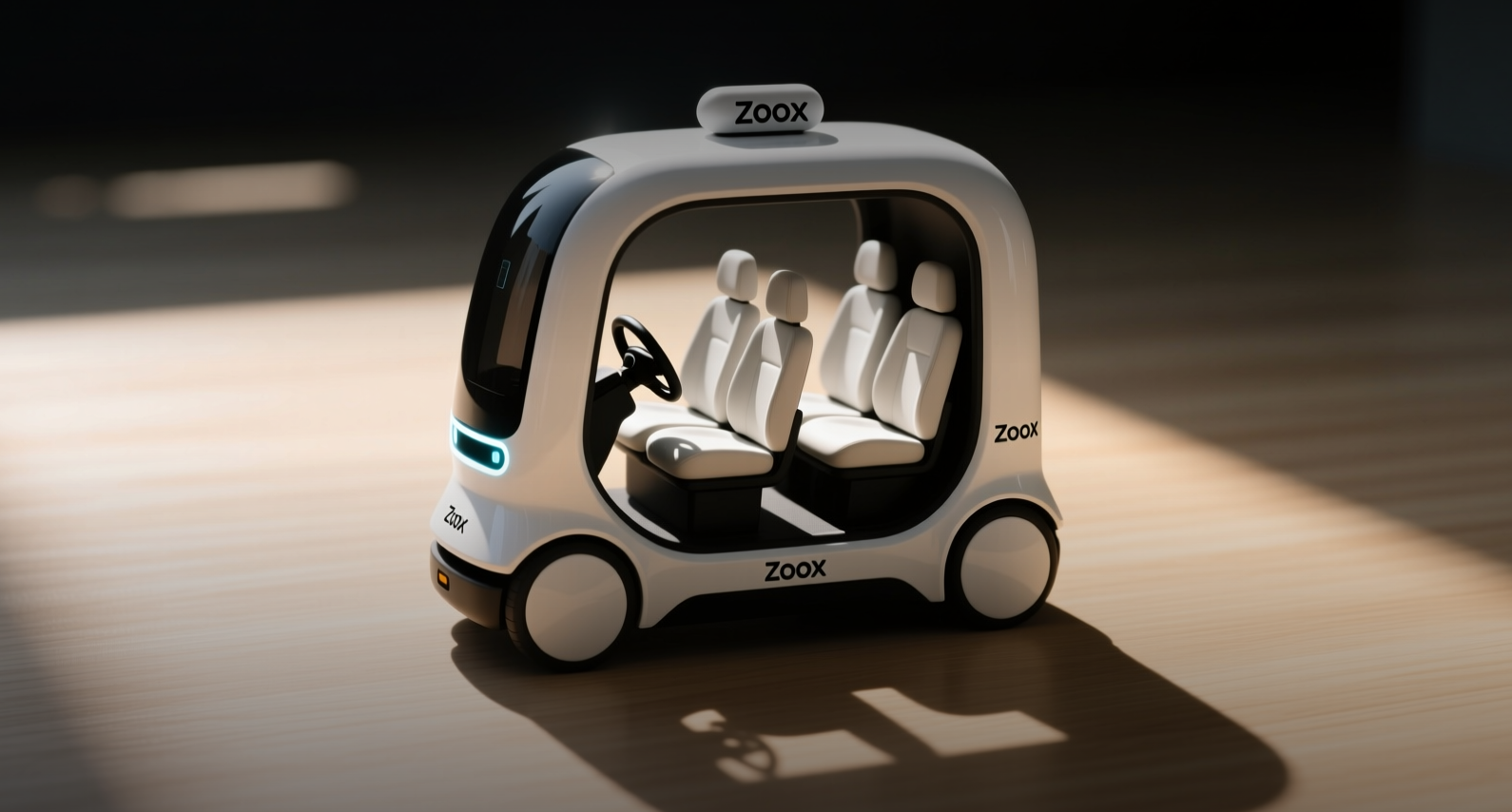
Amazon's Zoox began charging passengers for driverless rides in Las Vegas on Monday, the first commercial deployment of a purpose-built robotaxi under a two-year NHTSA exemption covering up to 2,500 vehicles a year.
"However hard it was to build the technology up to get up to this point, there's a new hard that's coming, which is paid operations, where with the customer, there's an expectation," Aicha Evans, chief executive officer of Zoox, said.
The National Highway Traffic Safety Administration granted Zoox a first-of-its-kind Part 555 exemption on July 30, permitting commercial deployment of up to 2,500 vehicles annually for two years under enhanced oversight. Unlike Alphabet's Waymo, which retrofits existing cars with sensors, Zoox's pill-shaped vehicles have no steering wheel or pedals, seat four passengers facing each other, and can drive in either direction. Fares combine a base fee with distance and time traveled, with possible surcharges for airport or special-event trips.
The launch puts Amazon in direct competition with Waymo, which already runs paid service in more than 10 cities, and Tesla, whose Austin robotaxi rollout has drawn reports of glitches. Zoox has served more than half a million riders and holds another half million on its waitlist, with Austin and Miami next on its expansion list.
Zoox's vehicles differ from rivals because they were designed from the ground up for autonomy rather than retrofitted. The carriage-style cabin, with four inward-facing seats and screens for temperature and music controls, is possible only because there is no driver. The bidirectional drivetrain lets the vehicle reverse direction without turning around, a feature that helps in tight urban maneuvers.
The design also created regulatory hurdles. NHTSA administrator Jonathan Morrison wrote in July that an autonomous vehicle unable to safely interact with first responders poses a danger to the public. The concern follows a June incident in which a Zoox robotaxi drove into heavy smoke at an active emergency scene in Las Vegas. The company issued a software recall and updated its technology to better detect fire and smoke. Evans said the company believes in transparency and takes responsibility for such rare edge cases, using software, firmware, and simulation to root-cause issues and deploy fixes.
Zoox's paid service operates from 11 a.m. to 1 a.m. across a wide swath of the Las Vegas Valley, with rides in San Francisco remaining free until further notice. The company said it aims to price competitively with other ride-hail services' comfort-level tiers, with the full fare visible before booking.
Waymo, the Alphabet unit leading the robotaxi race, launched its larger, cheaper-to-produce Ojai vehicle this spring in Los Angeles, San Francisco, and Phoenix. The Ojai keeps a steering wheel and pedals but adds accessibility features such as elevator-style doors and low step-in entry. Tesla's robotaxi service, which began in Austin in 2025, has faced reports of speeding and wrong-lane driving.
For Amazon, the Las Vegas launch marks a milestone in a strategy that has absorbed years of development costs. The company has not disclosed Zoox's spending, but the commercial rollout gives it a revenue stream in a market where Alphabet's Waymo and Tesla are also competing for share. Zoox's expansion to Austin and Miami, plus a half-million-strong waitlist, will determine whether Amazon can close the gap with Waymo's 10-plus-city footprint.
This article is for informational purposes only and does not constitute investment advice.
