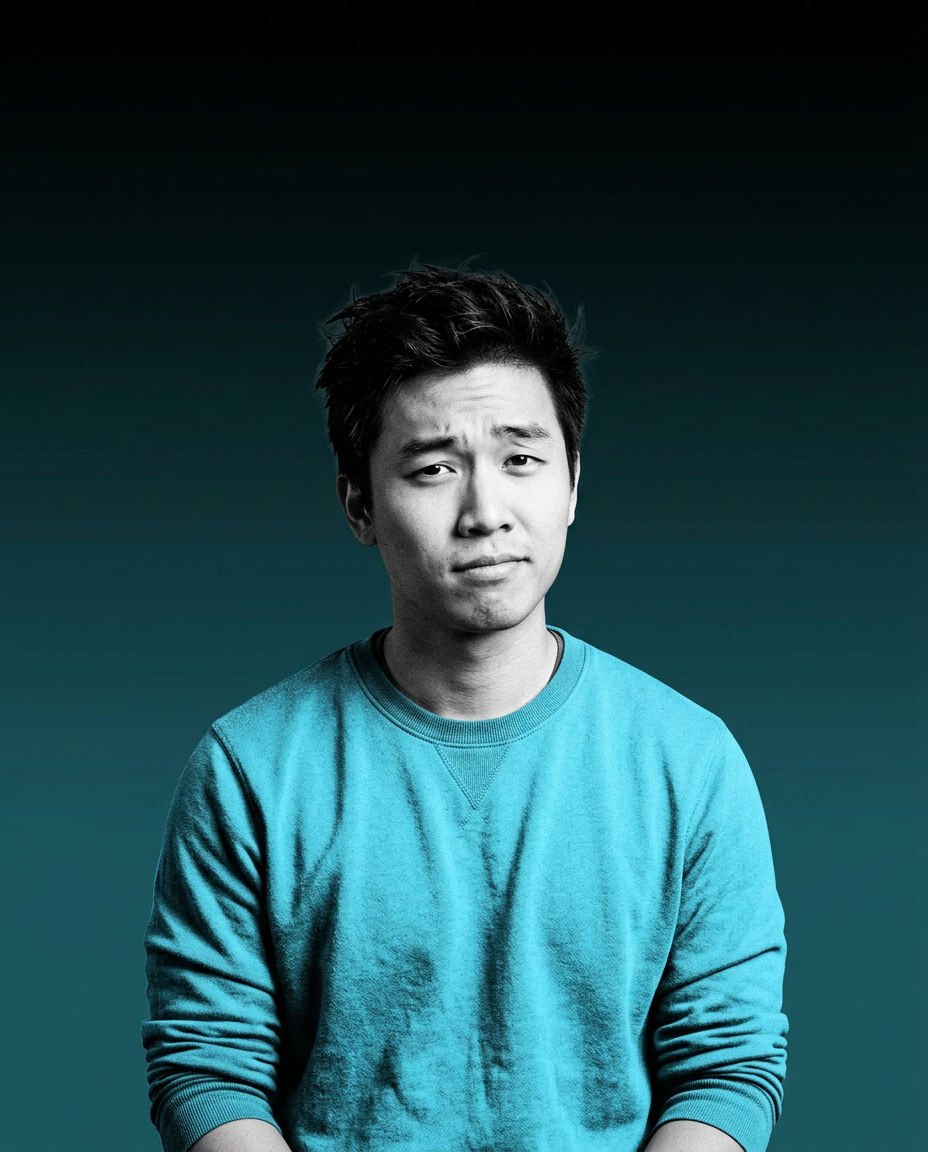
OpenAI's Sam Altman called rival Anthropic's AI safety agenda "anti-human," arguing that restricting frontier-model access would hand power to a few companies.
OpenAI's Sam Altman called rival Anthropic's AI safety agenda "anti-human," arguing that restricting frontier-model access would hand power to a few companies.

OpenAI Chief Executive Sam Altman called rival Anthropic's AI safety agenda "anti-human," arguing that restricting access to frontier models would concentrate power in a handful of companies and strip ordinary users of any say over the technology.
"The right approach is to want people deeply in control of the future," Altman said on David Senra's Founders podcast, released Sunday. "Society and the models are going to co-evolve."
Altman's remarks, delivered without naming Anthropic, took aim at two figures its chief executive Dario Amodei has cited publicly: a 25 percent probability AI destroys civilization and 50 percent of jobs disappearing. He framed the safety-first position as trading liberty for safety, warning that fear of an AI takeover could justify handing control to a few companies.
The clash comes as both labs prepare for public listings — OpenAI at a reported valuation above $850 billion and Anthropic expected to debut within the year — and as Washington weighs whether to regulate frontier models. Altman also confirmed OpenAI merged ChatGPT and Codex into a single platform and cut two products, Sora and the Atlas browser, to focus compute on its core model.
Altman's broadside lands at a moment when the two dominant AI labs are diverging sharply on how much control to hand users. Anthropic was the only major AI company last month to decline signing a letter endorsing open-weight models, which let developers download, modify and run models on their own infrastructure. OpenAI, while keeping its frontier models closed, released two open-weight models last year, gpt-oss-120b and gpt-oss-20b.
China has embraced the open-weight approach, matching Silicon Valley's best models at a fraction of the cost. Nvidia, Meta and Microsoft argue the United States must do the same or risk ceding ground in the AI race. Altman's critique reframes that debate: the real risk, he said, is not that AI escapes human control but that a few companies decide who gets to use it.
"Because ordinary people are not to be trusted, the strongest models cannot be freely opened, and how the technology is used and who can use it should be decided by a few AI companies," Altman said, summarizing the safety-first position he rejects. "As compensation, they will cure cancer, create wealth and provide endless entertainment, so everyone lives a decent life."
He called that bargain "a poisoned pill wrapped in honey" and, in his bluntest line, "anti-human."
OpenAI's platform bet: one model, fewer products
Altman used the interview to lay out a sharper product strategy. OpenAI has folded ChatGPT and Codex into a single interface — what he described as "a personal or company AGI" — alongside an API for developers to build on top. He acknowledged Codex was poorly named because it does far more than write code.
The consolidation came at a cost. OpenAI cut Sora, its video-generation tool, and the Atlas browser, both of which Altman called good products that consumed compute better spent on the core model. "Killing good ideas to pursue great ones is the hardest lesson for every founder and company," he said.
The strategy reflects a bet that a unified platform, not a portfolio of apps, will capture the value of increasingly capable models. Altman said OpenAI aims to cover the full cost and performance curve, from high-end models for scientific discovery to cheap, high-volume inference.
The open-weight divide widens
The feud with Anthropic is more than rhetorical. Altman's critique of safety-driven centralization maps directly onto the open-weight debate, where Anthropic has taken the most restrictive stance among major labs. Amodei has warned that new models present "very real risks" to cybersecurity, financial systems and critical infrastructure, and has advocated greater government regulation.
Altman rejected that path. "There are a lot of people who are so nervous about the magnitude of those risks and feel a need to protect the world," he said. "Like, 'we should trade off a lot of liberty for safety.'"
The stakes are commercial as well as philosophical. OpenAI has filed to list on the stock market at a reported valuation above $850 billion, and Anthropic is expected to follow within the year. Both are racing to stay ahead of Chinese labs that release open-weight models a few months behind the frontier.
Altman also conceded he misjudged the speed of AI adoption. He said he expected GPT-4, released in 2023, to upend software businesses quickly, but economic inertia has slowed the transition. He called the lag a stabilizing force that will make the shift "smoother and slower."
Still, he predicted an AI-driven boom in small business formation. "We are about to see the greatest boom in people starting smaller businesses than we have ever seen," he said.
For investors, the takeaway is a widening strategic split between the two largest private AI companies. OpenAI is betting that broad access to a unified model drives adoption and revenue; Anthropic is betting that safety controls justify premium pricing and regulatory favor. Which bet wins will shape the valuation of both companies as they head toward public markets.
This article is for informational purposes only and does not constitute investment advice.
