
Alibaba's Qwen3.8-Flash delivers frontier-level performance with just 6 billion active parameters, cutting training costs 90 percent and resetting the economics of open-weight AI.
Alibaba's Qwen3.8-Flash delivers frontier-level performance with just 6 billion active parameters, cutting training costs 90 percent and resetting the economics of open-weight AI.
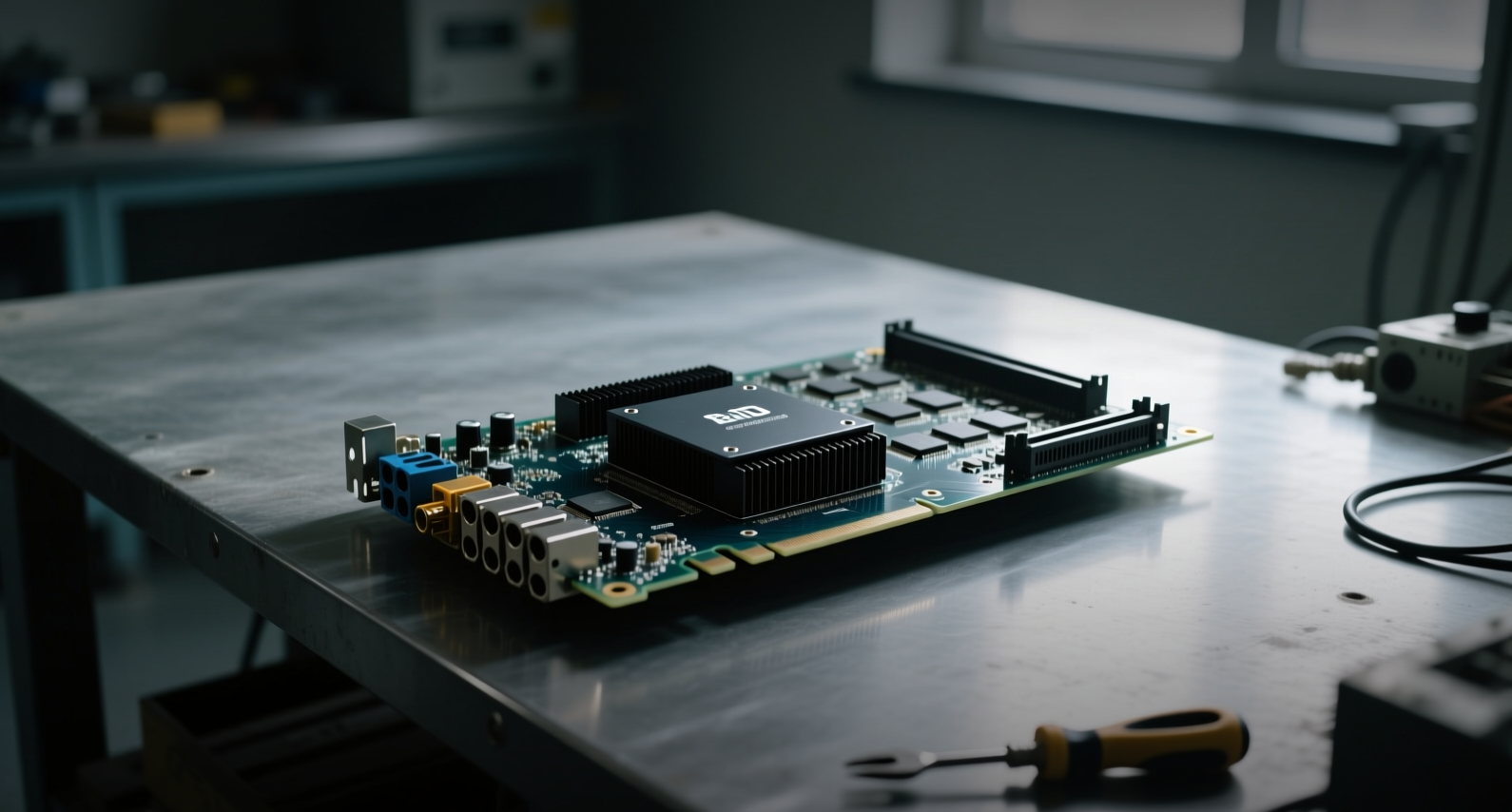
Alibaba's Qwen3.8-Flash activates just 6 billion of its 100 billion parameters to match frontier performance, cutting training costs 90 percent and undercutting DeepSeek-V4-Flash pricing by two-thirds.
"The next Qwen wave is coming," the Qwen team at Alibaba said on X, as the company released the model on its Qwen Office platform and Qwen AI API on Aug. 26.
Qwen3.8-Flash uses a new architecture that achieves efficiency through sparse activation — only 6 billion of 100 billion total parameters fire per inference. The model is priced at 1 yuan per million input tokens and 3 yuan per million output tokens, roughly one-third of DeepSeek-V4-Flash's rate. Training costs fell nearly 90 percent compared with Qwen3.7-Plus, according to the company. Alibaba did not disclose the benchmark conditions under which Qwen3.8-Flash claims to exceed Claude Opus 4.6.
The release follows Qwen3.8-Max's debut earlier this month, a 2.4-trillion-parameter open-weight model that scored 67.7 on SWE-bench Pro — beating OpenAI's GPT-5.6 Sol at 64.6 — while pricing at $2 per million input tokens and $6 per million output tokens. Alibaba's American depositary receipts rose more than 4 percent after that announcement. The company is also scheduled to release Qwen3.8-Flash-Next on Aug. 27 at 12 a.m. Japan time, a multimodal mixture-of-experts model built on the Qwen4 architecture, giving developers early access ahead of the full Qwen4 family launch.
The 6-billion-active-parameter design places Qwen3.8-Flash in a class of models achieving frontier-level results at a fraction of the compute cost. Anthropic's Claude Opus 4.6 Thinking leads aggregated SWE-bench Pro rankings at roughly 80 points, but its API pricing is not publicly disclosed in the same comparison tables. OpenAI's GPT-5.6 Sol charges $5 per million input tokens and $30 per million output tokens on its direct API, with a 2x input surcharge above 272,000 tokens.
Alibaba's pricing strategy targets developers who prioritize cost efficiency and customization. The open-weight approach — with Qwen3.8-Max's checkpoint available on Hugging Face and ModelScope since Aug. 12-13 — competes directly with Meta's Llama series and Mistral for self-hosted deployments. The Qwen3.8-Max open weights ship under a custom license requiring separate commercial terms for companies with cumulative revenue above $50 million using the model in Model-as-a-Service or AI work assistant businesses. Internal corporate use remains free as long as software or outputs are not provided to third parties.
The Qwen3.8-Flash follows a pattern established with Qwen3.5-Flash, which was a feature-enhanced version of Qwen3.5-35B-A3B (35 billion total parameters, 3 billion active). Whether Qwen3.8-Flash corresponds to a similarly scaled Qwen3.8-35B-A3B remains unclear, as Alibaba has not disclosed the parameter count of the Flash-Next variant scheduled for release on Aug. 27.
Alibaba's T-Head AI chips supply over 60 percent of the company's chip capacity to external customers, according to the company, insulating it from U.S. export controls that restrict Nvidia's advanced GPUs to China. The combination of proprietary silicon and aggressive model pricing strengthens Alibaba's cloud and AI revenue narrative. BABA ADRs rose more than 4 percent following the Qwen3.8-Max announcement, and the Qwen3.8-Flash release extends that momentum.
The broader implication: open-weight models are closing the gap with closed frontier APIs faster than most developers expected. Qwen3.8-Max's SWE-bench Pro score of 67.7 versus GPT-5.6 Sol's 64.6 — at roughly one-fifth the output price — represents the clearest data point yet that the open-versus-frontier gap has narrowed to near parity on coding benchmarks. Qwen3.8-Max also posted 86.6 on Terminal-Bench 2.1 and 92.6 on GPQA Diamond, with Alibaba describing the gains as strongest in multimodal and agentic categories rather than general reasoning.
For enterprises evaluating model deployment, the choice increasingly comes down to cost per benchmark point. Qwen3.8-Max's $6 output price divided by its 67.7 SWE-bench Pro score yields roughly $0.089 per point, versus GPT-5.6 Sol's $30 output price at 64.6 points — about $0.46 per point, a more than 5x gap. Self-hosting the open-weight checkpoint removes per-token costs entirely, though the 2.4-trillion-parameter model requires a multi-GPU inference cluster running frameworks such as vLLM or SGLang.
This article is for informational purposes only and does not constitute investment advice.
