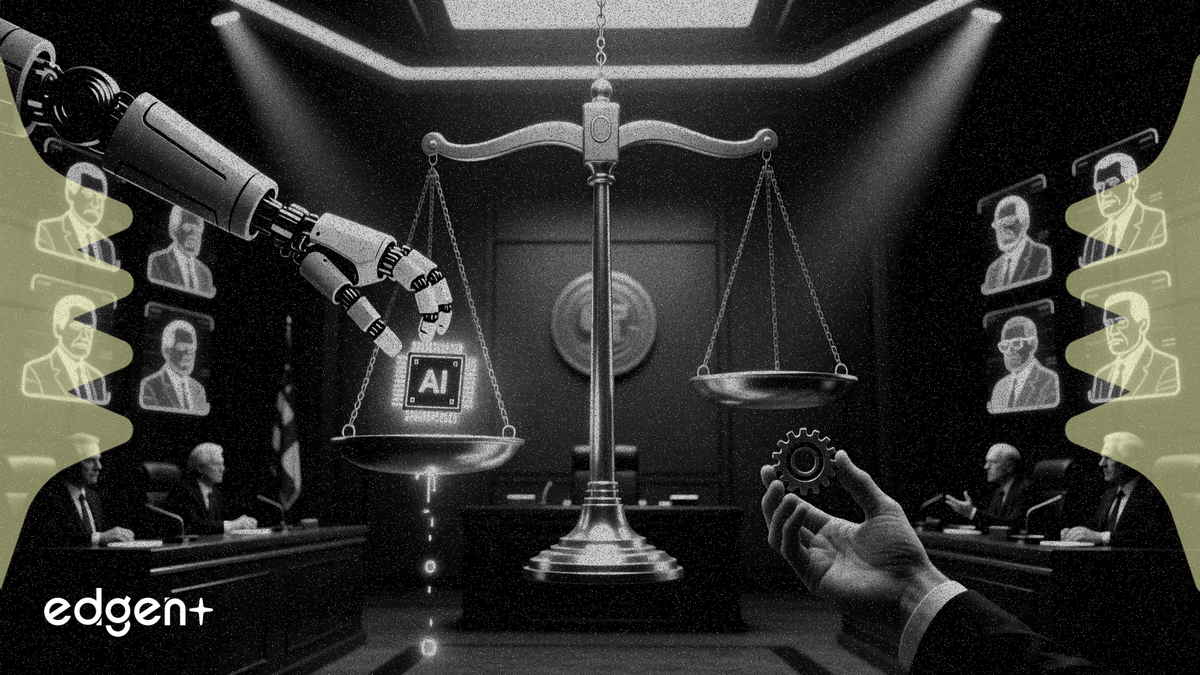
Economists broadly agree artificial intelligence will boost productivity but remain deeply divided on whether the technology will eliminate more jobs than it creates, a Wall Street Journal survey of 16 leading economists found.
"Whether those gains are broadly shared, and whether the workers whose careers are destroyed make successful transitions, these things do not depend on the technology," David Autor, professor at the Massachusetts Institute of Technology, told the Journal. "They depend on the societal institutions and policies we build to share the gains and redress the costs."
All 15 economists who answered the question said AI will meaningfully bolster labor productivity in the near term. Yet when asked whether AI will lead to net job losses or gains across the economy, eight respondents predicted no net change, five forecast a net loss, and only two — Ajay Agrawal of the University of Toronto and Jed Kolko of the Peterson Institute — projected net job growth. The survey, published June 10, included Nobel laureate Daron Acemoglu, former White House economic advisers Jason Furman and Tomas Philipson, and academics from Harvard, Stanford, Yale and MIT.
The split reflects a fundamental uncertainty about how AI will reshape labor markets at a time when companies are pouring billions into data centers and AI tools while, in some cases, rethinking headcount. The economists were similarly divided on whether AI will replace or complement workers: eight said complement, five said replace. On income inequality, seven said AI will widen the gap between highly educated and less educated workers, while five said it will narrow and two predicted no change.
Productivity Gains Are the Consensus
The near-unanimous view on productivity stands in contrast to the disagreement on employment. Nicholas Bloom of Stanford University said education remains the best defense. "Educated people are more flexible, so education is key for us and our kids," he said.
But the path from productivity to broad prosperity is not automatic. Autor warned that the US "does not have a glorious history" of sharing technology's gains broadly. Michael Strain of the American Enterprise Institute noted that the Industrial Revolution left real wages stagnating for four decades, and the Information Age left many workers behind. "I see no reason to believe that the AI revolution will be different," he said.
The survey also revealed a split on which workers will benefit. Justin Wolfers of the University of Michigan said AI "is a revolution coming squarely at white-collar workers," comparing it to what blue-collar workers experienced in the 1970s. Autor argued that entry-level workers may benefit as AI compresses learning curves, while experienced workers in routine information-processing roles face displacement risk.
White-Collar Risk and the Offshore Shift
Several economists identified specific sectors most exposed. Bloom said the first industry to be hit will be offshoring, with firms already cutting demand for outsourced coding and call center work in countries such as India and the Philippines as they switch to AI. Agrawal said information-dense sectors like health care, education and finance will be the biggest winners, while traditional middlemen in legal, real estate and administrative services face collapsing business models.
The economists were also asked whether AI will reduce or expand demand for white-collar jobs. Five said reduce, six said no change, and three said expand. On hiring practices, seven predicted AI will have a major impact on how companies hire and develop talent over the next five years, while six said some impact and one said minimal.
Pascual Restrepo of Yale said that if AI lowers the cost of routine work, it raises the value of everything else — including interpersonal skills. Daron Acemoglu agreed, saying social skills will become more important "all the more so if AI can be redirected to work and collaborate with human employees."
The survey underscores a broader challenge facing policymakers and business leaders: how to capture AI's productivity potential while managing the transition for workers. As Rebecca Henderson of Harvard Business School put it: "I don't think we've ever really seen anything moving with this scale and speed before. It's going to be a wild ride."
This article is for informational purposes only and does not constitute investment advice.