

Williams Companies closed its $5.5 billion Momentum Midstream acquisition, expanding its Haynesville network with 4,000-plus pipeline miles and 6 Bcf/d of gathering capacity to serve Gulf Coast LNG and power demand.
Williams Companies closed its $5.5 billion Momentum Midstream acquisition, expanding its Haynesville network with 4,000-plus pipeline miles and 6 Bcf/d of gathering capacity to serve Gulf Coast LNG and power demand.
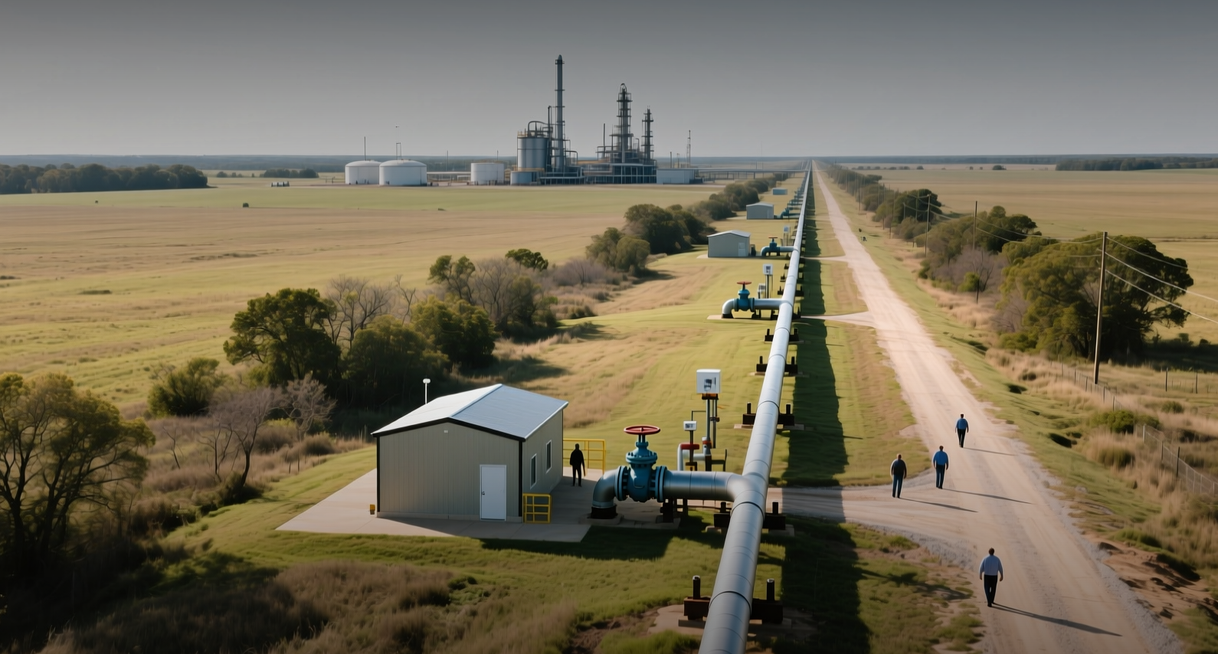
Williams Companies completed its $5.5 billion Momentum Midstream takeover on Sept. 4, adding 4,000-plus pipeline miles and 6 Bcf/d of Haynesville gathering capacity as Gulf Coast LNG demand accelerates.
"This acquisition establishes a premier Haynesville position and strengthens our ability to serve growing LNG, power and industrial demand along the Gulf Coast," Chad Zamarin, president and CEO of Williams, said in a statement.
The transaction comprised approximately $3.5 billion in cash and debt consideration and roughly $2 billion in Williams equity. Momentum's platform includes more than 1 million dedicated acres, multiple processing and treating facilities, and three take-or-pay pipelines with about 4.05 Bcf/d of transportation capacity.
The deal gives Williams a larger integrated platform in one of the most strategically important natural gas-producing regions in the US. Gulf Coast LNG terminals, gas-fired power plants serving data centers, and industrial facilities are competing for Haynesville supply, and Williams has already announced two expansion projects on the acquired platform. The company expects the infrastructure to provide a foundation for additional growth as demand develops.
Contracted cash flows anchor the deal's economics
Momentum's take-or-pay contract structure is central to the acquisition's appeal. Unlike exploration and production companies, midstream operators earn fee-based revenue largely insulated from commodity price swings. The acquired contracts give Williams revenue visibility that supports its broader natural gas strategy of moving supply from producing basins to demand centers along the Gulf Coast and Southeast.
The acquisition also reflects a broader consolidation pattern across US midstream. Williams' $5.5 billion commitment exceeds the $4.425 billion that a peer paid for Brazos Midstream assets, reflecting management's conviction that Haynesville gas will be needed to meet rising LNG export capacity. The US is on track to nearly double LNG export capacity by 2030, with several new terminals under construction along the Texas and Louisiana coasts.
Transco and organic projects add another growth layer
Beyond the Momentum deal, Williams is advancing organic projects that complement its expanded footprint. The company's Transcontinental Gas Pipe Line — the largest interstate natural gas pipeline in the US — anchors its Southeast strategy. The Southeast Supply Enhancement project is planned to add 1.6 Bcf/d of southbound capacity in the second half of 2027, with early service possible in North Carolina. The project includes a compressor station reversal at Station 135 in Anderson County, South Carolina, along the Transco mainline corridor.
The physical network changes are designed to relieve bottlenecks such as Station 165 in Pittsylvania County, Virginia, ultimately improving flow to markets like Spartanburg County, where a 457-megawatt gas power plant is planned to support artificial intelligence data center operations. Every cubic foot of gas burned at such dedicated plants must travel through interstate pipelines before reaching the site, making Transco's Zone 5 increasingly strategic as data center operators seek dedicated gas supply for on-site generation.
Williams is also progressing the Constitution pipeline, a 125-mile line that would move Marcellus Shale gas from Pennsylvania to upstate New York. The Federal Energy Regulatory Commission issued a favorable environmental assessment for the project, with public comment open until Sept. 21. If approved, the pipeline would add a new revenue stream and improve system utilization.
The combination of the Momentum acquisition, Southeast Supply Enhancement and Constitution pipeline gives Williams a multi-year pipeline of growth initiatives. Each project layers additional fee-based cash flows onto the base business, though investors will watch total capital spending, expected returns and any changes to dividend policy as these projects progress.
For shareholders, the key question is whether Williams can translate the larger asset base into sustainable earnings growth while maintaining a disciplined balance sheet. The $5.5 billion transaction represents a substantial investment, making the performance of the acquired assets critical to future returns. WMB shares traded near $75.27 on Aug. 31, up 2.09 percent for that session, as investors weighed the deal's strategic merits against integration risk. The company's ability to execute on both the Momentum integration and its organic expansion pipeline will determine whether the acquisition delivers the shareholder value management has promised.
This article is for informational purposes only and does not constitute investment advice.
