

TSMC reported record August revenue, up more than 53% year over year and over 10% from July, the strongest monthly signal yet that AI accelerator demand is still accelerating.
TSMC reported record August revenue, up more than 53% year over year and over 10% from July, the strongest monthly signal yet that AI accelerator demand is still accelerating.
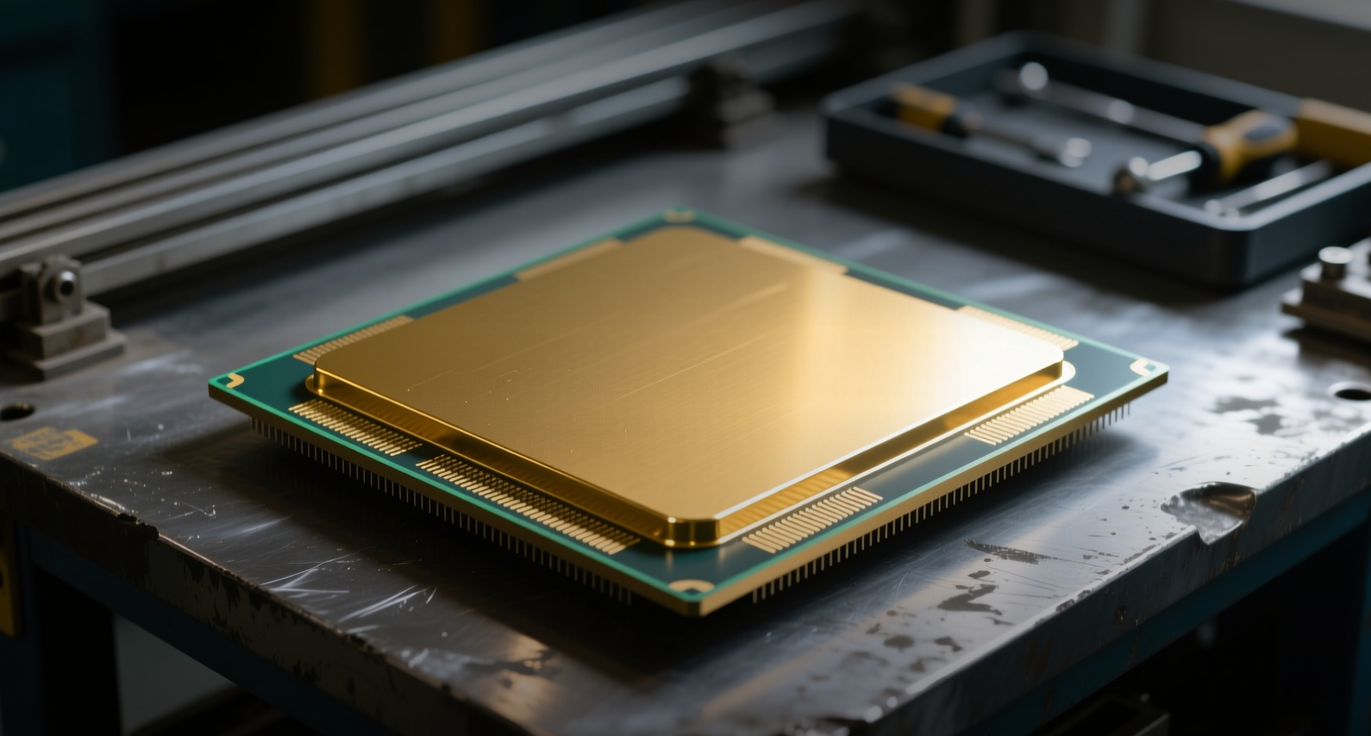
TSMC's August sales climbed more than 53% from a year earlier to the highest monthly total in its history, a print that lands as the sharpest available read on how much advanced-node capacity the AI buildout is actually consuming. Revenue rose over 10% from July, according to the company's monthly disclosure published Sept. 10 in Taipei. The dollar figure was not disclosed in the release.
"The monthly number is the closest thing the market gets to a real-time demand gauge for leading-edge logic," said Dan Nystedt, a Taipei-based semiconductor analyst who tracks TSMC's monthly filings. "A record August, in a month that is normally seasonally soft ahead of the year-end phone cycle, tells you the AI accelerator orders are not slowing."
The comparison base matters. TSMC's August 2025 revenue was already elevated by the first wave of Nvidia Blackwell wafer pulls, so a 53% year-over-year gain is stacked on a strong prior-year month rather than a depressed one. The 10% sequential increase is the more telling figure for near-term momentum: it implies monthly revenue is still climbing rather than plateauing at a high level, which is what a maturing order book would look like.
Advanced nodes carry the load. TSMC's N3 family (the 3-nanometer generation, which packs more transistors per square millimeter and improves performance per watt) is the process behind Nvidia's Blackwell and Rubin accelerators, AMD's MI300 and MI350 series, and Apple's A-series and M-series chips. N2, the 2nm node, entered risk production in 2025 with volume ramp targeted for 2026. Every wafer allocated to an AI accelerator is a wafer not available to a smartphone or PC customer, and TSMC has been explicit that AI demand is crowding out capacity rather than filling idle lines.
The constraint on AI accelerator shipments has not been the logic die for at least two years. It is CoWoS, TSMC's chip-on-wafer-on-substrate advanced packaging, which stacks high-bandwidth memory alongside the compute die. Nvidia's H100 and B200 parts each consume multiple CoWoS units, and TSMC has been doubling packaging capacity roughly annually to keep pace. Amkor and ASE Technology handle some outsourced packaging volume, but the most advanced CoWoS steps remain single-sourced at TSMC, which gives the company pricing power that a pure foundry model would not normally support.
That pricing power is the part of the story the revenue line only partly captures. Advanced-node wafer prices have risen with each generation, and N2 wafers are expected to carry a meaningful premium to N3. If August's record came with a richer node mix, the margin implication for the September quarter is larger than the top-line growth alone suggests.
The read-across runs in both directions. Nvidia, AMD, and Broadcom all depend on TSMC capacity for their accelerator roadmaps, so a record month is evidence their orders are being filled rather than deferred. Equipment suppliers tied to leading-edge capex, including ASML for lithography and Applied Materials for deposition and etch, see their order books move with TSMC's expansion plans. On the other side, Samsung Foundry and Intel Foundry are competing for the same AI customers with less mature yields at the leading edge, and a TSMC capacity crunch strengthens the case for customers to qualify a second source — a slow process that has not yet produced a meaningful share shift.
TSMC guided to third-quarter revenue of $31.8 billion to $33 billion when it reported second-quarter results in July, a range that already implied roughly 38% year-over-year growth at the midpoint. Two months of data now sit above that trajectory. July and August combined put the company on track to land at or above the top end of the range, barring a September collapse, and the monthly cadence suggests the fourth quarter will be set up by AI accelerator demand rather than by consumer electronics.
Investors have already paid for part of this. TSMC's Taipei-listed shares have re-rated through 2026 on the AI capex cycle, and the American depositary receipts trade at a premium to the broader semiconductor index. The question the August print does not answer is whether hyperscaler capital spending — the source of the accelerator orders — can keep growing at the current rate into 2027, or whether the record month marks a peak in the rate of change rather than the level. Microsoft, Amazon, Alphabet, and Meta have all raised 2026 capex guidance this year, and that spending is what converts into TSMC wafer revenue with a lag of roughly two to three quarters.
For now, the monthly number does what monthly numbers are supposed to do: it removes doubt about the near term. A record August with double-digit sequential growth is not the profile of a demand cycle rolling over.
This article is for informational purposes only and does not constitute investment advice.
