Crude extended its advance into a second session Wednesday, with Brent and WTI both up nearly 1 percent in early trade as fresh US strikes on Iranian Revolutionary Guard targets overnight dimmed any prospect of a quick de-escalation in the six-month Middle East conflict. The move follows a surge of almost 3 percent on Monday, when Washington and Tehran exchanged fire for the first time in over a month.
"The market is repricing the risk that the Strait of Hormuz becomes a contested waterway again, and that premium is not coming out until there is a durable ceasefire," said Omar Tariq, a commodities strategist who previously covered oil for Bloomberg in London. "Every strike round resets the floor under prices."
US Central Command said it began striking Islamic Revolutionary Guard Corps targets in Iran at 12 p.m. ET Tuesday, in response to "recent attempted attacks by the IRGC against commercial shipping in the Strait of Hormuz and against American service members deployed to the region." Iranian state media reported projectiles hitting sites in Chabahar and Konarak, while two Iranian officials said strikes damaged a military base in Bandar Abbas, the perimeter of the airport on Qeshm Island, and targets in Sirik and Jask. President Donald Trump described the strikes as "large and powerful," adding that if Iran retaliates it "will be hit again at a much harder and higher level."
The escalation reverses a monthlong lull that followed Trump's decision to pull back over concerns about dwindling US munition stockpiles and pivot to a campaign of economic pressure on Tehran. The earlier exchange on Sunday, in which Iran fired missiles toward US military targets in Jordan and the United Arab Emirates after Washington struck Iranian rocket launchers on Larak Island, sent global oil prices almost 3 percent higher and drove US stock indexes lower. The IRGC has vowed to retaliate with "crushing" force, and explosions were reported over Aqaba, Jordan after Tehran's pledge.
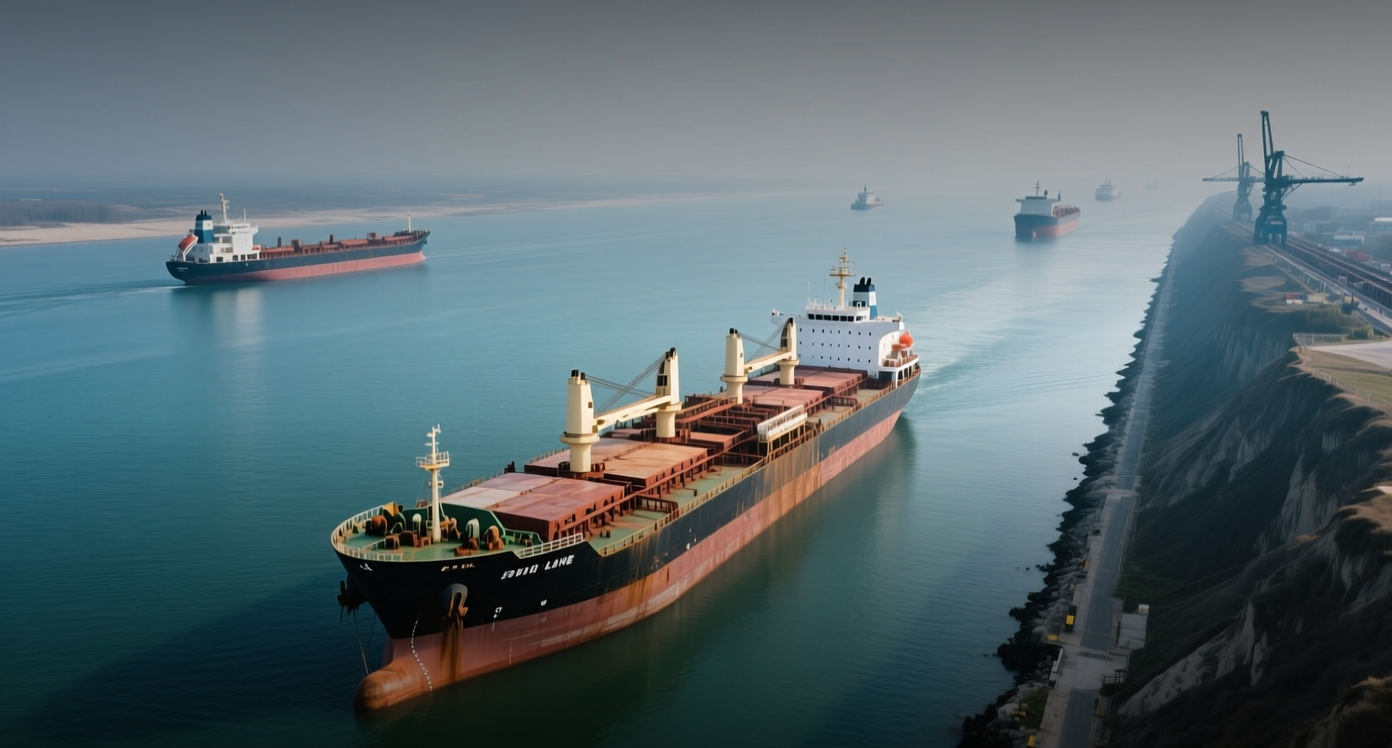
The Strait of Hormuz, through which roughly a fifth of global oil supply transits, sits at the center of the risk repricing. Trump insisted the waterway was in "extremely good shape" with many ships transiting, though tracking data show traffic remains significantly lower than before the war began. The last time the strait's security was openly contested, in the tanker attacks of 2019, Brent spiked more than 14 percent within weeks before easing once shipping lanes reopened.
For energy markets, the stakes are direct: any sustained disruption to Hormuz flows would tighten an already supply-constrained market and feed through to inflation expectations, pressuring central banks to reassess policy paths. Energy equities have absorbed the bid, while airlines, shipping lines and other fuel-intensive sectors face margin pressure. With Iran vowing retaliation and Washington signaling readiness to strike again, traders are pricing continued volatility — the geopolitical premium embedded in crude is unlikely to ease until either side signals a return to the ceasefire that held through July.
This article is for informational purposes only and does not constitute investment advice.