The BIP110 Bitcoin fork has mined more than 800 blocks since relaunching, yet no major exchange lists the asset, leaving it without a tradable market.
"BitcoinBIP110.org strongly recommends that users exercise caution when dealing with Neoxa Exchange," the fork's own website said in a public service announcement, describing the platform as a "high-risk, unverified custodial exchange."
The only quote for the asset comes from Neoxa, a small beta venue that opened deposits under the ticker BTCB2. Bids there topped out near $82 while the lowest ask sat at $190, a 131.7 percent spread that points to almost no real trading. BTCB2/USDC volume reached roughly $94,100 over 24 hours, with the BTCB2/BTC pair logging about $19,300, exchange data shows.
Without a listing on any centralized venue — CoinGecko and CoinMarketCap show no ticker for the asset — the fork's coins cannot be bought or sold through mainstream channels, a constraint that has historically pushed minority chains toward a rapid loss of miner and community interest.
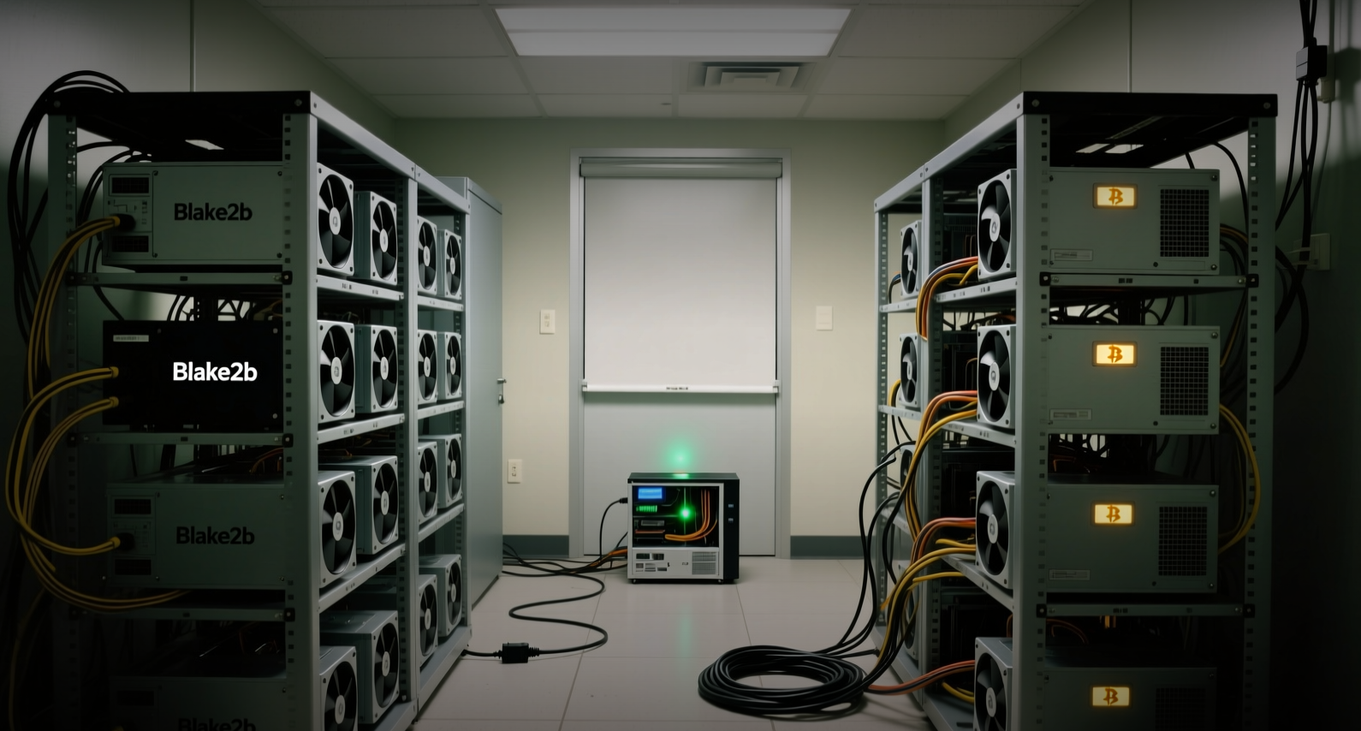
The chain split from Bitcoin at block 961,632 on Aug. 8 when nodes enforcing BIP-110 rejected blocks that did not signal support for tighter limits on non-financial data. Production stalled after a handful of blocks, then restarted over the weekend under new rules: developer Luke Dashjr swapped the proof-of-work from SHA-256d to Blake2b and cut the maximum block size to 300 KB. The first Blake2b block was mined by a pool called Silent Wave at height 961,640.
The algorithm change cut the fork off from the ASIC hardware that secures Bitcoin, so the specialized rigs cannot touch the new chain. More than 99 percent of hash rate stayed on the main network, and only about 2.5 percent of recent blocks had signaled support before the split.
Warnings about the lone venue have spread since BTCB2 began showing a price. A Reddit user in r/cryptocurrency called Neoxa a "scam" after reporting deposit trouble, while a Neoxa associate said on the Knots Discord server that the exchange may delist the coin. "After all the hate we got from you guys, I will rather delist the coin," the associate, named Andy, wrote.
Blockstream Chief Executive Adam Back summed up the reception in seven words on X: "Live by the fork, die by the fork." Bitcoin historian Pete Rizzo called the relaunch a failed fork now running its own incompatible blockchain, while developer Chris Guida said the effort would skip KYC platforms and rely on people earning and spending the coins through goods and services.
The original network kept producing blocks without interruption, with Bitcoin trading near $77,888, up 1.85 percent in 24 hours. Whether the revived chain attracts lasting users and economic activity remains open; for now it exists as a small, independently mined ledger that traces its origin to Bitcoin's Aug. 8 block but no longer follows its consensus or proof-of-work.
This article is for informational purposes only and does not constitute investment advice.