
Deep Cogito's $43 million Series A backs a shift toward owned, specialized AI models over costly proprietary APIs.
Deep Cogito's $43 million Series A backs a shift toward owned, specialized AI models over costly proprietary APIs.
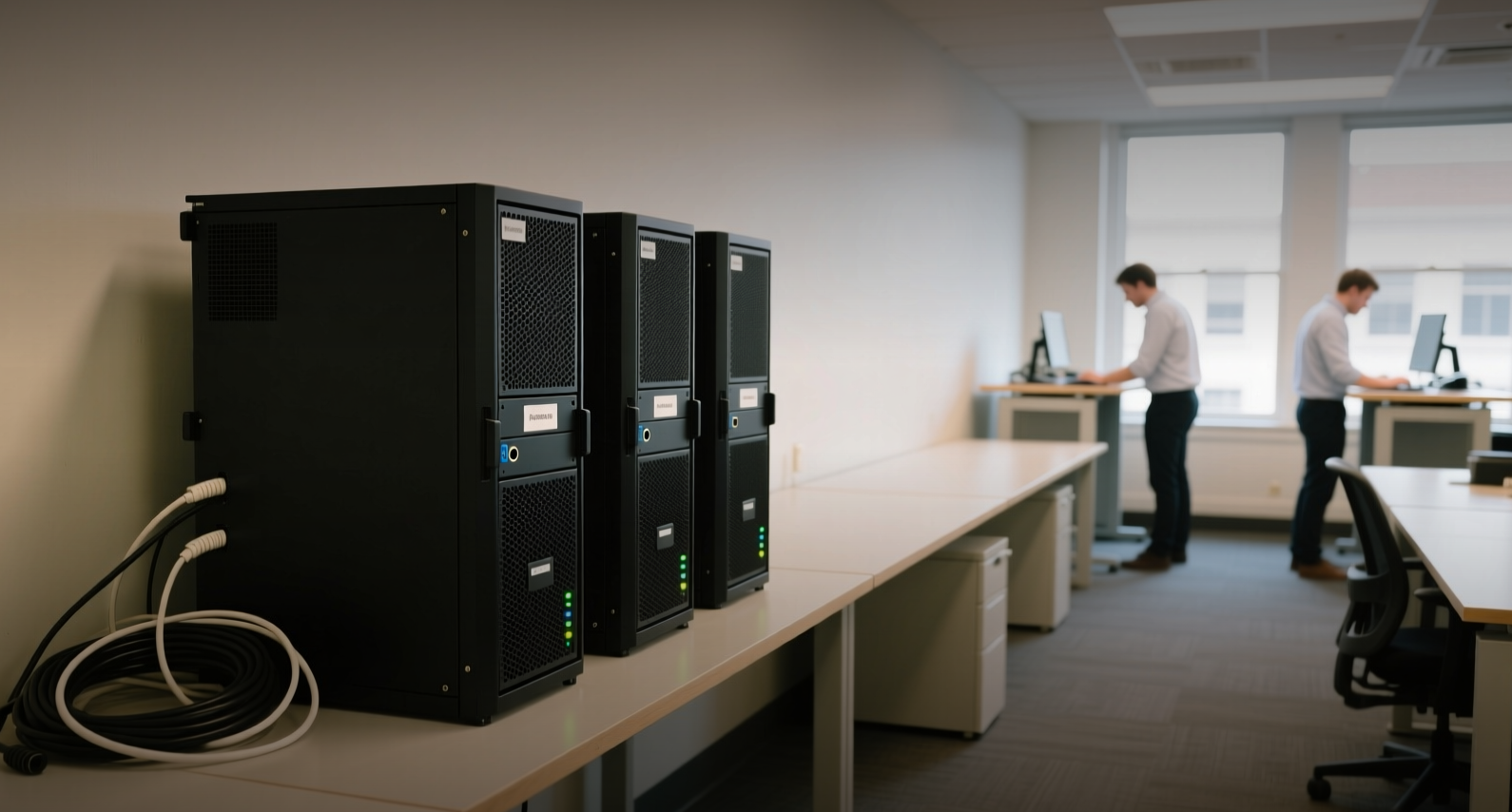
AI research lab Deep Cogito raised $43 million to build open-weight models that companies can own and customize, a bet that enterprises will increasingly reject the cost and lock-in of proprietary frontier AI. The San Francisco-based startup, founded in 2024 by former Google AI Search engineers, focuses on the post-training phase of model development — refining broadly trained models with enterprise-specific data and reinforcement learning.
"We think of them becoming one of the defining companies building open-weight models and specialized enterprise intelligence," Schuster Tanger, co-founding partner at TQ Ventures, which led the round, said. "We think there's an aperture for a highly proficient American solution."
The Series A included Benchmark, Nexus Venture Partners, Atreides Management, South Park Commons and cybersecurity firm Zscaler, bringing total funding past $56 million. Deep Cogito's Cogito family of frontier open-weight models and specialized enterprise models are designed to run on a company's own infrastructure, giving organizations control over proprietary data while cutting inference costs compared with frontier APIs.
The funding lands as China dominates open-weight model supply with DeepSeek, Alibaba's Qwen and Moonshot's Kimi, and as US enterprises weigh the cost of frontier APIs from OpenAI and Anthropic against the control of models they can audit, fine-tune and run on-premise. SemiAnalysis research shows open-source models now take half as long to catch up to the first closed-source model of each generation.
Post-Training Engine Powers Cogito Models
Deep Cogito applies large-scale reinforcement learning, in which a model learns through penalties and rewards, and recursive self-improvement, where a model teaches itself to improve, producing compounding gains in intelligence. One research initiative repeatedly allows a model to use additional computation to produce answers beyond what it can generate directly, then distills those improvements back into the model's weights.
The long-term goal is to build models "that progressively improve their own capabilities and ultimately move beyond the limits of human-generated training data," according to the company.
Arora, a former senior software engineer at Google who most recently modeled the company's generative search, argues that specialized models trained on product-specific data often outperform general frontier models on that product. "Cost is one driver, but the equally important one is performance," he said.
The approach differs from retrieval-augmented generation, which retrieves relevant proprietary data at inference time. RAG is useful for retrieving facts but lacks the capacity for intuitive expertise, Arora said. "As the problem gets a little harder — cybersecurity, coding assistants are a great example — it's hard to write down exactly the kind of code structure you want at all times, but these are the kind of skills that the model can learn over time from your data."
Open-Weight Economics vs. Proprietary APIs
The economics favor open-weight models for many enterprise workloads. Frontier models from OpenAI, Anthropic and Google deliver broad capability but carry premium per-token pricing and usage restrictions. Open-weight models, which publicly share underlying numerical parameters, can be fine-tuned with internal data and deployed on-premise, cutting both cost and data-exposure risk. Meta's Llama and Mistral have demonstrated the viability of this approach, with enterprises deploying dozens of specialized open models alongside proprietary ones.
Zscaler, a strategic investor, is testing Deep Cogito with the goal of deploying it on its own platform and giving users tools to secure AI. "Everyone is worried about the cost efficiency and model economics. Closed-weight models are very efficient, but the cost economics are very expensive, too," Dhawal Sharma, executive vice president of AI security and strategic initiatives at Zscaler, said.
Gartner analysts note that most enterprise needs sit in specific workflows with specific data, and a general-purpose closed model trained on the entire internet is overkill for most of them. "You can't govern what you can't see," said Max Goss, research director at Gartner, on the transparency advantage of open models.
Aaron Levie, CEO of cloud content-management company Box, said recursive self-improvement could be "the most meaningful part of the acceleration that we see" in AI development. "All of the evidence from the labs and the researchers in the labs suggests that we have reached a kind of escape velocity or we're getting close to an escape velocity."
The challenge for enterprises is execution. Building and maintaining specialized models requires skills most companies lack, and the competitive environment is shifting rapidly. Deep Cogito's bet is that companies will increasingly want external help to build models they own — and that the US needs a homegrown alternative to China's open-weight dominance. Zscaler's strategic investment, alongside the broader enterprise shift toward multi-model deployments, suggests the open-weight segment is becoming a meaningful line item in corporate AI budgets.
This article is for informational purposes only and does not constitute investment advice.
