
Beijing's four-part policy essay series clarifies the 2026 GDP target range and pushes back on calls for aggressive stimulus.
Beijing's four-part policy essay series clarifies the 2026 GDP target range and pushes back on calls for aggressive stimulus.
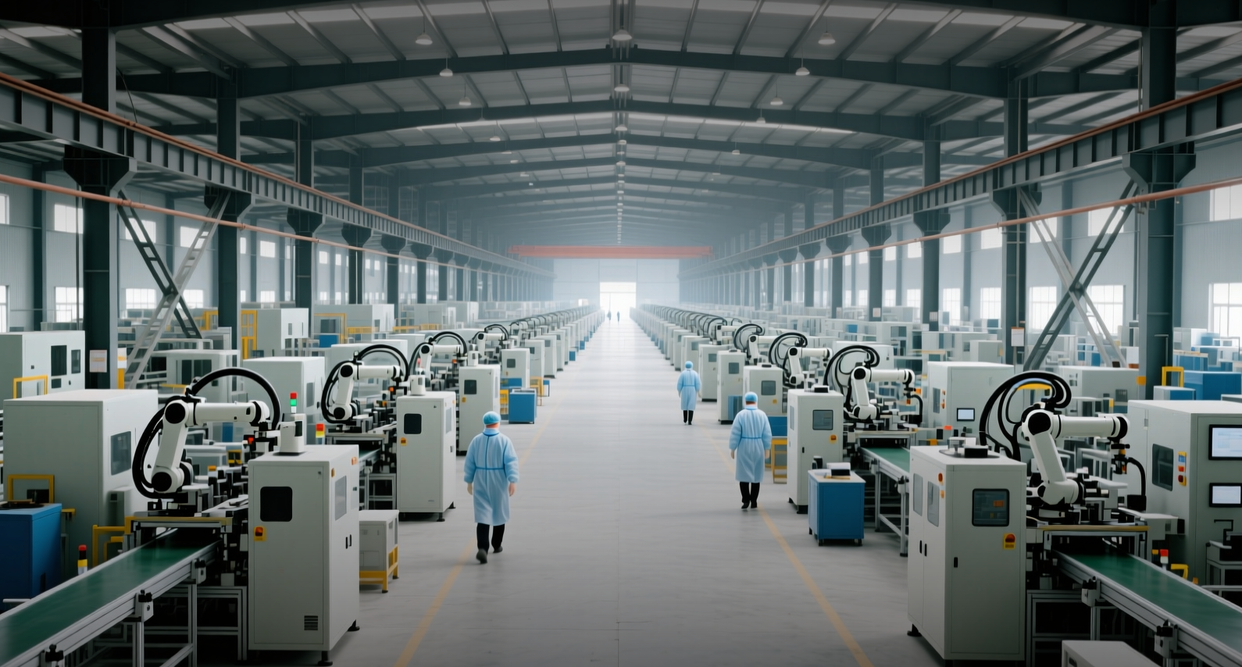
The People's Daily published four consecutive essays under the pen name "Zhong Caiwen" from Aug. 22-25, defending China's 4.7% first-half growth and clarifying the official 2026 GDP target of 4.5%-5%, while rejecting what it called "policy addiction" from oversized stimulus.
"China has not taken the path of overrelying on strong policy stimulus," the third essay said, adding that targeted interventions would function like "acupressure" to address specific vulnerabilities. The byline is widely associated with the Central Financial and Economic Affairs Commission, a key economic decision-making body headed by President Xi Jinping.
The essays follow a string of disappointing July data. Industrial output rose 4.5% year-on-year, below the 5.0% consensus, while retail sales grew just 0.6% versus a 1.5% forecast. Real estate investment fell 19.2% in the January-July period, and the manufacturing PMI dropped to 49.2, the lowest in five months.
The messaging matters for markets because it sets expectations for the Fifth Plenary Session of the 20th Central Committee in October, where the 15th Five-Year Plan's 109 major projects begin rolling out. The essays indicate Beijing will prioritize targeted fiscal and monetary tools over broad-based easing, potentially supporting infrastructure, high-tech investment, and consumer sectors while leaving property and local government debt risks to be managed gradually.
The "Zhong Caiwen" series — the third consecutive commentary defending China's economic resilience — represents a deliberate effort at expectation management. Since 2024, central media have published 23 essays under this byline, typically timed around major economic meetings. The four latest pieces address six market concerns directly: whether growth is decelerating, the so-called "K-shaped divergence," investment declines, macro policy strength, risk control, and whether China is crowding out other economies.
On growth, the essays revealed that the Central Economic Work Conference and the Two Sessions set the 2026 target at 4.5%-5%, a range that accounts for external headwinds. The 4.7% first-half print falls within this band. The essays also pushed back on the "K-shaped divergence" narrative, arguing that structural differences across industries and income groups are normal in any economy, and emphasized that the July 30 Politburo meeting added "accelerating the shift between old and new growth drivers" to its guiding principles for the first time.
On investment, the essays acknowledged that real estate and traditional infrastructure can no longer serve as growth engines at previous levels, but argued this reflects a natural transition rather than an investment "stall." High-tech industry investment continues to grow strongly, and the 15th Five-Year Plan's 109 major projects — including the "six networks" of integrated infrastructure — are expected to support overall investment in the second half.
On policy, the essays were explicit: "Compared with some economies that rely on high debt and high deficits to stimulate growth, China has not taken the path of overrelying on strong policy stimulus." The commentary noted that the national treasury's average daily balance in the first half hit a record high for the period, indicating ample fiscal firepower. "The macro policy toolbox is well-stocked, and the space for countercyclical adjustment remains considerable," it said.
On risks, the essays argued that the three main vulnerabilities — local government debt, real estate, and small and medium financial institutions — are "being resolved in an orderly manner and converging." Evidence cited included new and existing home transaction volumes turning from decline to increase, continued reduction in the number of financing platforms, and a decline in high-risk local financial institutions.
The final essay outlined second-half priorities: expanding quality consumption supply across income groups, leveraging private investment through a new mechanism for private enterprises to participate in national major projects, regulating AI computing power construction to avoid "herding behavior," and curbing "involution-style" competition through unified market legislation.
The unified market regulation is particularly notable. The essays said the government will establish both negative and positive lists for local government investment attraction and corporate competition practices, with the national unified market construction regulation expected this year. This follows the 15th Five-Year Plan's emphasis on breaking down local protectionism.
For investors, the key takeaway is that Beijing is asking for patience. The essays explicitly reject the notion that more stimulus equals better outcomes, arguing that "X trillion" or "X percent" framing oversimplifies macro control. Instead, the government is steering a managed transition — accepting slower growth in traditional sectors while nurturing new drivers in AI, high-tech manufacturing, and services.
The Fifth Plenary Session in October will be the next major policy checkpoint. Hong Kong's Sing Tao Daily noted that September could see simultaneous strengthening of fiscal and monetary policy, with the possibility of increased countercyclical adjustment intensity before the plenum.
This article is for informational purposes only and does not constitute investment advice.
