
Federal Reserve Chair Kevin Warsh's first Jackson Hole address reframed the policy debate from cuts to hikes, pushing September rate-increase odds above 50 percent for the first time since the tightening cycle began.
Federal Reserve Chair Kevin Warsh's first Jackson Hole address reframed the policy debate from cuts to hikes, pushing September rate-increase odds above 50 percent for the first time since the tightening cycle began.
Federal Reserve Chair Kevin Warsh's Jackson Hole inflation warning pushed two-year Treasury yields up 9.5 basis points to 4.325 percent and lifted September rate-hike odds to 55.7 percent from 35.4 percent.
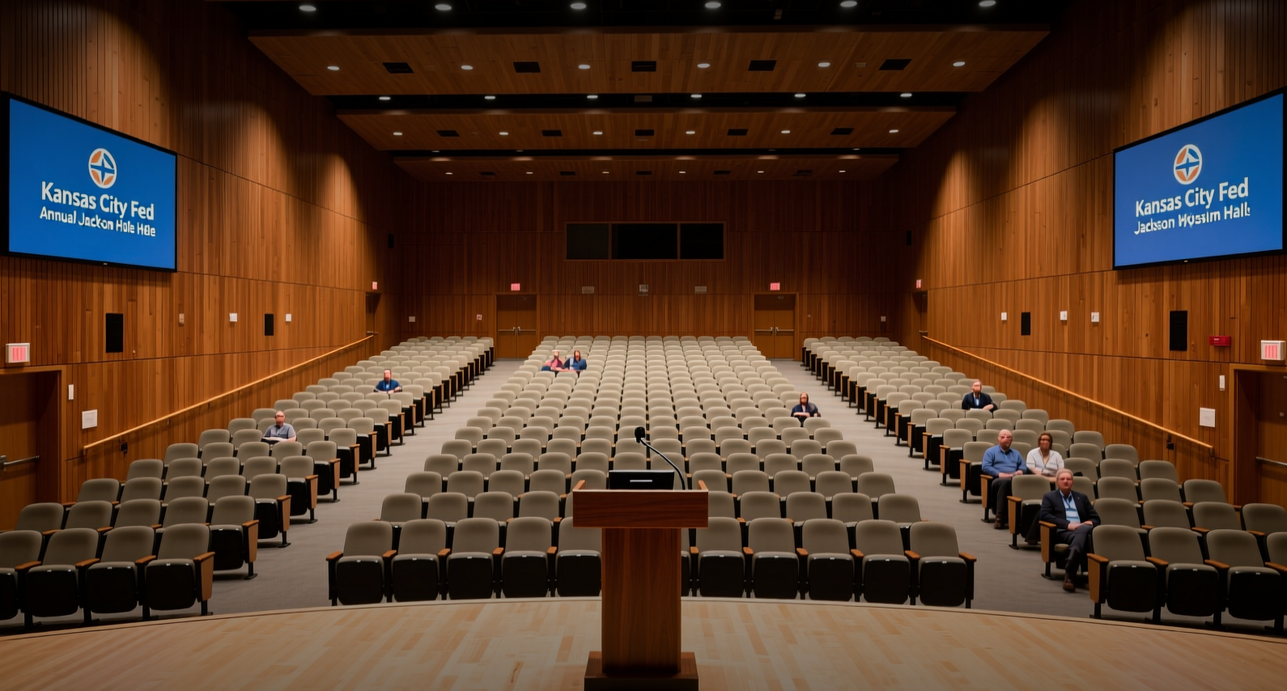
"We must be confident that underlying inflation is moving to our objective, clearly and at sufficient speed. Otherwise, we have work to do," Warsh said in his keynote address at the Kansas City Fed's annual symposium in Wyoming.
The 10-year Treasury yield rose 2.8 basis points to 4.700 percent, flattening the 2s10s curve spread by 6.7 basis points to 37.5 basis points. Equities absorbed the repricing, with the S&P 500 up 0.38 percent and the Nasdaq advancing 0.41 percent in afternoon trading. The dollar gained ground while gold fell 0.8 percent to $4,563.05 as higher real-rate expectations raised the opportunity cost of holding bullion.
The repricing alters the calculus for the September 15-16 FOMC meeting, where markets now see a two-way outcome. Warsh stopped short of pre-committing to a hike, but if upcoming inflation and labor data confirm his concerns, short-duration bonds become more attractive while floating-rate borrowers face increased reset risk.
Warsh, who replaced Jerome Powell in late May, acknowledged that recent U.S. reports show inflation has cooled somewhat but said "they do not tell me that underlying trends have meaningfully improved." He called output strong and said labor markets appeared steady, while emphasizing that the central bank's primary focus remains on prices.
The yield-curve response was telling. Short maturities track policy expectations more directly than longer-term bonds, and the 6.7-basis-point excess move in the two-year versus the 10-year is the cleanest evidence that markets priced a more immediate Fed response rather than a broad inflation panic. The last time the Fed signaled a potential tightening at Jackson Hole was in August 2022, when then-Chair Jerome Powell's brief but pointed speech preceded a 75-basis-point hike at the September meeting.
The cross-asset transmission extended beyond rates. Floating-rate credit becomes more expensive as reset risk rises, while short-duration Treasury income becomes relatively more attractive. Long-duration equities face higher discount rates, which reduces the present value of cash flows far in the future. Technology and semiconductor stocks are particularly sensitive, with Marvell Technology shares declining after earnings despite beating estimates, showing how high expectations have become for AI-linked companies.
The 2s10s spread compressed to 37.5 basis points from 44.2 basis points before the speech, a bear-flattening pattern in which short-term yields rise faster than long-term yields. This suggests investors are not worried that higher rates will be needed for an extended period to fight inflation, but rather that the Fed may need to act sooner rather than later.
Jon Faust, an economist at Johns Hopkins and a former adviser to Powell, said Warsh succeeded in conveying a tougher approach on inflation while avoiding the detailed guidance customary among his predecessors. "He found a way to convey that if necessary he would support raising rates, which is one thing people were concerned about," Faust said.
The market's repricing is not locked in. Softer inflation readings from upcoming price data could pull September odds below 50 percent. A sharp employment slowdown would challenge the case for tighter policy. Heavy Treasury issuance can keep long yields elevated even if Fed expectations ease.
Friday's economic calendar offered mixed signals. The Chicago PMI unexpectedly fell into contraction territory in August, while consumer sentiment improved in the final reading with one-year inflation expectations moderating. Oil prices retreated, with Brent near $88 per barrel and WTI around $82.73, which could help ease headline inflation pressures.
Warsh did not pre-commit to a hike. The CME FedWatch probabilities will shift in response to labor and inflation figures in the weeks ahead. Markets now face a genuine two-way outcome for the September meeting, with the policy path dependent on data that has yet to be released.
This article is for informational purposes only and does not constitute investment advice.
