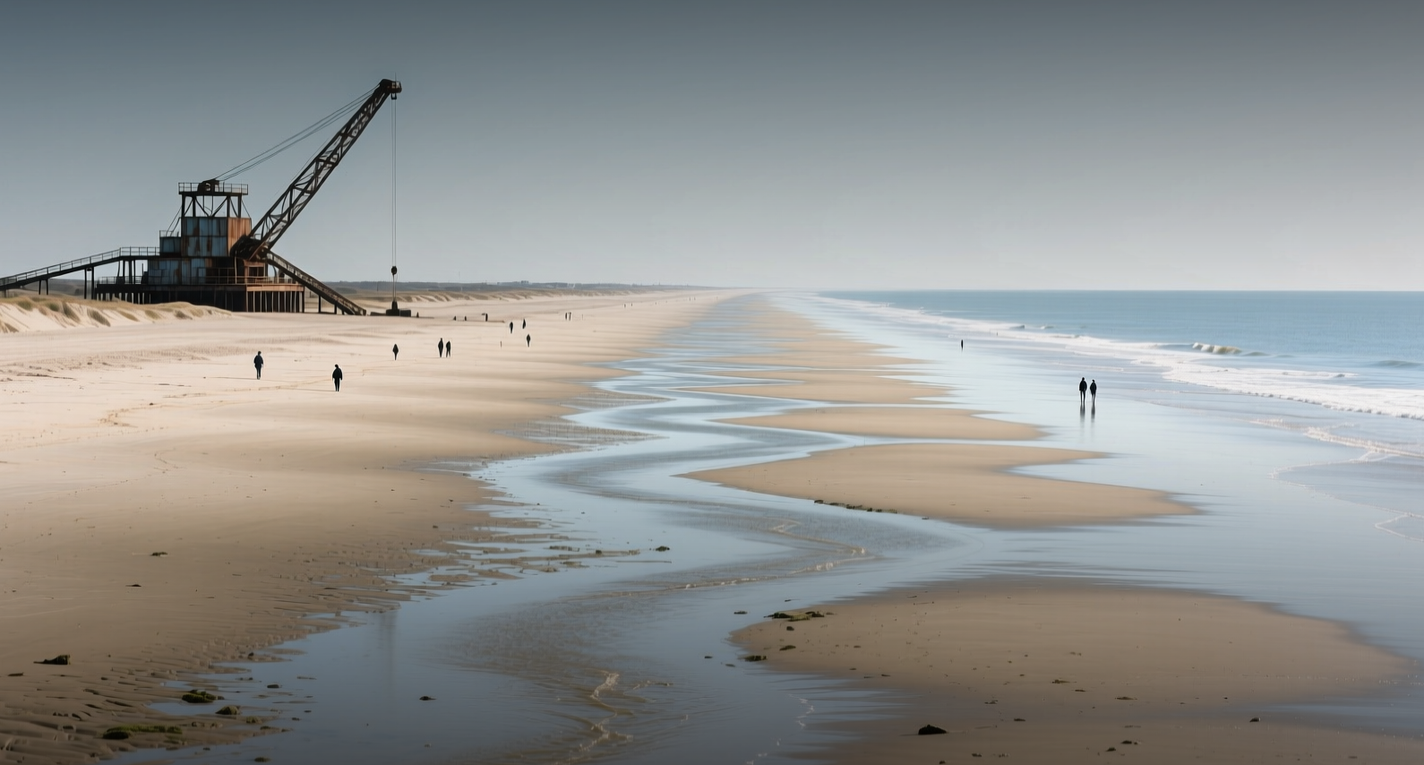
The US produces no primary magnesium while China controls 90 percent of global supply, a dependency Rep. Elise Stefanik says threatens American defense and industry.
The US produces zero tons of primary magnesium while China controls 90 percent of global supply, leaving American defense, aerospace and automotive sectors dependent on Beijing for a metal critical to the F-35, missiles and satellites.
"The metal we stopped making is waiting in the sea, right where we left it," Rep. Elise Stefanik, a Republican representing New York's 21st Congressional District, wrote in a Wall Street Journal op-ed, urging a national production target of 200,000 tons of American magnesium annually by 2030.
The last US smelter broke down in 2021 and collapsed into bankruptcy last year. China's share of global supply grew from 16 percent in 1999 to roughly 90 percent today through subsidized energy, cheap labor and lax environmental enforcement. In 2021, Chinese energy rationing caused magnesium prices to quintuple, and Beijing has already banned gallium and germanium exports to the US over military applications.
The Trump administration plans to invest $3 billion in critical minerals, and Stefanik argues magnesium deserves a top priority. New plants take years to build, making the 2030 target a race against time — one that determines whether the US can arm itself without China's permission.
A Metal the Arsenal Depends On
Magnesium is 33 percent lighter than aluminum and 60 percent lighter than titanium. It is an ingredient in nearly every other metal that matters: aerospace-grade aluminum alloys cannot be made without it, steel cannot be efficiently desulfurized without it, and titanium cannot be refined without it. The metal affects everything from the F-35 to beer cans.
The strategic vulnerability extends beyond magnesium. China controls roughly 80 percent of global antimony production and more than 50 percent of reserves, according to industry data. Global antimony output has fallen from 187,000 tonnes in 2011 to 110,000 tonnes in 2023, tightening a market already squeezed by Beijing's 2024 export ban on the metal to the US, which sent prices up 2,600 percent.
Washington is already responding to the broader critical minerals gap. The US recently extended $2.2 billion in backing to Brazil's only rare earth mine, and the EU's Critical Raw Materials Act sets domestic production benchmarks of 10 percent extraction, 40 percent processing and 25 percent recycling by 2030. These moves reflect a growing recognition that supply chain security for critical minerals is a national security issue, not just an industrial policy concern.
The Manufacturing Race
China is scaling thixomolding — a process that injection-molds semi-molten magnesium into finished parts lighter than cast aluminum — across electric vehicles, drones and robotics. The US invented seawater extraction of magnesium in 1941 when Dow Chemical perfected the process on the eve of World War II, giving America access to a virtually inexhaustible supply. National output soared, and magnesium became one of the first metals placed under mandatory wartime priority.
The US has no shortage of coastline on which to scale seawater extraction. Beijing makes the world's dirtiest structural metal, while America can make the cleanest and cheapest, Stefanik argues. The choice is straightforward: produce magnesium at home or remain dependent on China for a metal critical to American industry.
This article is for informational purposes only and does not constitute investment advice.