
Tesla produced its 10 millionth EV in July, yet its autonomous future faces a widening gap with rivals that already log millions of driverless miles.
Tesla produced its 10 millionth EV in July, yet its autonomous future faces a widening gap with rivals that already log millions of driverless miles.
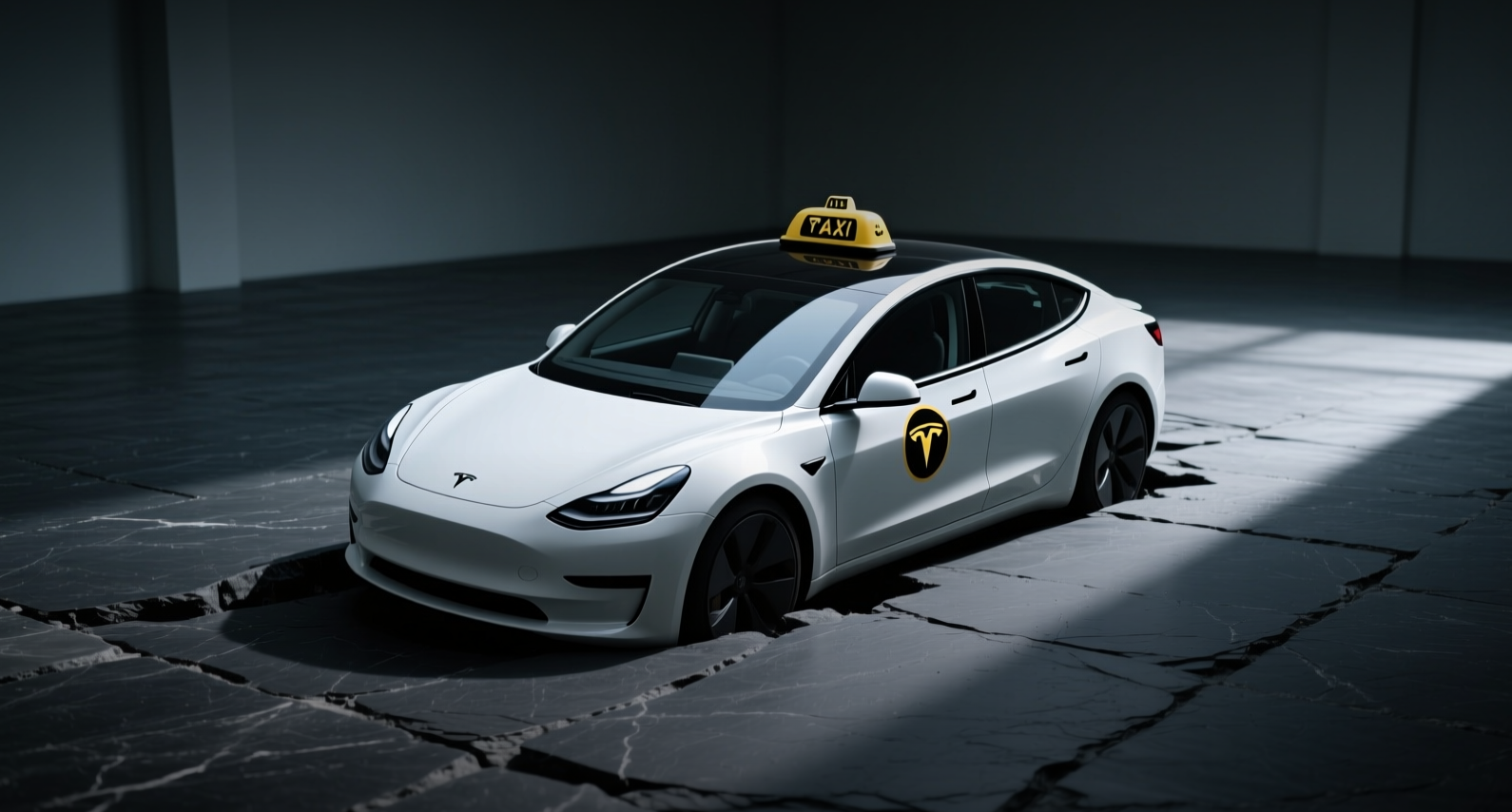
Tesla produced its 10 millionth EV in July, yet its autonomous future faces a widening gap with rivals that already log millions of driverless miles.
Tesla's pivot to autonomous mobility hinges on a Robotaxi program that trails Alphabet's Waymo by roughly 100-fold in paid driverless miles, even as Morgan Stanley assigns 41% of the carmaker's valuation to the technology.
Morgan Stanley's Adam Jonas, a longtime Tesla bull, said the Robotaxi and autonomous-driving business drives 41% of the company's valuation, with the Optimus humanoid robot contributing another 25% and core automotive and energy just 34%.
The competitive gap is stark. Waymo has logged more than 200 million fully autonomous miles and generates about 500,000 paid rides weekly across major metros, while Baidu has surpassed 137 million fully driverless miles. Tesla's cumulative paid Robotaxi miles reached 2.4 million in the second quarter, with growth essentially flat from the first, and its active unsupervised driverless fleet is estimated at just 20 to 40 vehicles, per the company's earnings report.
The stakes are rising as Tesla's core business erodes. Deliveries peaked at 1.81 million in 2023 and have declined for two consecutive years, while the Model 3 and Model Y have gone without a full redesign since their 2017 and 2020 launches. Tesla began Cybercab production in February, but the dedicated robotaxi still needs regulatory approval before it can charge for rides, and the company has not outlined a timeline.
Cybercab's Regulatory Hurdles Mount
Tesla's camera-only approach to driverless vehicles, which skips the LiDAR and radar sensors rivals use for depth perception and adverse-weather mapping, could slow the Cybercab's scale-up. The company also faces a looming problem with its older Hardware 3 computers, which lack the memory bandwidth and processing power needed for true unsupervised Full Self-Driving promised to consumers.
Meanwhile, Amazon-owned Zoox was granted permission by the National Highway Traffic Safety Administration to commercially deploy 2,500 steering-wheel-free robotaxis annually for two years, a total of 5,000 vehicles, and is expected to begin paid rides in Las Vegas. It is the first vehicle designed from the ground up with no manual controls to receive approval. Tesla, by contrast, has announced plans to expand its Robotaxi service to Tampa, Orlando and the Austin metro, though its unsupervised fleet remains small.
Core Business Softens as AI Spending Soars
Tesla's aging lineup is pressuring margins. The Cybertruck underperformed, the Model S and Model X were discontinued to free factory space for robotics, and the Semi is years behind schedule. The company has relied on price cuts, low-cost financing and promotional discounts to drive demand as global EV competition intensifies.
At the same time, capital expenditures on future businesses are climbing with little near-term return. Musk has said full Cybercab production capacity could reach 2 million units a year, or roughly 38,000 vehicles weekly, though early output is likely in the hundreds per week. The first physical Cybercab prototype, revealed this month with a built-in Starlink V5 dish capable of download speeds above 375 Mbps, points to the broader strategy of equipping all future Tesla models with satellite terminals. EPA filings show the Cybercab carries a 48-kWh battery, reflecting its lightweight, low-cost design.
Tesla shares face a binary outcome: if the Robotaxi program executes, the 41% of valuation tied to autonomy could be justified; if delays persist, that premium is at risk. With Waymo and Zoox already generating revenue from driverless rides, the market is pricing in delivery that Tesla has yet to demonstrate at scale.
This article is for informational purposes only and does not constitute investment advice.
