
SoftBank's $5.4 billion acquisition of ABB Robotics, on track to close by year-end, is set to redraw the competitive map of industrial automation as AI and robotics converge.
SoftBank's $5.4 billion acquisition of ABB Robotics, on track to close by year-end, is set to redraw the competitive map of industrial automation as AI and robotics converge.
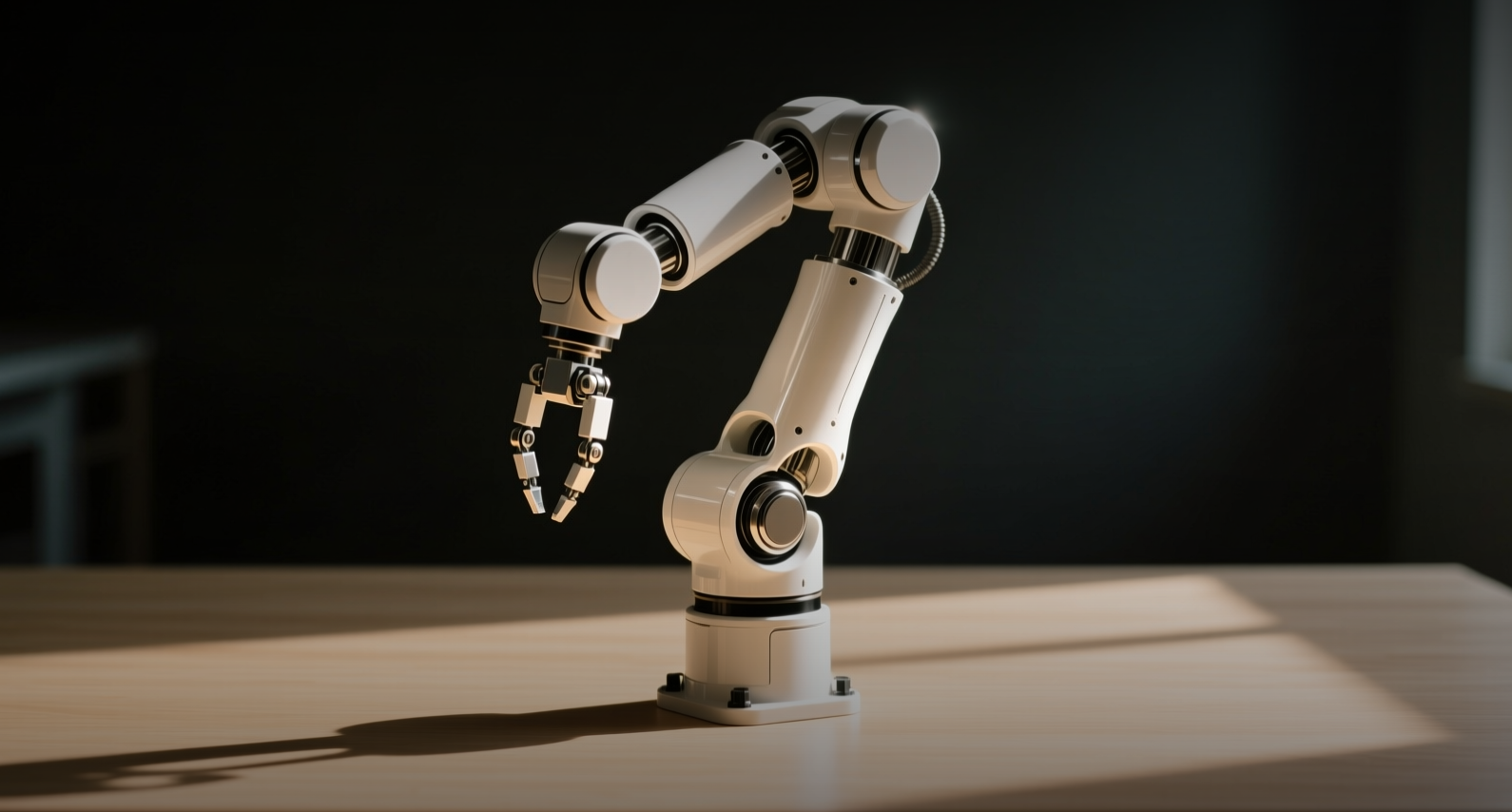
SoftBank's $5.4 billion acquisition of ABB Robotics, on track to close by year-end, is accelerating the convergence of AI and industrial automation, a shift reshaping factory floors worldwide.
"Industrial robotics is entering a new era as machines and artificial intelligence converge," Marc Segura, president of ABB Robotics, told CNBC's Ritika Gupta.
The deal hands Japan's SoftBank one of the world's largest industrial robotics franchises at a moment when AI-enabled machines are moving beyond fixed assembly lines into logistics, warehousing, and precision manufacturing. ABB's market value stands at $136 billion after a 20 percent stock gain in 2025, lifted by an investment boom in electric grids as data centers and AI development drive power demand. ABB plans to list shares in Sweden or Switzerland in the second quarter of 2026 and focus on more profitable assets, including its energy division, which has grown to 23.2 percent profitability.
The transaction consolidates a robotics sector where China's Unitree is preparing an IPO and Europe is fighting to hold its position in the global physical AI race. SoftBank's entry could reset valuations across industrial automation stocks as AI-enabled robots broaden their reach.
The AI-Robotics Convergence
Segura framed the shift as structural rather than incremental. Traditional industrial robots execute pre-programmed tasks with fixed precision; AI-enabled systems perceive their environment, adapt to variations, and learn from each cycle. That distinction matters for manufacturers weighing capital spending: a robot that handles unstructured tasks replaces more human labor per dollar than a conventional unit.
The competitive stakes are global. China's Unitree, best known for humanoid and quadruped robots, is preparing an IPO that would give investors a pure-play vehicle on physical AI. Europe, home to ABB, KUKA, and other established automation names, is defending its manufacturing base against Chinese entrants that have scaled quickly on domestic demand and state support.
What the Deal Means for Investors
For SoftBank, the acquisition is a bet that AI-enabled robotics becomes a core growth market rather than a niche. For ABB, the sale lets the parent focus on electrification and automation, where it has held exploratory talks with France's Legrand, a maker of electrical and digital construction equipment valued at 38 billion euros ($44 billion). Any such deal would require French government approval under local law.
ABB shares have climbed 20 percent in 2025, and the robotics sale proceeds are expected to fund share buybacks alongside any acquisitions. The listing in Sweden or Switzerland in the second quarter of 2026 gives investors a clearer view of the electrification business's standalone value.
For investors, the question is whether SoftBank can extract more value from ABB Robotics than ABB did as a division. The robotics unit's integration into SoftBank's broader AI portfolio, which includes stakes in chip designers and AI infrastructure, could create cross-selling opportunities that a standalone industrial conglomerate could not match. That logic, if it holds, would justify premium valuations across the physical AI sector as more players follow Unitree to public markets.
This article is for informational purposes only and does not constitute investment advice.
