

Key Takeaways:
- SHIB fell 11% as whales booked profits after a failed rally above $0.00000537.
- Whale transactions hit a four-month high with 52 transfers exceeding $100,000.
- The next support sits near $0.00000417, the lower Bollinger Band level.
Key Takeaways:
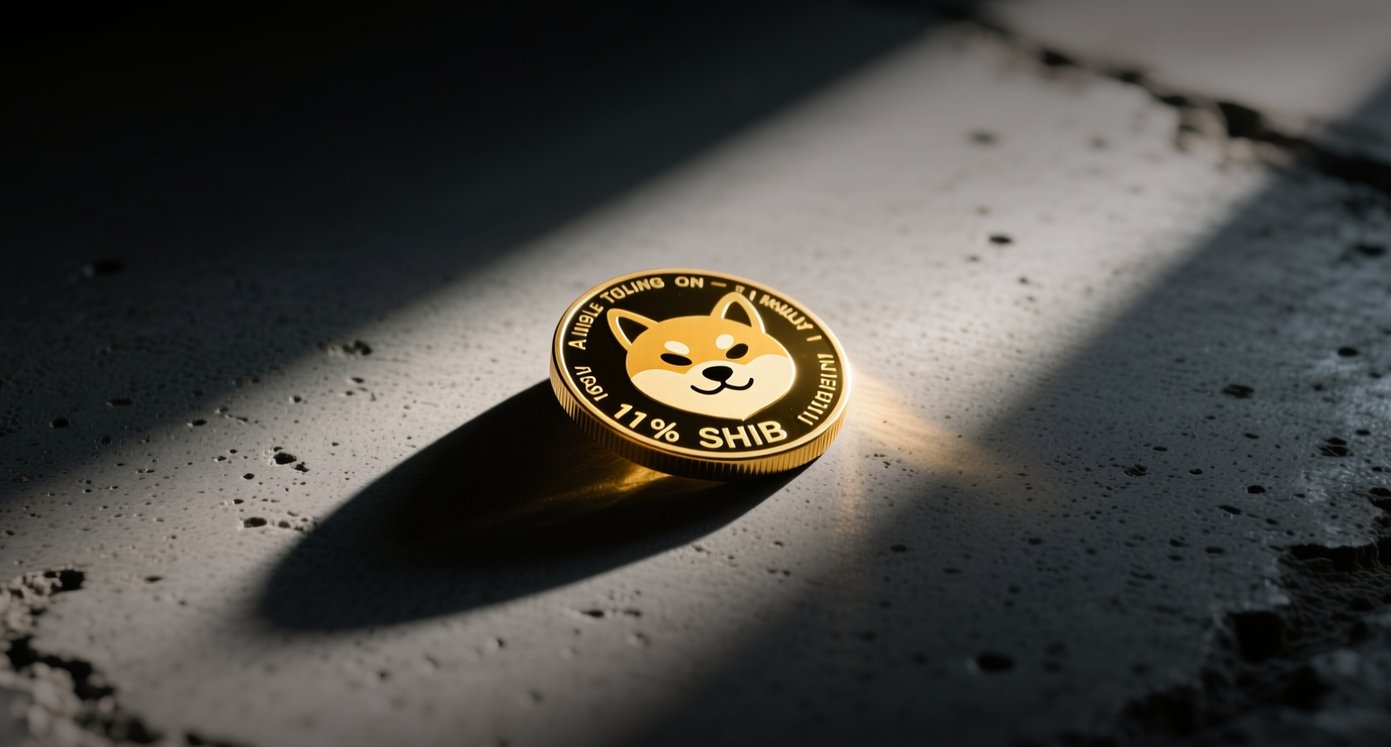
SHIB fell 11% to $0.00000466 as whale profit-taking accelerated after a failed rally above $0.00000537.
"Whale transactions hit a four-month high of 52 transfers exceeding $100,000 in a single day, creating enough liquidity for large holders to reduce positions," Santiment analysts said.
The ownership structure amplifies selling pressure. Just 0.05% of wallets control 94.64% of the supply, with exchange wallets among the largest accessible holders — Robinhood at 3.92%, Binance at 3.42% and Crypto.com at 2.76%, per Etherscan data. The burn wallet accounts for 41.04% of the supply, meaning retail buying alone often struggles to absorb heavy profit-taking once whales begin moving tokens to exchanges.
The next support sits near $0.00000417, the lower Bollinger Band, after the Relative Strength Index collapsed from above 80 to around 46. A break below that level would expose SHIB to a retest of earlier July lows unless renewed buying demand absorbs continued whale selling.
SHIB's social dominance climbed to 0.084%, its highest level since April, suggesting retail interest accelerated as prices approached their local peak, Santiment data shows. The rally briefly pushed SHIB as high as $0.00000537 before sellers regained control, with the Bollinger Band midline near $0.00000495 now acting as immediate resistance.
On the 4-hour chart, SHIB trades around the 50-day exponential moving average near $0.00000460 while remaining well below the 200-day EMA at $0.00000602, indicating the broader trend has yet to reverse. The 20-day EMA near $0.00000447 offers the first layer of support, with the swing-low region around $0.00000420 to $0.00000430 aligning with the lower Bollinger Band as the next downside target.
Shibarium, the layer-2 network introduced to reduce SHIB's circulating supply through token burns, has seen relatively modest daily burn volumes, leaving price movements largely dependent on speculative demand rather than supply contraction.
This article is for informational purposes only and does not constitute investment advice.
