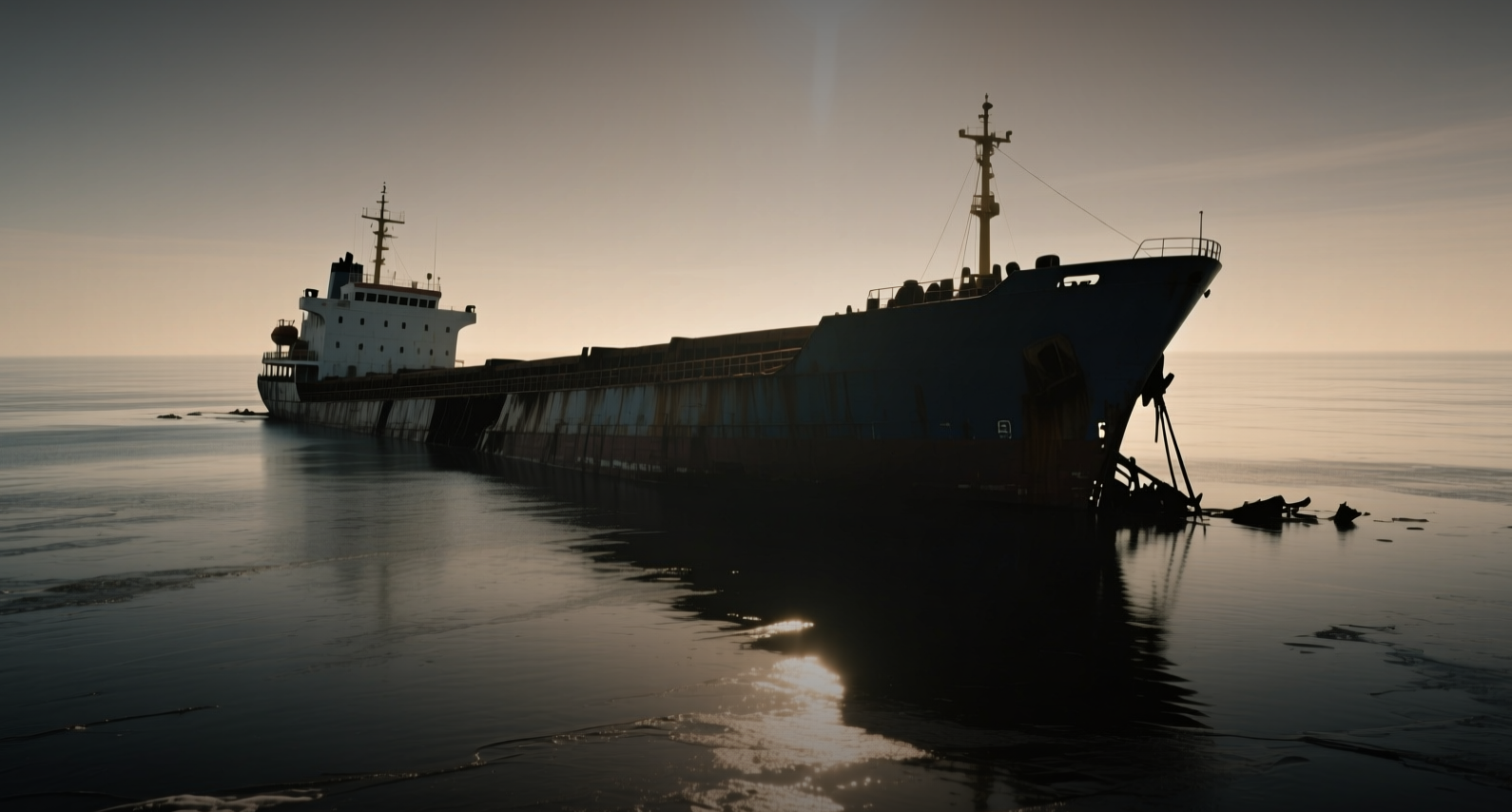
Russia's strikes on two cargo vessels at a Ukrainian port mark the latest escalation in a campaign that has cut Ukraine's agricultural exports to 30 percent of target, threatening global food supply chains.
Russia struck two cargo vessels at a Ukrainian port, extending a campaign that has hit 159 ships in 12 days and cut Ukraine's grain exports to 30 percent of target, threatening global food supply chains and reviving fears of a repeat of the 2022 grain crisis that pushed wheat prices to record highs.
"The objective is the irreversible paralysis of oil, fuel, and cargo logistics used to bypass sanctions," Ukrainian military commanders said, describing a strategy to turn every self-propelled vessel into "a drifting barge — blind and deaf. The objective is not to pollute the sea with oil spills, so we are not sinking them."
Russia's Defense Ministry said it attacked vessels transporting supplies for Ukrainian forces at the port of Odessa, plus a dry cargo ship in Black Sea waters east of the port carrying weapons from Western countries. The ministry also reported cluster strikes on military industrial enterprises in Kyiv, a refinery in Poltava Oblast, and a metallurgical plant in Dnipropetrovsk Oblast, using land-based and air-based high-precision weapons and long-range attack drones.
Ukraine's Navy said it struck a Russian Bastion missile system and launch positions deployed in Crimea, which Moscow has frequently used to fire Oniks supersonic missiles and Zircon hypersonic missiles at southern Ukraine. Ukrainian drones also hit a Wildberries logistics hub near Moscow spanning 250,000 square meters — the retailer's largest warehouse facility — with seven of its 10 major warehouses now shut down.
With 90 percent of Ukraine's agricultural exports moving through Black Sea ports — roughly 20 percent of the country's GDP — the escalation threatens 10.8 billion euros ($12.5 billion) in blocked agricultural exports by November, according to Ukraine's Agriculture Ministry. Ships are avoiding docking at Ukrainian ports, with Russia striking vessels 35 times in port waters and 22 times in the Black Sea during July alone, according to Reuters data.
Shipping War Escalates on Both Sides
The attacks extend beyond grain infrastructure. Russian drones struck the port of Mykolaiv for the second time in recent days on July 17, killing two Ukrainian crew members aboard commercial vessels docked there, according to the Mykolaiv Regional Prosecutor's Office. A 60-year-old seafarer died from burns sustained in an earlier July 15 attack that damaged two cargo ships flagged in Liberia and the Cayman Islands. The Azerbaijani Foreign Ministry confirmed that one of its seafarers, the captain of the cargo ship Atlas Bey, was killed in a Russian drone attack on July 14 off Odesa.
Ukraine's counter-campaign has been equally aggressive. Military commanders report 159 vessels struck since July 6 — 117 in the Sea of Azov and 42 in the Black Sea — targeting tankers transporting fuel to Crimea. Ukrainian drones also triggered a fire at Ust-Luga, a major Baltic Sea oil export port in Russia's Leningrad region, where more than 50 drones were shot down overnight. Latvia's armed forces shot down a drone that entered its airspace, and Finland temporarily restricted maritime movement in parts of the Baltic Sea as a precaution. Russia's Federal Air Transport Agency temporarily restricted flights at all Moscow-area airports.
Russia's Foreign Minister Sergey Lavrov denounced the Ukrainian attacks as "terrorism," while Moscow rejected reinstating the 2022-2023 Black Sea grain initiative. Russian Foreign Ministry spokesperson Maria Zakharova called reviving the framework "ill-advised," accusing the West of using the deal to attack Russia.
The last time Russia escalated attacks on Ukrainian ports to this degree was in July 2023, when Moscow withdrew from the grain deal and wheat prices jumped roughly 8 percent within a week. Current conditions differ: Turkey has attempted to mediate a ceasefire, though Moscow says Ankara has yet to send an official proposal. If the shipping blockade persists through harvest season, wheat and agricultural commodity prices face sustained upward pressure, with the risk premium extending to energy and shipping equities while defense and commodity-related stocks benefit.
This article is for informational purposes only and does not constitute investment advice.