

Qualcomm's High Bandwidth Compute roadmap attacks the AI memory wall, where HBM bandwidth grows at under half the rate of accelerator compute.
Qualcomm's High Bandwidth Compute roadmap attacks the AI memory wall, where HBM bandwidth grows at under half the rate of accelerator compute.
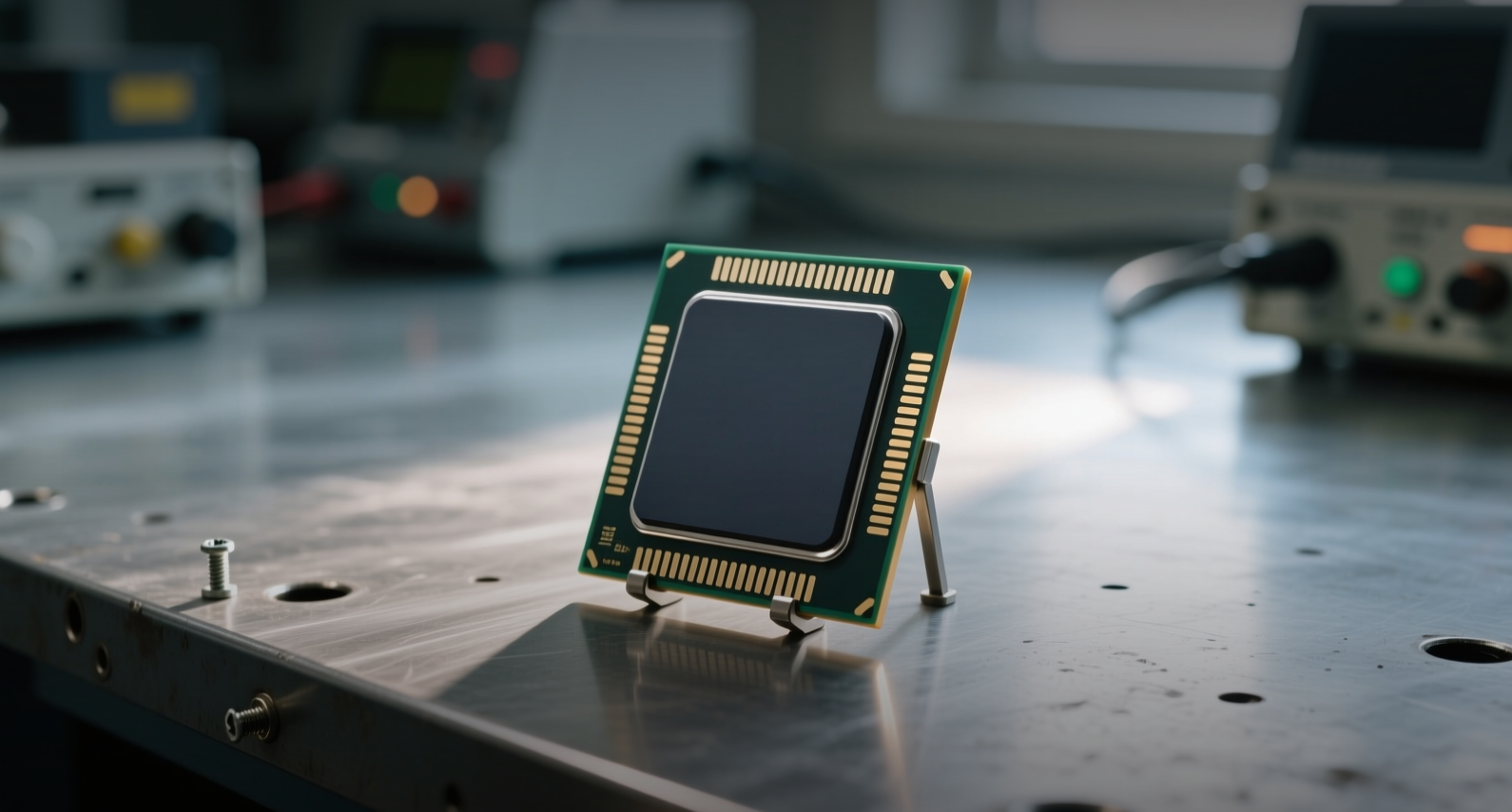
Qualcomm's High Bandwidth Compute roadmap attacks the AI memory wall, where HBM bandwidth grows at under half the rate of accelerator compute.
Qualcomm is taking its High Bandwidth Compute roadmap into AI data centers, where memory bandwidth grows at under half the pace of accelerator compute — a gap that leaves inference workloads waiting on data. The company is expanding server CPUs, custom silicon, and software to close it.
The constraint is well documented. "AI accelerator TFLOPS grow at roughly three times their current level every two years, while the bandwidth of high-bandwidth memory climbs at under twice its current level," Raghu Sreeramaneni, HBM Design Architecture Fellow at Micron Technology, said at Hot Chips 2026 in Stanford, California on Aug. 23.
Qualcomm's HPC roadmap, announced Aug. 26, pairs its Oryon CPU architecture with a memory subsystem designed to keep large working sets resident. The company's next flagship Snapdragon chip clocks two Prime cores at 5GHz — a first for mobile — backed by six Performance cores in an eight-core layout tuned for agentic AI. On the data center side, Qualcomm is expanding its server CPU line, including the Dragonfly C1000, and custom silicon efforts.
The memory wall is not unique to Qualcomm. SK hynix and SanDisk at the 2026 FMS Conference unveiled high bandwidth flash (HBF), stacking NAND dies like HBM stacks DRAM, targeting about 1TB capacity with terabyte-per-second-scale bandwidth. Micron projects the global HBM market to grow from about $35 billion in 2025 to around $100 billion by 2028.
Qualcomm's push into AI infrastructure comes as its non-handset revenue is guided to accelerate from 24 percent to over 60 percent of total in fiscal 2027, offsetting Apple-related declines. QCOM trades at roughly 15-16x forward earnings, and the AI data center opportunity is not fully priced in, according to Seeking Alpha analyst Danil Sereda.
Micron's presentation quantified what computer architects have called the memory wall since a 1995 ACM paper by Wulf and McKee. A system with three times the TFLOPS of its predecessor but only twice the memory bandwidth does not deliver three times the real-world AI throughput — it delivers at best twice, and often less, because most large language model inference workloads are memory-bandwidth-bound rather than compute-bound.
The gap compounds across generations. Micron's roadmap, sourced from research by the Korea Advanced Institute of Science and Technology, projects HBM5 at 4 terabytes per second around 2029, HBM6 at 8 TB/s around 2032, HBM7 at 24 TB/s around 2035, and HBM8 at 64 TB/s around 2038. At every interval, compute gains outpace bandwidth gains.
The economics are stark. HBM3E consumes roughly three times the fabricated silicon area of DDR5 to deliver the same storage capacity, because of the through-silicon vias (TSVs — microscopic copper pillars connecting stacked DRAM dies) and advanced packaging. A typical AI accelerator package with eight HBM4 instances spans more than 12,000 square millimeters, with memory silicon exceeding eight times the surface area of the GPU die.
Qualcomm's HPC roadmap is a bet that the memory constraint, not raw compute, will decide the coming generation of AI infrastructure. Its FlexCache memory subsystem, unveiled Aug. 25 ahead of Snapdragon Summit, lets Prime cores draw on the entire cache pool when a workload demands it, keeping larger working sets resident instead of spilling to system RAM.
The timing matters. SK hynix's Kim Chunsung, EVP, said at FMS that enterprise workloads are becoming more diverse, with storage requirements for persistent assets such as models and RAG data, plus dynamic runtime state like KV cache and agent metadata. The first HBF specification, released at FMS, enables up to 512GB based on 8-high and 16-high NAND die stacks, with bandwidth grades from about 0.4 TB/s to 3.0 TB/s over a UCIe interconnect.
For Qualcomm, the opportunity is diversification. Non-handset revenue is guided to accelerate from 24 percent to over 60 percent in fiscal 2027, and the company has landed Meta as a launch partner for its Dragonfly AI chips. QCOM trades at roughly 15-16x forward earnings, a discount to Nvidia and AMD, and the AI data center opportunity is not fully priced in, according to Seeking Alpha analyst Danil Sereda. The risk is execution: Qualcomm's HPC claims lack independent benchmarks, and Nvidia's Vera Rubin platform, shipping with HBM4 since early 2026, sets a high bar.
This article is for informational purposes only and does not constitute investment advice.
