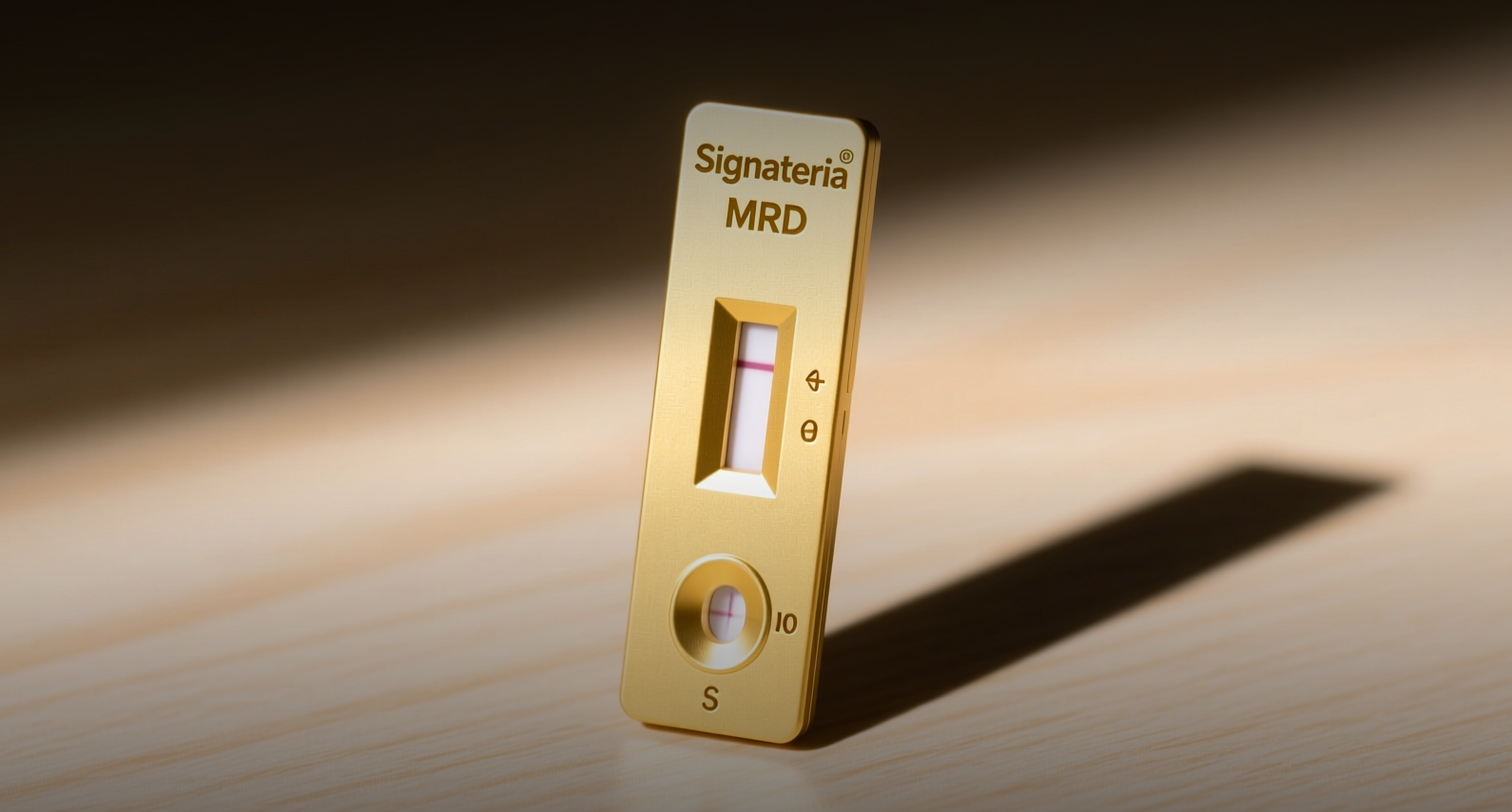
Natera Inc.'s Signatera has become the first personalized molecular residual disease test for solid tumors to receive Class C certification under the European Union's In Vitro Diagnostic Regulation, clearing a path for broader commercial expansion across Europe's $1.7 billion MRD testing market.
"The IVDR represents one of the world's most rigorous regulatory frameworks for in vitro diagnostic medical devices," said Solomon Moshkevich, president of clinical diagnostics at Natera. "Backed by extensive clinical evidence across multiple cancer types, this builds on our recent regulatory approvals in both the United States and Japan."
The certification covers the full Signatera platform — including the assay, specimen collection kit, and associated software — for use in adjuvant and surveillance settings across gastrointestinal malignancies, genitourinary cancers, non-small cell lung cancer, head and neck cancer, breast cancer, skin cancer, gynecological malignancies, diffuse large B-cell lymphoma, indolent non-Hodgkin's lymphomas, and pan-cancer immunotherapy monitoring. Natera shares rose 2.7 percent following the announcement, bringing the company's year-to-date gain to 23 percent compared with a 0.1 percent decline in the broader diagnostics industry.
The IVDR, which replaces the outgoing In Vitro Diagnostic Medical Devices Directive, subjects diagnostic devices to a comprehensive review of analytical validity, clinical performance, and quality management systems. Certification reduces the lead time and regulatory overhead for launching new clinical trials in Europe and ensures Natera can continue offering Signatera to EU patients after the IVDD transition deadline in 2028. The milestone follows two other regulatory wins for the Signatera portfolio: approval from Japan's Pharmaceuticals and Medical Devices Agency in June 2026 for colorectal cancer patients, and U.S. Food and Drug Administration approval in May 2026 of Signatera CDx as a companion diagnostic for muscle-invasive bladder cancer.
Why the certification matters for investors
The MRD testing market, valued at $1.7 billion in 2025, is projected to grow at a compound annual rate of 12 percent through 2034, according to Precedence Research. Natera's first-to-certify status under IVDR creates a regulatory moat that competitors such as Guardant Health and Exact Sciences — which offer their own liquid biopsy tests — have not yet matched in Europe. Natera trades at 16.1 times sales, a premium to the biotech industry average of 12 times, reflecting investor expectations that Signatera's expanding regulatory footprint will drive adoption across international markets.
"MRD testing is redefining how we assess recurrence risk and guide treatment decisions for patients with cancer," said Julien Taieb, M.D., Ph.D., head of gastroenterology and gastrointestinal oncology at Université Paris-Cité. "This certification for Signatera is an important milestone as it will enhance access to personalized MRD testing for patients across Europe within a more rigorous regulatory framework."
Natera has also been building clinical evidence for Signatera beyond the regulatory filings. Data published in JAMA Oncology and presented at the ESMO GI congress showed how MRD status can guide adjuvant chemotherapy decisions in colorectal cancer patients with liver metastases. The company has additionally partnered with Aveta Biomics, Eledon Pharmaceuticals, and CytoDyn to integrate Signatera into late-stage clinical trials across head and neck cancer, kidney transplantation, and colorectal cancer, respectively.
This article is for informational purposes only and does not constitute investment advice.