
South Korea's semiconductor exports hit a fifth monthly record this year as hyperscaler AI spending keeps the memory supercycle running.
South Korea's semiconductor exports hit a fifth monthly record this year as hyperscaler AI spending keeps the memory supercycle running.
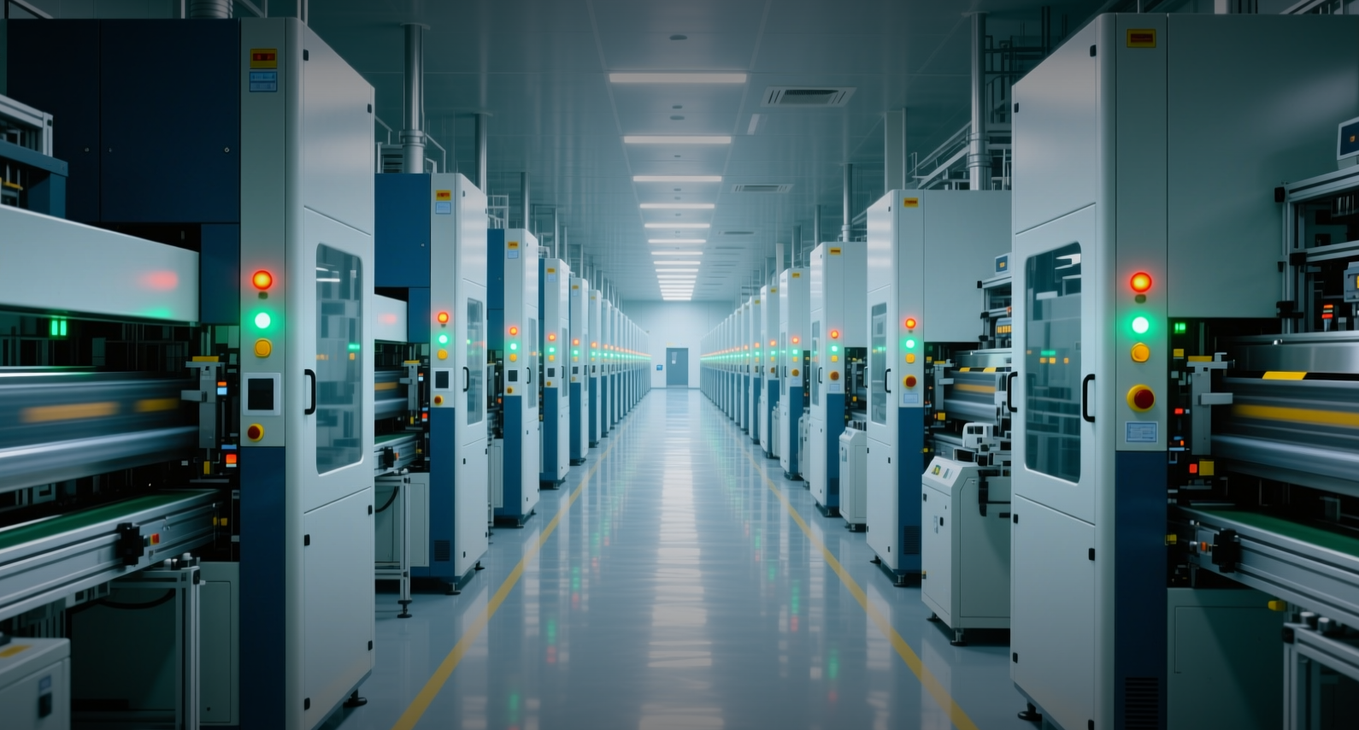
South Korea's exports surged 68.7 percent in August to $98.25 billion, beating the 62 percent consensus, as semiconductor shipments jumped 209 percent to a record $46.65 billion on sustained AI infrastructure investment from Google and Amazon.
"Semiconductor exports remain strong, and exports of non-semiconductor items are also posting a high growth rate of 20 percent, which is positive in that it shows the base of our exports is broadening," Trade Minister Kim Jung-kwan said.
The trade surplus widened to $34.75 billion, the third consecutive month above $30 billion. Exports to China rose 119.3 percent to $24.1 billion, while shipments to the United States climbed 89.3 percent to $16.5 billion. Computer exports hit a monthly record of $6.24 billion, up 419.5 percent, as NAND prices for enterprise SSDs kept climbing.
The data strengthens the Bank of Korea's case for continued tightening after it raised rates 25 basis points for a second consecutive meeting last week and upgraded its 2026 GDP forecast to 3.3 percent from 2.6 percent. But the "K-shaped" divergence — autos down 29.8 percent and ships down 45.9 percent while tech soars — exposes structural imbalances that could complicate the policy path.
Semiconductor exports have now topped $40 billion for three consecutive months, with August's $46.65 billion surpassing June's $44.8 billion record. The monthly trajectory tells the story: $25.1 billion in February, $32.8 billion in March, $37.2 billion in May, $44.8 billion in June, and $46.6 billion in August. Chips now account for 47.5 percent of total exports.
The demand engine is AI infrastructure. Global hyperscalers including Google and Amazon have expanded facility investment, driving demand for high-bandwidth memory (HBM) and server DRAM — the flagship products of Samsung Electronics and SK hynix. Both companies posted record second-quarter profits, and market expectations point to continued strength through year-end.
Goldman Sachs projects DRAM average selling prices at Samsung and SK hynix will climb about 17 percent quarter-over-quarter in the third quarter. Spot prices for DDR4 rose 7 percent in August, while DDR5 gained 6 percent. HBM is likely to remain a seller's market into next year — Goldman said market consensus for HBM price growth in 2027 rose to 53 percent from 32 percent over the course of a month.
SK hynix CEO Kwak Noh-jung said last week that AI-driven demand will keep memory supply tight through the end of the decade, a forecast two years longer than Samsung's July projection.
The export picture is not uniformly strong. Automobile exports fell 29.8 percent to $3.85 billion, hit by fewer working days during summer vacation schedules and partial strikes over wage increases. Ship exports dropped 45.9 percent to $1.69 billion on reduced delivery volumes. Of Korea's 20 major export categories, 14 recorded growth, but the non-tech laggards reveal the economy's structural dependence on semiconductors.
Petroleum product exports rose 65.3 percent to $6.84 billion and petrochemicals gained 12.2 percent to $3.86 billion, though both saw volume declines — the value increases stem from higher prices triggered by Strait of Hormuz tensions. Secondary battery exports grew 24 percent to $600 million, a fourth consecutive monthly gain.
The strong trade data supports the Bank of Korea's hawkish stance. Core inflation accelerated to 2.6 percent in July, and the central bank maintained its 2026 consumer inflation forecast at 2.7 percent while nudging core inflation projections up to 2.5 percent. The won's strength helps lower raw material import costs, President Lee Jae-myung noted, arguing that fiscal policy should play a more active role as rates rise.
The January-to-August cumulative trade surplus reached $202.5 billion, up $162.2 billion from a year earlier. But the government remains cautious about external risks. Kim cited U.S. tariff policies, the EU's tariff-rate quota system for steel, global supply chain restructuring, and Middle East instability as factors that could disrupt the export momentum.
This article is for informational purposes only and does not constitute investment advice.
