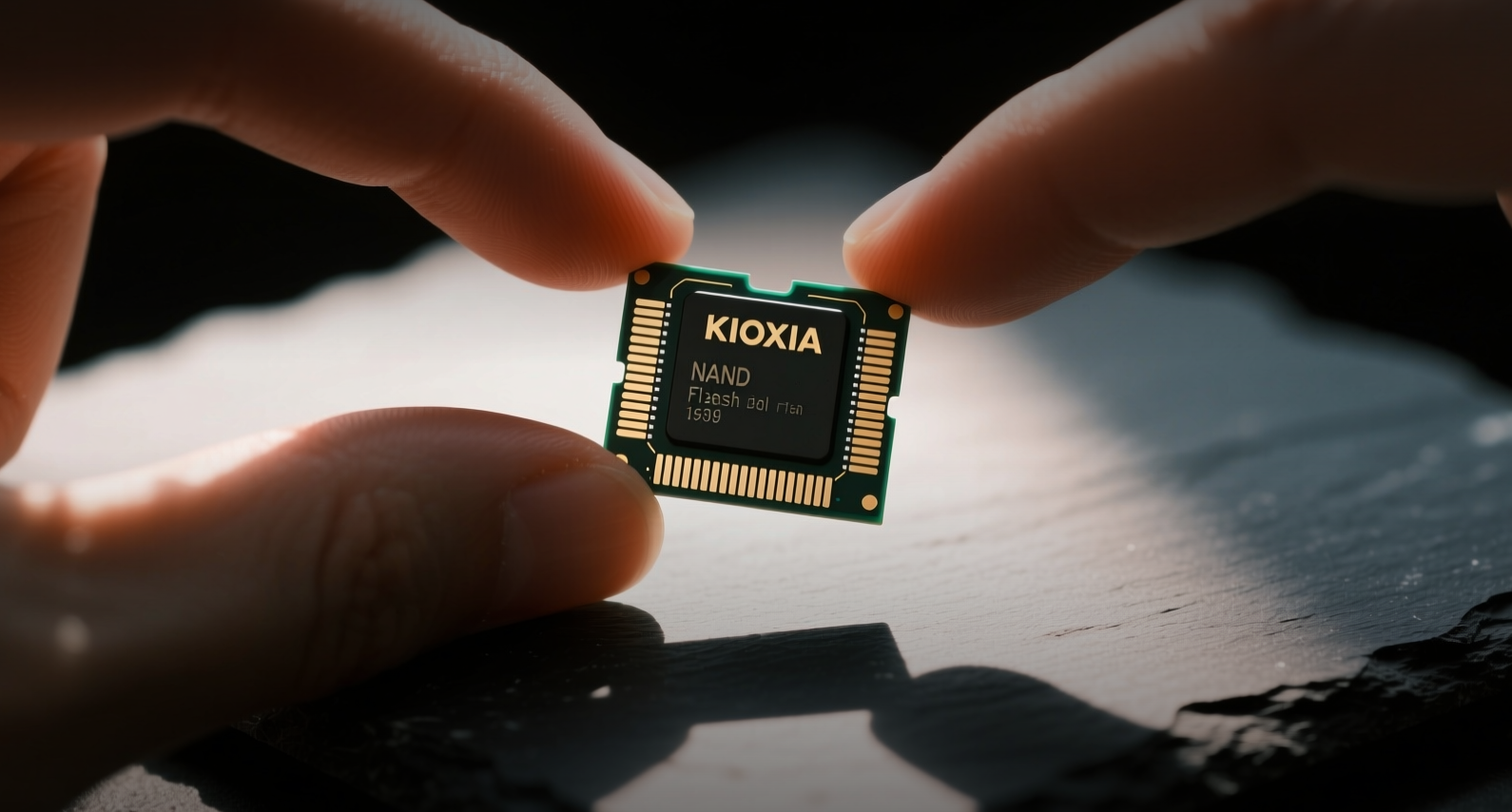
Kioxia Holdings reported record first-quarter non-GAAP operating profit of ¥1.33 trillion, up 28-fold year-on-year, and unveiled an ¥800 billion share buyback, the first large-scale repurchase in the global NAND storage industry.
UBS analysts said the buyback, tied to a roughly 50 percent total shareholder return target, could reduce outstanding shares by about 19 percent if half of projected FY2028 net profit of ¥9.42 trillion is deployed. The firm raised its price-to-book multiple for Kioxia to 5.23x from 4.63x and lifted average ROE forecasts to 48 percent from 42 percent. JPMorgan maintained an Overweight rating with a ¥155,000 price target, implying significant upside from the ¥46,500 close on July 31.
Revenue for the April-June quarter climbed 415 percent year-on-year to ¥1.77 trillion, with SSD and storage products contributing ¥1.17 trillion, or 66 percent of total sales. Blended average selling prices for NAND products rose about 70 percent quarter-on-quarter, while bit shipments grew only in the low single digits, with some volumes deferred to the current quarter. Gross margin reached 78 percent, and the company's equity ratio jumped to 50.8 percent from 37.9 percent at the end of the prior fiscal year.
The buyback marks a structural shift in how memory chipmakers return capital, and the trend is spreading. Nomura Securities projects Korean listed-company buybacks will reach a record ¥116 trillion in 2026, with about 90 percent coming from Samsung Electronics and SK Hynix, expanding to ¥274 trillion in 2027 and ¥328 trillion in 2028. The firm maintains its KOSPI target of 10,000 to 11,000 points, citing the AI earnings cycle and corporate buybacks as the next market driver.
Kioxia shares surged as much as 17.7 percent following the earnings release. The company also announced a three-for-one stock split effective October 1 and expects to secure long-term contracts locking in 50 percent of production capacity through 2028. Management forecast industry-wide NAND bit demand growth in the high-teens percentage range for calendar 2026, with demand expected to outstrip supply in 2027 as agentic AI workloads expand.
For the current quarter, Kioxia guided revenue of ¥2.39 trillion, up 35 percent sequentially, and non-GAAP operating profit of ¥1.90 trillion, implying an operating margin of about 79.5 percent. The guidance came in below some buy-side expectations of ¥2.0 to ¥2.5 trillion in revenue, though management cited continued data center demand strength. Apple demand is expected to increase in the current quarter, according to UBS.
The record profitability and buyback program give Kioxia a valuation framework that could extend across the storage sector. Investors will watch the October 31 earnings call for further shareholder return policy details, while the November release of Korea's low-PBR company list will test whether the buyback-driven re-rating takes hold in Seoul.
This article is for informational purposes only and does not constitute investment advice.