

Apple's own software has confirmed the entire iPhone 18 lineup before the company's marketing team has said a word.
Apple's own software has confirmed the entire iPhone 18 lineup before the company's marketing team has said a word.
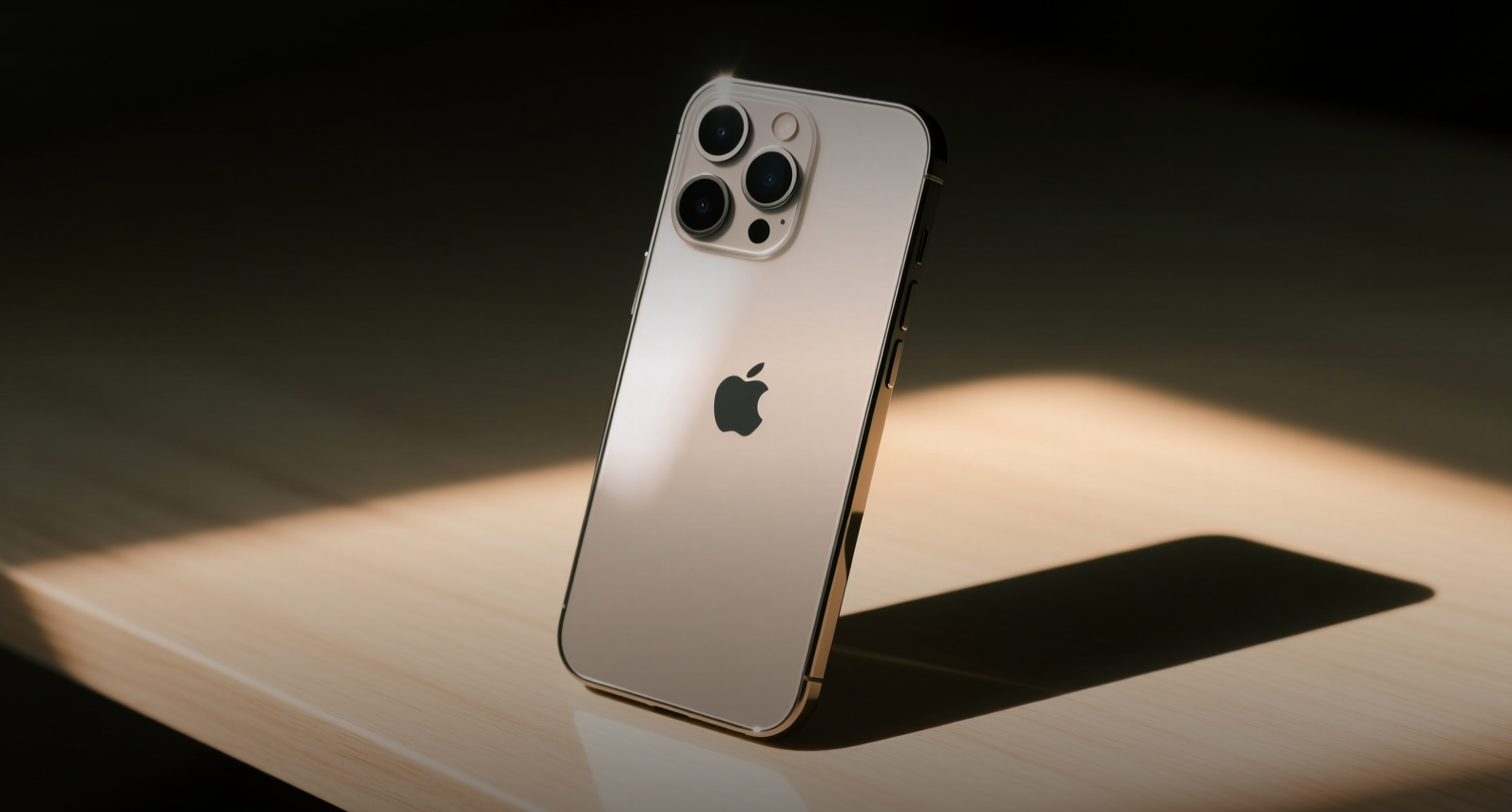
Six unreleased iPhone identifiers surfaced together in iOS 27 beta 5 battery driver files, confirming a $1,999 foldable Ultra and a split launch that pushes the base iPhone 18 to spring 2027.
Supply chain analyst Ming-Chi Kuo projects Apple will ship 7 to 8 million foldable iPhones in the second half of 2026, with just 500,000 to 1 million units available in the third quarter — a supply constraint that could push launch demand into early 2027.
The identifiers — V62 through V69 — map to the iPhone Air 2, iPhone 18 Pro, iPhone 18 Pro Max, iPhone 18, iPhone Ultra, and iPhone 18e. The same six codenames appeared in a leaked December 2025 iOS 26 build, marking eight months of stable concurrent development. The foldable Ultra carries a 5.5-inch outer display and 7.8-inch inner screen with a 4:3 aspect ratio, powered by a dual-cell battery system totaling roughly 4,883 milliamp-hours.
The launch structure reshapes Apple's upgrade cycle economics. All three fall models — the Pro, Pro Max, and Ultra — start at $999 or above, leaving no new sub-$999 iPhone for the 2026 holiday season. Budget buyers face a choice between discounted iPhone 17 units or waiting until March 2027 for the standard iPhone 18 and 18e.
The battery driver discovery carries unusual technical weight. Apple's Battery Intelligence system manages lithium-ion cell health using hardware-specific power profiles — charging curves, thermal limits, and degradation models that differ by device. For the software to function, engineers must embed each device's identifier in the driver itself, not as metadata but as an active lookup parameter used on every charging decision. Finding all six identifiers in the same beta build means Apple's power management team is writing production-grade code for every configuration simultaneously.
The foldable's architecture is the most revealing. V68 arrived alongside dual-battery management code introduced in iOS 27 beta 4, which referenced "the batteries in this iPhone" in the plural — language that has never appeared in iPhone software because every current iPhone uses a single cell. Supply chain filings point to two cells: 1,921 milliamp-hours on the hinge side and 2,962 milliamp-hours on the display-dominant half. The dual-cell arrangement is an engineering requirement for book-style foldables, which divide the chassis into two compartments connected by a hinge. A single battery spanning the hinge would face mechanical stress with every open and close.
The 4.5-millimeter unfolded chassis — thinner than any current iPhone and thinner than Apple's own 13-inch iPad Pro — forces a significant compromise. The chassis cannot physically accommodate the TrueDepth camera array that Face ID requires, which includes an infrared dot projector, flood illuminator, and IR camera. The result is Touch ID in the power button, the same approach Apple uses on iPad Air models. It marks the first time since 2017 that Apple's highest-priced iPhone flagship will use fingerprint authentication rather than facial recognition.
The Ultra also drops the telephoto camera. Two 48-megapixel sensors — a main and an ultra-wide — handle the rear camera system with no optical zoom. The A20 Pro chip, built on TSMC's 2-nanometer process with 12 gigabytes of LPDDR5X memory, powers the device. At $1,999, the Ultra positions against Samsung's Galaxy Z Fold series, which has dominated the foldable category since 2019.
The six identifiers divide neatly along Apple's launch strategy. V63, V64, and V68 — the iPhone 18 Pro, Pro Max, and foldable Ultra — are expected at the fall 2026 keynote, which analysts tracking Apple's Labor Day scheduling patterns expect around September 9. V62, V67, and V69 — the iPhone Air 2, standard iPhone 18, and iPhone 18e — are pushed to a spring 2027 window, with March the most commonly cited target from supply chain sources.
This is the first time Apple has held back the entire base and budget tier from its traditional September event. The iPhone 17e launched as a standalone spring release in March 2026, but the standard iPhone has always shipped in September. For budget-minded upgraders, the options this holiday season are to spend more, buy a discounted current-generation iPhone 17, or wait until spring.
The timing adds another layer of significance. John Ternus, Apple's longtime head of hardware engineering, formally assumes the CEO role on September 1, replacing Tim Cook, who becomes executive chairman. The September keynote will be the first delivered under a new chief executive, and the foldable Ultra — which requires substantial stage time to introduce a new form factor — anchors the event alongside the Pro models.
Battery driver identifiers confirm that iOS engineers are writing active, hardware-specific code for six distinct device configurations and have been doing so since at least December 2025. They confirm that Apple's software team treats these configurations as stable enough to embed in production-grade power management drivers across multiple iOS generations. They confirm, for V68 specifically, that the foldable's dual-battery architecture is being managed at the driver level alongside the rest of the lineup.
What they do not confirm: final marketing names (V68 could ship as "iPhone Fold" rather than "iPhone Ultra," though Bloomberg reporting has consistently pointed to the Ultra name), specific pricing, final specifications, or a guarantee that every referenced device reaches retail. Apple engineers write and then occasionally abandon device configurations. The identifier appearing in a beta is not a warranty.
What makes this instance carry unusual weight is the eight-month stability across two separate iOS generations. A codename that survives from the December 2025 iOS 26 leak all the way to a shipping-adjacent iOS 27 developer beta in August 2026 — unchanged, in the same battery driver subsystem — describes a hardware project that has been through two full iOS development cycles without revision.
At $1,999 per unit, Kuo's projected 7 to 8 million foldable shipments in the second half of 2026 would represent $14 billion to $16 billion in potential revenue at full production. But the constrained third-quarter supply of 500,000 to 1 million units means the financial impact will be gradual. The Ultra's pricing also positions Apple directly against Samsung's Galaxy Z Fold series and Google's Pixel Fold — a competitive battle that will test whether Apple can convert its loyal base into foldable buyers at more than double the price of a standard Pro model.
This article is for informational purposes only and does not constitute investment advice.
