
India's global image has deteriorated sharply, with US favorability falling to 45 percent from roughly two-thirds in 2008, a Pew Research Center survey shows.
India's global image has deteriorated sharply, with US favorability falling to 45 percent from roughly two-thirds in 2008, a Pew Research Center survey shows.
A Pew Research Center survey across 36 countries finds a median of only 45 percent view India positively versus 41 percent negatively, a narrowing from three years ago when 46 percent held favorable views against 34 percent unfavorable. US favorability has fallen to 45 percent, with 50 percent now viewing India unfavorably, among the lowest readings since Pew began asking in 2008.
"A politician or a bureaucrat thinking, 'Do I want to stick my neck out for a particular country?' may decide against it," said Paul Staniland, a political scientist at the University of Chicago, cautioning against overstating the effect of opinion surveys on US foreign policy.
The slide spans India's Quad partners. Australian favorability fell to 44 percent from 71 percent in 2008, a historic low, while Japan's 55 percent is down from a 70 percent peak in 2012. Among Americans aged 18 to 29, 56 percent hold an unfavorable view, and Republicans lean negative by 55 percent to 42 percent.
The erosion threatens the bipartisan consensus on Capitol Hill that has underpinned closer US-India ties and public support for the Quad, even as Britain (71 percent) and Germany (66 percent) have grown more favorable after India reached free-trade agreements with both.
The downturn tracks Prime Minister Narendra Modi's own fading standing in the US. In 2018 nearly 4 in 10 Americans expressed confidence in Modi; five years later, among those who knew of him, only 2 in 10 did, according to Jacob Poushter, the survey's lead author. Four in 10 respondents had not heard of India's prime minister.
India's image has become a partisan fault line. Some on the right view India as an endless source of legal and illegal immigrants who threaten American jobs and culture, with each negative anecdote — a highway accident caused by an illegal Punjabi truck driver, a software job lost to an H-1B visa holder, a cyber scam traced to India — becoming an indictment of the country. Some on the right also decry the Indian government's restrictions on Christianity.
On the left, India's Hindu nationalist turn under Modi has drawn criticism over discrimination against Muslims, harsh internet shutdowns and attacks on government critics. Indian-American New York Mayor Zohran Mamdani, the most visible Democratic socialist in the US, has lambasted both Hindu nationalism and Modi. The old image of India as a colorful land where the Beatles went to meditate is fading.
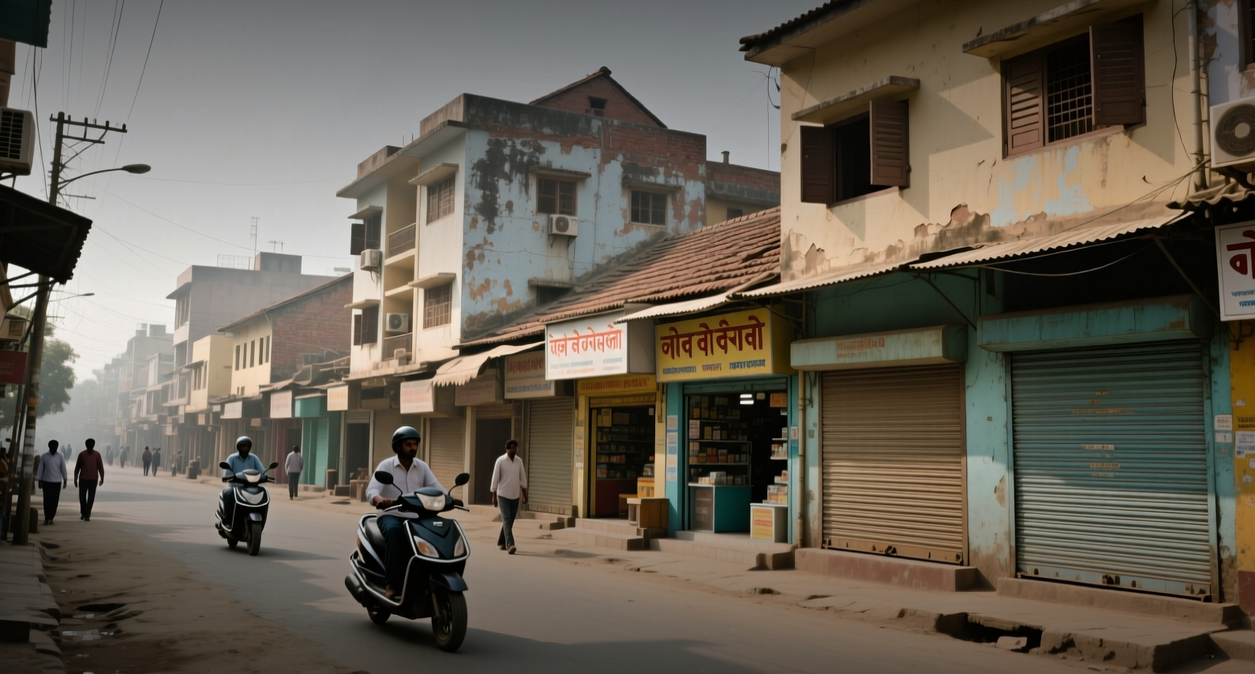
To reverse the slide, India must address the drivers of its image problem. Better job creation at home would soften other countries' anxieties about an uncontrollable influx of Indian immigrants, while fixing neglected cities would stop urban India from being a byword for squalor. India's toxic online culture, characterized by troll armies quick to abuse critics, is a negative advertisement for the country.
Public opinion remains malleable, and not all Western publics hold a dim view. Britain's favorability rose to 71 percent from 66 percent in 2023, Germany's to roughly two-thirds from 47 percent, and France's climbed 11 points to 50 percent over three years — gains that may reflect India's recent free-trade agreements with the UK and the European Union.
The stakes extend beyond sentiment. If India's image continues to slide, the strong bipartisan consensus on Capitol Hill to strengthen US-India ties could erode, undercutting arguments for closer cooperation in the developing world and public support for the Quad. Whether India can rebuild its reputation will depend on the government addressing what went wrong in the first place.
This article is for informational purposes only and does not constitute investment advice.
