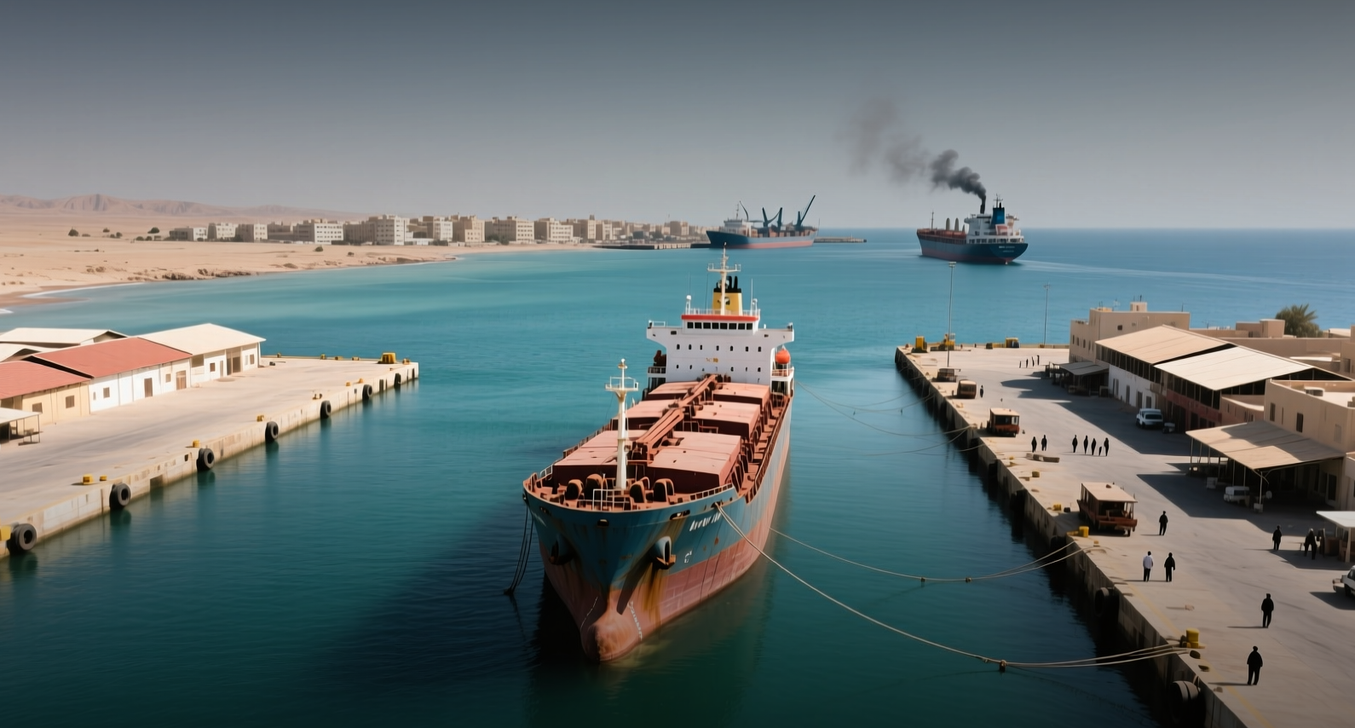
The Iran-backed Houthi movement took Yemen's Red Sea port city of Mokha on Thursday, advancing to within about 80 kilometers (50 miles) of the Bab el-Mandeb Strait, the waterway through which roughly 12 percent of the world's oil and other goods normally move. Houthi and Yemeni officials confirmed the takeover to the Associated Press, making it the group's largest territorial gain since the 2022 truce that ended more than a decade of civil war.
"The loss of Mokha will without question have consequences for maritime security in the region," said Bjorn Beirens, a shipping security consultant, who assessed the port's fall as a direct threat to transit through the southern Red Sea.
Mokha sits in Taiz province on Yemen's western coast, and its capture hands the Houthis a supply corridor linking the provincial capital to the coast. Ahmed Baash, a commander with the National Resistance Forces allied with Yemen's internationally recognized government, and Hazam al-Assad, a member of the Houthi political bureau, both confirmed the takeover. Residents told the AP that Houthi forces had fanned out across intersections, all roads west of the city were closed and shops had shuttered. Three doctors said they fled a Mokha hospital after it was seized, and other residents were moving south toward Aden, which remains under Saudi-backed control.
The Bab el-Mandeb has become more important to global energy flows this year because shipping through the nearby Strait of Hormuz was disrupted after Iran was attacked by the United States and Israel. Saudi Arabia has leaned harder on its Red Sea export route as a result: between March and mid-July, Saudi seaborne crude exports through Bab el-Mandeb ran eight times higher than in the same period of 2025, according to Al Jazeera. In 2024, about 4.1 million barrels of crude and petroleum products passed through the strait daily, roughly 5 percent of the global total.
A blockade declared in July, now backed by ground positions
The Houthis declared a maritime embargo against Saudi shipping in July and have since targeted Saudi oil facilities, airports and tankers in the Red Sea with drones and missiles. Riyadh said Houthi strikes on Abha, Khamis Mushait, Jazan and Najran wounded at least 73 people, among them women and children, and Saudi Arabia's Energy Ministry reported fires at multiple oil installations and utility sites in the south, including the Jazan refinery, which can process 400,000 barrels of crude a day. The Houthis said they targeted Aramco-operated energy infrastructure with drones and ballistic missiles.
Ahmed Nagi, a senior analyst at the International Crisis Group, said the western coast push is not only about territory. "The Houthis have already linked their military campaign to the Red Sea and the shipping routes around Bab el-Mandeb," he said. "Gaining more control over the western coast could give them greater depth and allow them to sustain pressure on maritime traffic in the Red Sea."
The precedent is expensive. When the Houthis ran a sustained campaign against commercial shipping in 2023 and 2024, major container lines diverted to the Cape of Good Hope, adding roughly 10 to 14 days to Asia-Europe voyages and pushing spot rates on the route above $5,000 per 40-foot container at the peak, from under $2,000 beforehand. War-risk premia for Red Sea transits rose from a fraction of a percent of hull value to as much as 1 percent on some sailings. Those costs land first on tanker and container operators, then on cargo owners, and eventually on consumer prices.
What the market is watching now
The immediate question is whether the Houthis convert ground control into sustained attacks on shipping. Control of Mokha gives them a shorter reach to the strait and a coastal logistics base, but the group's ability to threaten vessels still depends on drones, anti-ship missiles and sea mines rather than the port itself. Arab coalition and international naval forces have stepped up patrols to protect freedom of navigation.
The second question is whether the fighting stays inside Yemen. Houthi strikes on Saudi territory have revived the risk of a wider Iran-Saudi confrontation, and Pakistan's defense minister has said the security grouping of Pakistan, Saudi Arabia and Turkey could be activated in response. Any move that pulls Iranian naval assets into the Red Sea would widen the risk premium from shipping into crude benchmarks directly.
For now, the transmission runs through insurance and freight before it reaches the oil price. Watch the war-risk quotes for Red Sea transits and the Asia-Europe container rate over the next two weeks — if both climb while the fighting around Taiz continues, the strait is repricing, and the crude market will follow.
This article is for informational purposes only and does not constitute investment advice.