
Key Takeaways: Goldman Sachs says the AI trade's easy-money phase is over, urging rotation into banks, gold miners and copper miners.
Key Takeaways: Goldman Sachs says the AI trade's easy-money phase is over, urging rotation into banks, gold miners and copper miners.
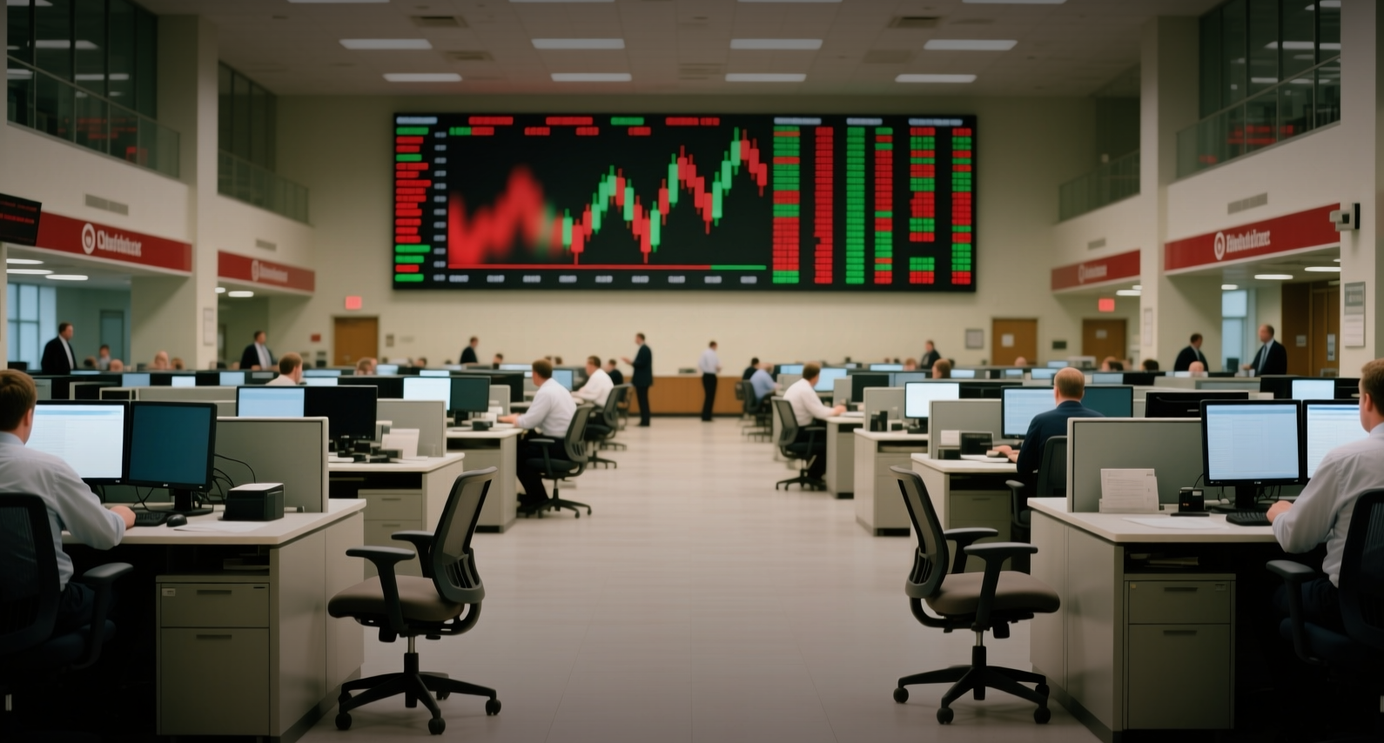
The AI momentum trade has flipped, with Goldman Sachs urging clients to rotate into European and Japanese banks, gold miners and copper miners.
"The AI trade's easy-money phase is over," Natasha Tiwana, senior trader at Goldman Sachs, said in a report.
Goldman's high-beta momentum portfolio (GSPRHIMO) fell 12% in a week during August, while its AI long-short hedge portfolio dropped 10% in five days. Momentum-factor daily declines exceeding 5% in 2026 have already outnumbered the past five years combined, the bank said.
The reversal matters because hedge funds entered the third quarter effectively "all in on AI," with crowding at a record in the second quarter. September's earnings and conference calendar will determine whether the rotation is a healthy clearing of positions or the start of a lasting style shift.
Software replaces semiconductors atop momentum
Goldman's data show the overlap between 12-month winners and three-month winners has fallen to a multi-year low, while the overlap between 12-month winners and three-month losers sits near a record high. Software has become the largest weight in the short-term momentum long basket (GSXUHMO3), while the semiconductor and AI composite has moved into the short basket (GSXULMO3).
The reshuffle reflects a reassessment of market leadership and keeps factor volatility elevated, Goldman said. Investors are turning to factor-hedging baskets rather than simple index tools to manage exposure.
Banks, gold and copper take the baton
European banks (SX7E) and Japanese bank stocks (GSXAJMEB) stand to benefit from higher-for-longer rates and improving net interest income, with fee income growing and efficiency ratios rising. Japanese banks have outperformed the TOPIX and Japanese semiconductor stocks over the past three months with lower volatility. European banks trade at about a 15% discount to U.S. banks, and Greek banks — Goldman's top value pick in the region — still carry roughly a 10% discount to eurozone core peers with merger upside. Positioning in European banks sits at a two-year low.
Gold miners (GSXGOLDM) have climbed 32% in a month but remain about 12% below their record, trading at 11 times forward earnings, a 20% discount to the five-year average. Goldman expects the U.S. Treasury's expanded bond-buyback program to weaken the dollar and drive the next leg higher. Copper hit a record this week, though copper miners (GSXGCOPP) have lagged the metal since February.
French risk lurks beneath the surface
Goldman also flagged under-priced French political risk. The OAT-Bund spread has widened to about 85 basis points since early June, yet French domestic stocks (GSXEFRDO) have barely moved, with valuations at the 90th percentile of five-year history. Headline risk could rise as early as next week with the Aug. 27 employers federation meeting and Aug. 30 gathering of Justice Minister Gérald Darmanin.
The rotation carries real consequences for positioning. Hedge funds that rode the AI trade generated strong returns in the second quarter but suffered their worst one-month underperformance against the S&P 500 in more than two decades in July, according to Goldman. U.S. equity long/short funds were still up about 10% through mid-August, absorbing the volatility. September's earnings and conference calendar will test whether the rotation endures.
This article is for informational purposes only and does not constitute investment advice.
