
Key Takeaways:
- Spot gold up 10% in August, biggest monthly gain since January, topping $4,700/oz
- Options traders favor call spreads and exotic structures over outright calls
- Bitcoin +12% since Aug 19; $2.5B short liquidations, $2B ETF inflows
Key Takeaways:
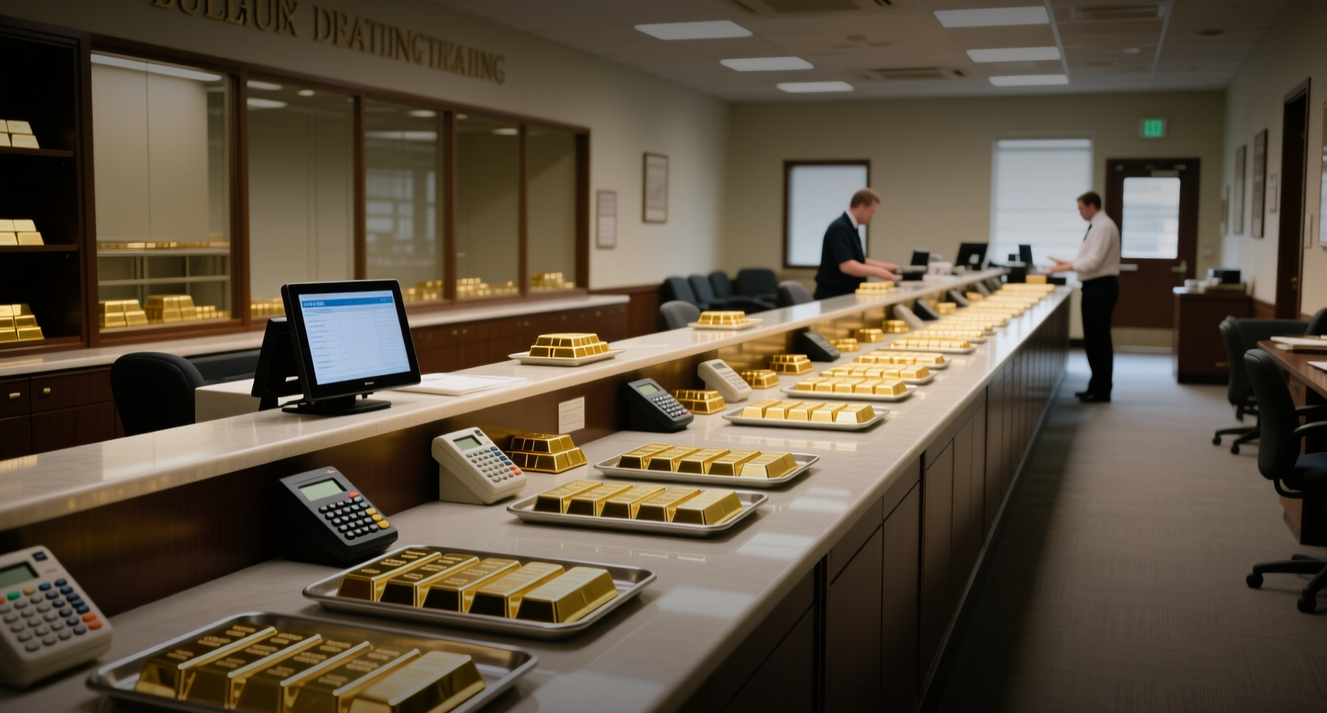
Spot gold climbed about 10 percent in August, its biggest monthly gain since January, after Treasury Secretary Scott Bessent announced plans to at least double purchases of long-dated government bonds, pressuring the dollar and reviving the debasement trade.
"Investors are returning to gold not only through exchange-traded funds but also through derivatives markets," Aakash Doshi, global head of gold and metals strategy at State Street Investment Management, said. "The debasement trade never died, it just paused."
Gold topped $4,700 an ounce, up 7 percent in five days, after Bessent said the Treasury would double liquidity-support buybacks in 10-to-30-year sectors to at least $4 billion per operation. The dollar dipped against rival currencies, while the 10-year Treasury yield eased to about 4.71 percent. Brent crude traded near $91 a barrel as expanded Iran sanctions under "Operation Economic Outcast" added to the macro backdrop.
Unlike January's rally, options traders are taking a more measured approach. Implied volatility remains below first-quarter highs, and investors favor call spreads and exotic structures over outright calls, with some targeting a $4,900-$5,300 range. Fed Chair Kevin Warsh's hawkish Jackson Hole remarks triggered a Friday pullback, and the first expanded buyback operation is scheduled for Sept. 10.
The expanded buybacks, which take effect Sept. 9 with the first larger operation on Sept. 10, are designed to improve liquidity in older, less-liquid bonds. The maximum value of scheduled buybacks for the quarter is estimated at approximately $83 billion, including at least $14 billion of additional capacity — small relative to federal debt of roughly $40 trillion, but significant as a signal of Treasury willingness to intervene in the bond market.
Traders have been buying SPDR Gold ETF call spreads rather than outright calls, and demand for exotic structures such as dual-digital options has grown. "August's move has been far more orderly than the price action and derivatives activity in January's precious metals market," Doshi said.
Neeraj Chaudhary, head of exotic options and flow trading for EMEA at Bank of America, said some investors see limited upside from current levels. "Gold volatility is relatively low, and some investors believe the next leg up may be more contained, with prices potentially ranging between $4,900 and $5,300," he said.
Gold paired with currency trades has become a popular strategy. "Some investors traded gold/USD versus yen combinations — you can buy gold upside with dollar upside at nearly negative 20 percent correlation," Chaudhary said. Joseph Khouri, head of equity derivatives structuring for EMEA at Bank of America, noted that "gold dual-digital options have been the dominant flow over the past few months, with gold typically as the bullish leg in cross-asset portfolios."
Bitcoin Rides the Same Dollar Wave
Bitcoin rose 12 percent since Aug. 19, briefly topping $80,000, as dollar weakness amplified the move. CoinGlass data shows more than $2.5 billion of short positions were liquidated in Bitcoin perpetual futures from Aug. 19-21, accelerating the breakout. U.S.-listed spot Bitcoin ETFs have attracted more than $2 billion in inflows since Aug. 19.
The question is whether Bitcoin is being treated as a durable macro hedge like gold, or whether the move is driven by leverage and momentum. With shorts cleared and profit-taking underway, the next phase depends on whether spot demand continues rather than forced buying. Arthur Hayes, co-founder of BitMEX, has argued that Bessent's approach mirrors Janet Yellen's 2023 liquidity playbook, which could provide further support if buyback operations are expanded.
This article is for informational purposes only and does not constitute investment advice.
