
Market odds of a Federal Reserve rate hike in September surged to 58 percent after Chair Kevin Warsh's Jackson Hole speech, lifting the US Dollar and pressuring EUR/USD.
Market odds of a Federal Reserve rate hike in September surged to 58 percent after Chair Kevin Warsh's Jackson Hole speech, lifting the US Dollar and pressuring EUR/USD.
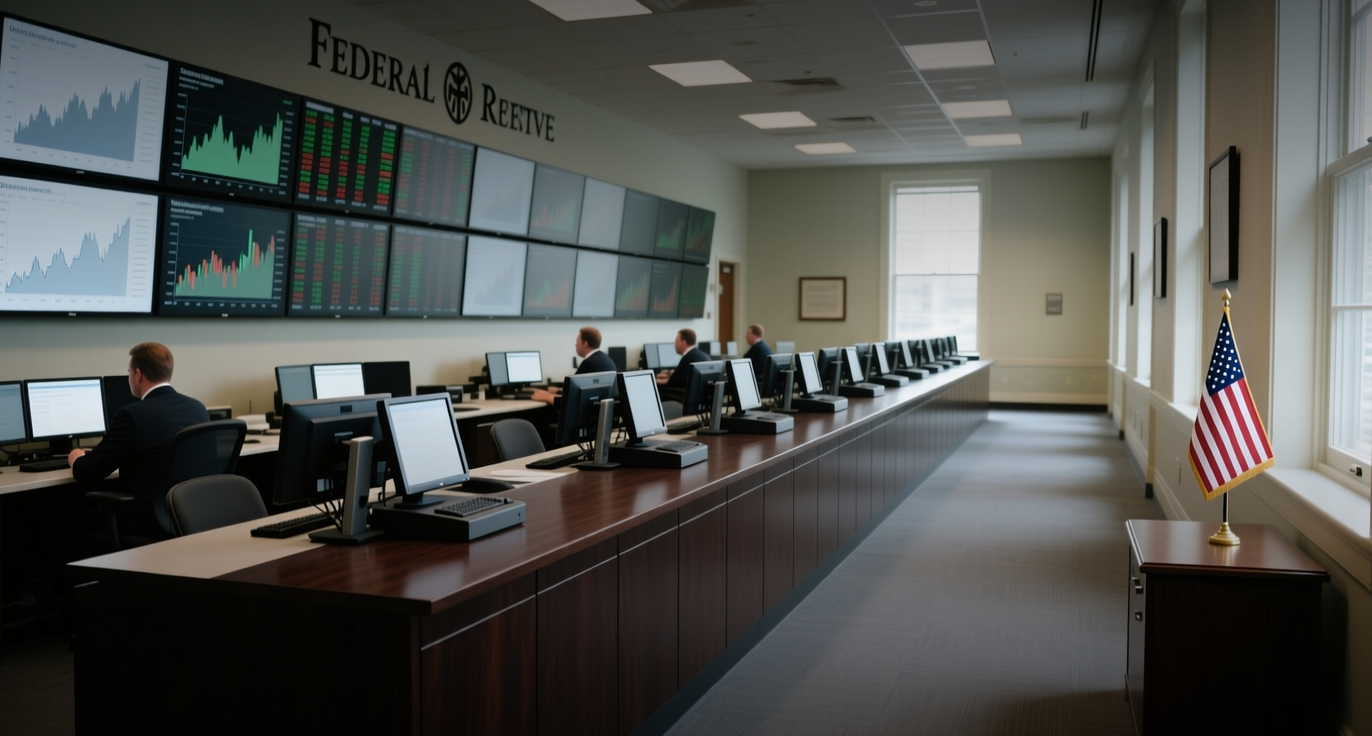
The Fed will "have work to do" if inflation misses its 2 percent target, Chair Kevin Warsh said Friday, pushing September rate-hike odds to 58 percent and the US Dollar Index up 0.4 percent.
"The initial reaction seems hawkish, but it looks like we're just repeating the same route as we did leading up to the last Fed decision where the market was all hawked up heading into it," said Eugene Epstein, head of trading and structured products at Moneycorp.
The 2-year Treasury yield jumped 6.6 basis points to 4.29 percent, its highest in a month, while the 10-year yield held at 4.67 percent and the 30-year slipped 3 basis points to 5.16 percent. The US Dollar Index rose to 99.55, its strongest level in weeks, while the S&P 500 added 0.4 percent, pulling closer to its all-time high set earlier this month. The Dow Jones Industrial Average rose 208 points, and EUR/USD came under pressure as the dollar strengthened, with the pair trading lower on the week.
A rate hike would mark a sharp reversal from the easing cycle that ran from September 2024 through December 2025, when the Fed cut its benchmark rate from 5.25-5.50 percent to the current 3.50-3.75 percent range. CME FedWatch data shows 51 percent of traders expect a hike in October and 70 percent expect higher rates by December.
Warsh, speaking at the annual economic symposium in Jackson Hole, Wyoming, said "short-term interest rates are the predominant tool" for the Fed to manage its dual mandate of price stability and maximum employment. He added that he would be "hard pressed to describe broad financial conditions as restrictive," implying current short-term rates are not high enough to cool the economy and inflation.
The comments mark the closest Warsh has come to acknowledging that rate increases may be needed. He has repeatedly said he wants markets to react to incoming data rather than Fed guidance, and Friday's remarks were consistent with that approach. Still, the market reaction was immediate: traders raised the probability of a September hike to 58 percent from 35 percent a day earlier, according to CME Group data.
The dollar's strength reflects a growing divergence between US and euro-area monetary policy expectations. The European Central Bank has signaled a more cautious path, with markets pricing limited additional tightening, while the Fed's hawkish pivot has widened the yield differential in favor of the dollar.
The last time the Fed shifted from easing to tightening within a single year was in 2022, when it raised rates from near zero to 5.25-5.50 percent over 18 months. The S&P 500 fell 19 percent in 2022, while the Nasdaq dropped 33 percent. However, the current cycle differs: rates are starting from 3.50-3.75 percent, not zero, and the FOMC's own projections anticipate only one hike in 2026 before cuts resume in 2027 and 2028, with a longer-run target of 3-3.25 percent.
Peter Cardillo, chief market economist at Spartan Capital Securities, said he does not expect the Fed to act in September. "He also alluded to the fact that the summer inflation numbers were better, but not convincing. So I think he wants to wait for one more round of inflation numbers in September, October before pulling the trigger."
If the Fed delivers one 25-basis-point hike this fall, the impact may be muted because the move is already priced in. The more significant risk is if inflation proves stickier than expected, forcing multiple hikes. That scenario would likely push the dollar higher against the euro, pressure emerging-market currencies, and weigh on commodity prices.
Brian Jacobsen, chief economic strategist at Annex Wealth Management, noted that Warsh's approach could collide with Treasury's bond market interventions. "The problem with the Warsh approach to monetary policy is that it could collide with the Treasury's interventions in the bond market," he said. "If Warsh wants to shrink the Fed's balance sheet, that can work at odds with the Treasury's desire to mop up some of the longer-dated debt out there."
The next FOMC meeting in September will be the first test of whether Warsh's hawkish tone translates into action. If the Fed holds in September, the October meeting becomes the focal point, with 51 percent of traders expecting a hike then and 70 percent expecting higher rates by December.
This article is for informational purposes only and does not constitute investment advice.
