
Key Takeaways:
- CXMT's market cap reached RMB3.54 trillion, surpassing Tencent
- Stock surged over 500% since STAR Market debut two weeks ago
- Tencent shares fell 4.46% after 2Q26 capex exceeded forecasts
Key Takeaways:
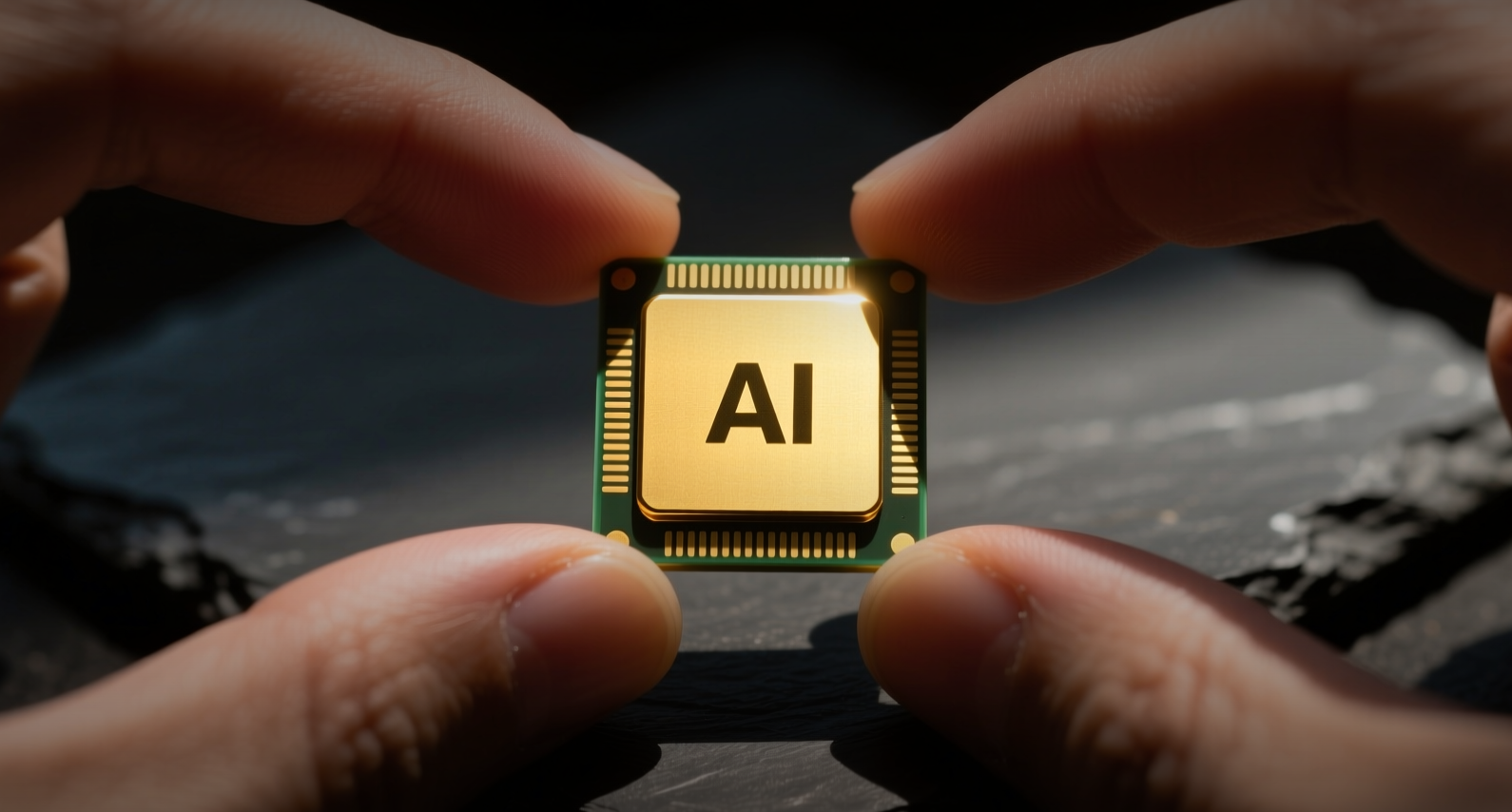
China's most valuable listed company is now a memory chip maker, not an internet platform.
CXMT Corp. reached approximately RMB3.54 trillion in market cap, overtaking Tencent Holdings to become China's most valuable listed company just two weeks after its STAR Market debut.
"CXMT overtaking Tencent sends a message to the market that chips are replacing clicks," Gary Tan, portfolio manager at Allspring Global Investments, said. "As agentic AI occupies an increasingly larger share of internet traffic, the gap between the two companies is expected to widen."
CXMT has surged more than 500% cumulatively since listing on the STAR Market, becoming China's largest onshore-listed company. Tencent's market cap dropped to approximately RMB3.44 trillion after its shares closed down 4.46% at HKD441 on Aug. 13, following second-quarter results showing net profit flat year-over-year at over RMB56 billion and capital expenditure near RMB52.8 billion, above analyst forecasts.
The crossover marks a structural reordering of China's equity market, where semiconductor and AI hardware companies now command higher valuations than traditional internet platforms. CXMT's rally reflects intense investor appetite for domestic chip makers as Beijing pushes semiconductor self-sufficiency, while Tencent's decline shows market concern that heavy AI investment could weigh on profitability and cash flow.
CXMT, China's leading DRAM manufacturer, sits at the center of an AI-fueled boom in memory chip demand. The company's rise places it alongside SMIC as a cornerstone of China's semiconductor self-sufficiency strategy, competing directly with global memory giants Samsung Electronics and SK Hynix in the DRAM and NAND markets. The STAR Market listing gives CXMT access to domestic capital markets to fund capacity expansion, a critical advantage as Beijing restricts foreign chip technology transfers.
The 500% post-listing surge reflects more than just AI enthusiasm. CXMT's valuation now embeds expectations that China's domestic memory market — historically dominated by Samsung, SK Hynix, and Micron Technology — will shift toward local suppliers as geopolitical tensions accelerate supply chain localization. The company's ability to scale production and close the technology gap with global leaders will determine whether the current valuation can be sustained.
Memory chips have become the most strategically contested segment of the semiconductor industry, with DRAM and HBM (high-bandwidth memory) demand driven by AI training and inference workloads. CXMT's positioning in this segment gives it direct exposure to the fastest-growing part of the chip market, a factor that distinguishes it from other Chinese semiconductor names facing more fragmented demand.
Tencent's results highlight the divergent fortunes of China's tech giants. While the company's capex near RMB52.8 billion exceeded forecasts — reflecting aggressive investment in AI infrastructure — investors punished the stock for the potential drag on near-term profitability. The market's reaction suggests that AI spending without immediate revenue returns is being viewed less favorably than direct exposure to AI hardware demand.
The contrast between the two companies' market reactions is instructive. CXMT's stock has been bid up on the promise of AI-driven memory demand, while Tencent's shares fell despite reporting over RMB56 billion in quarterly net profit. This divergence reflects a broader shift in how investors value AI exposure: hardware companies with direct revenue from AI infrastructure are commanding premium multiples, while platform companies spending heavily on AI without clear near-term returns face valuation pressure.
For investors, the market cap crossover shows where capital is flowing in China's technology sector. CXMT's valuation, built on the promise of domestic memory self-sufficiency and AI-driven demand, now exceeds that of a company generating over RMB56 billion in quarterly net profit. The question is whether CXMT's 500% post-listing surge has priced in years of growth, or whether the structural shift toward AI hardware will continue to widen the gap between chip makers and internet platforms.
This article is for informational purposes only and does not constitute investment advice.
