

Chinese naval activity near Japan's Amami-Oshima island has surged to at least 10 transits in 2026, accelerating Tokyo's record $56 billion defense budget request.
Chinese naval activity near Japan's Amami-Oshima island has surged to at least 10 transits in 2026, accelerating Tokyo's record $56 billion defense budget request.
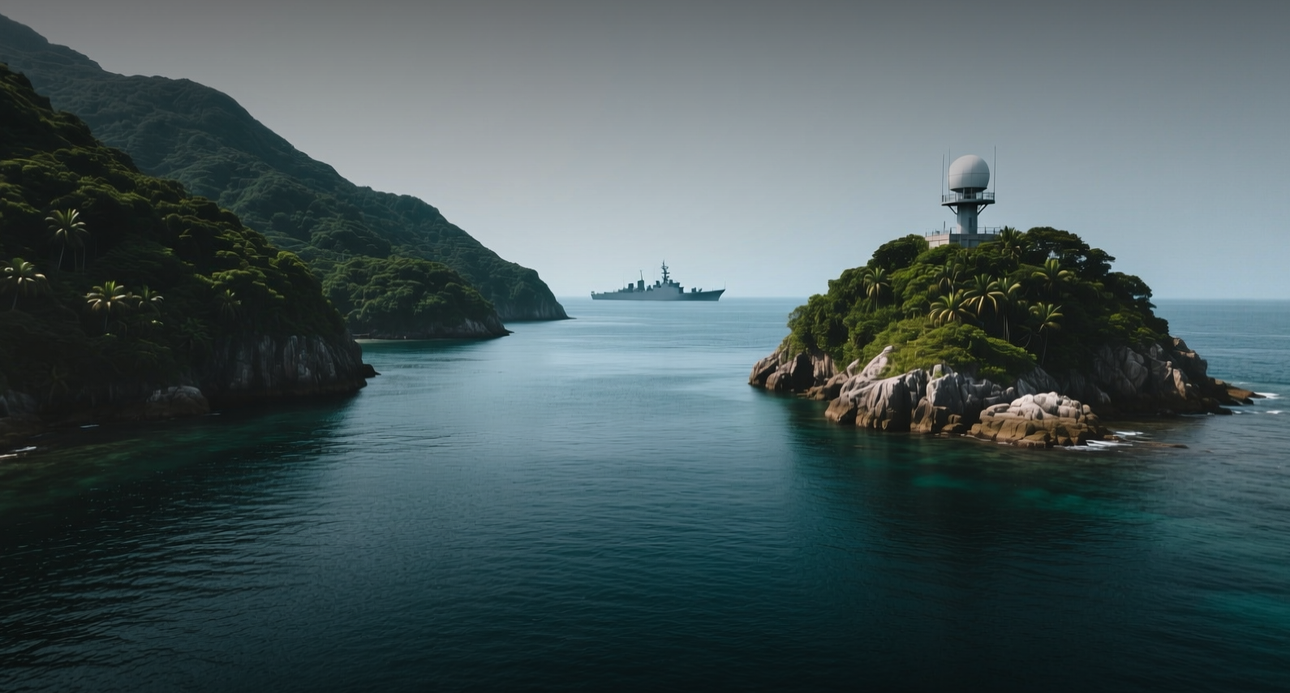
Chinese destroyers have sailed through the narrow strait off Amami-Oshima at least 10 times this year after zero such transits in 2025, accelerating Japan's record $56 billion defense budget request as officials describe the most severe security environment since World War II.
"It's a provocation for sure," said Takuya Matsuda, an international security scholar at Aoyama Gakuin University in Tokyo.
Japan's Defense Ministry on Monday requested 8.89 trillion yen ($56 billion) for the next fiscal year, up from the 8.8 trillion yen sought for the current year. The final figure is expected to exceed 9 trillion yen once Prime Minister Sanae Takaichi's government approves revised security documents by year-end. The request prioritizes AI-assisted command systems, attack drones, hypersonic missiles launchable from submarines, and a state-owned defense industrial base — part of a five-year plan that doubled spending to about 2 percent of gross domestic product.
The buildup sits at the center of a regional security spiral. China, Russia and North Korea have each accused Japan of reviving militarism, with Beijing throttling tourist flights and restricting rare earth access to Japanese firms after Takaichi suggested Japan could be drawn into any Taiwan conflict. Japan's defense budget has now set records for 14 consecutive years, and Chinese Foreign Ministry data shows Tokyo's per-capita defense spending at three times China's level.
Island chain probes
The narrow channel between Amami-Oshima and the rocky outcrop of Yokoate is just 7 miles wide at its navigable point, compared with the 150-mile-wide Miyako Strait to the south. Chinese destroyers have been using the winding route to probe Japan's defenses along the First Island Chain, a string of islands that Washington and Beijing view as a barrier to Chinese naval expansion. The current pace of transits is on track to exceed the 15 recorded in 2024.
The urgency is felt on the island itself. Naruhito Kamada, mayor of Setouchi, said he is working with local officials on an evacuation plan for Amami-Oshima's 60,000 residents. The island hosts two army bases with about 600 troops, including a missile unit, and Japan's Maritime Self-Defense Force is expanding its base there to handle larger vessels.
Defense Minister Shinjiro Koizumi has acknowledged gaps in Japan's coverage, telling officials in April that "large swaths of the Pacific side are effectively a vacuum in our defenses." Tokyo plans to install military radar on the remote island of Kitadaitojima to improve monitoring.
The spending push has translated into rising profits at major defense contractors including Mitsubishi Heavy Industries, Kawasaki Heavy Industries and IHI Corp., which have benefited from Japan's expanding military procurement and arms exports. But the industry faces structural constraints: dozens of companies have exited the sector over the past decades citing low margins and reputational concerns, and Japan's commercial drone market remains heavily dependent on Chinese imports.
Tomohisa Takei, a retired admiral and senior fellow at the Sasakawa Peace Foundation, cautioned that Japan is not ready for a protracted conflict, citing recruitment difficulties in an aging society and the weakness of the defense-industrial base. "Japan is not ready to fight a protracted war," he said.
The US alliance dimension adds another layer of uncertainty. President Trump has questioned whether Washington would defend Taiwan and redeployed the Japan-based USS George Washington to the Middle East, sowing doubts in Tokyo about the reliability of the US security umbrella. Still, Washington demonstrated in a Pacific maritime drill this summer that it is working closely with Asian allies, and a three-way exercise between the US, South Korea and Japan is planned for this month.
Beijing shows no sign of backing down. A Chinese Foreign Ministry spokesperson said the military "has always complied with international law" and urged Japan to "stop seeking any excuses for military buildup." With Japan revising its three key national security documents by year-end and China expected to maintain its naval presence near the island chain, the security spiral shows few signs of easing.
This article is for informational purposes only and does not constitute investment advice.
