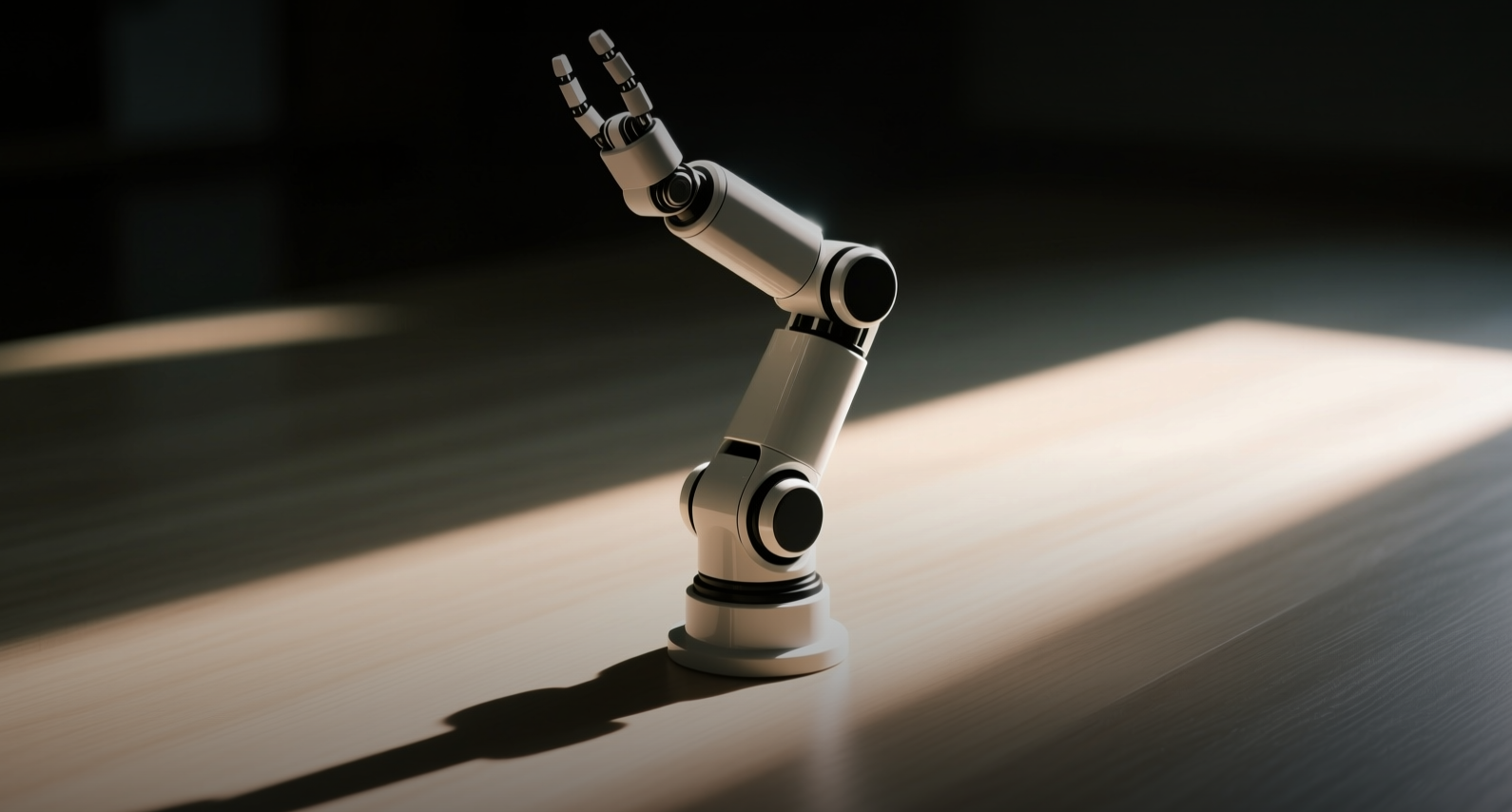
China's export machine is moving up the value chain, shipping the chips, precision machinery and robotic arms that build the world's factories.
China's exports of intermediate and capital goods jumped 25 percent and 12 percent, respectively, in the first five months of 2026, as the country shifts from assembling consumer goods to supplying the machinery that underpins global manufacturing. Consumer goods exports rose just 4 percent over the same period, according to a McKinsey Global Institute analysis of China's official customs data.
"In the past, advanced manufacturing was led by Germany and Japan," said Frank Jiang, vice president of international business at Topstar, one of China's largest industrial robotics and machinery manufacturers. "But we believe our technology has caught up. For many products, we have surpassed them."
The shift is eroding the economic moats of advanced-manufacturing economies. For the first time in decades, Germany imports more advanced capital goods from China than it exports there, while producers of chemicals, machines and batteries across the European Union, Japan and South Korea that once counted Chinese factories as customers now face a formidable competitor at home and abroad.
The transformation threatens to redraw global supply chains and is prompting European leaders to weigh protective measures against what some have dubbed "China Shock 2.0." China's dominance over greater portions of global supply chains is making its export machine more resilient against tariffs, which tend to target finished goods rather than the intermediate inputs and machinery that feed other countries' factories.
Tariffs Redirect, Not Stop, China's Exports
The resilience was on display in 2025, when U.S. tariffs pushed China's consumer goods exports down for the first time since 2019. Exports of intermediate inputs and capital goods rose by more than $175 billion from the prior year, helping push China's trade surplus to a record $1.2 trillion, the McKinsey analysis shows.
For advanced-manufacturing economies, "China is increasingly evolving from a customer into a competitor," said Jeongmin Seong, a partner at the McKinsey Global Institute.
The pressure is visible across Europe. German forklift maker Jungheinrich estimates Chinese manufacturers have increased their share of the regional industrial truck market to 30 percent of units today from 11 percent in 2019, and recently lowered its earnings forecast partly because of the competition. In São Paulo, German connector maker Harting faces Chinese rivals offering 30 percent discounts on high-volume products, said Poliana Lanari, managing director for Latin America. South Korea's Dongwha Electrolyte, a battery electrolyte maker, has operated at a loss for several years because of Chinese competition, according to broadcaster KBS.
Chinese Suppliers Ride the Factory-Building Boom
The shift is a boon for Chinese equipment makers, whose customers now include factories relocating from China to Mexico, Vietnam and Brazil to dodge tariffs. Topstar's overseas sales climbed nearly 10 percent last year to roughly $92 million, and its industrial robotics revenue jumped 81 percent year-over-year in the first quarter of 2026, with machine-tool sales up 63 percent.
In Dongguan, the city that helped turn China into the world's factory floor, Henry Wang co-founded Dongguan ICT Technology, an 80-person firm exporting automated systems that assemble circuit boards for clients including IBM, Honeywell and L3Harris. Wang expects revenue to rise at least 50 percent this year and says tariffs have not affected his business. "The era where China just served as the world's factory is over," he said. "Now, China is helping the rest of the world build their factories."
The pattern extends to clean energy. China's exports of key clean energy technologies surpassed $160 billion in 2025, up 11 percent, and the country accounts for more than 35 percent of global exports in those categories, the International Energy Agency said. The IEA projects 40 to 50 percent of future growth in China's production of electric cars, battery cells and heat pumps will be exported over the next decade, reflecting strong demand abroad and the long lead times for other countries to build capacity.
This article is for informational purposes only and does not constitute investment advice.