
Key Takeaways:
- Seven ministries target 60 trillion yuan retail sales by 2030
- Autos, home appliances, and smart goods lead the consumption push
- Purchase restrictions easing and NEV charging build-out to lift consumer stocks
Key Takeaways:
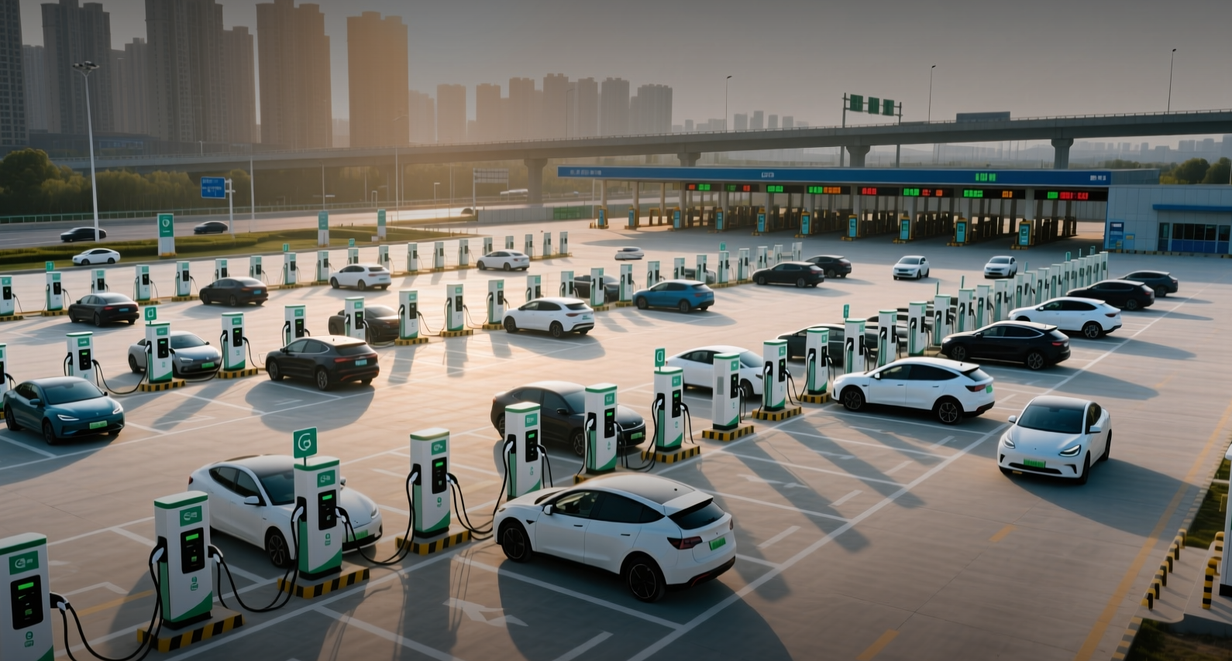
China's seven ministries set a 60 trillion yuan retail sales target for 2030, putting automobile deregulation and new-energy charging infrastructure at the center of a consumption expansion blueprint.
China's Ministry of Commerce and six other departments issued implementation guidelines on Aug. 31 targeting 60 trillion yuan ($8.9 trillion) in total retail sales of consumer goods by 2030, while cultivating green, smart, and health consumption into markets each worth more than 10 trillion yuan. The document, published during the early stage of the 15th Five-Year Plan, gives automobiles the most prominent policy treatment, proposing to ease purchase restrictions, streamline used-car circulation, and expand charging infrastructure for new-energy vehicles.
"China's total retail sales of consumer goods already exceeded 50 trillion yuan in 2025, with passenger vehicle retail sales reaching 23.744 million units, and retail sales of home appliances and telecommunications equipment by enterprises above designated size each surpassing 1 trillion yuan," an official at the Ministry of Commerce's Department of Consumption Promotion said in an explanatory briefing. The official said the advantages of China's mega-market continue to show, laying the foundation for the new target.
The guidelines outline four task areas: promoting bulk durable goods such as automobiles and home furnishings, improving the quality of daily consumer goods, supporting specialty consumption including silver-economy and infant products, and fostering upgraded categories. For autos, the policy calls for deepening pilot reforms in vehicle distribution, urging regions with purchase restrictions to optimize those measures, and expanding consumption across the entire value chain. It also supports new business formats including vehicle modification, motorsports, and RV camping, while establishing a recognition system for classic vehicles and improving the full-lifecycle vehicle information exchange system covering sales, registration, maintenance, insurance, and scrapping.
The expected easing of purchase restrictions would most directly benefit auto retail in China's first-tier and strong second-tier cities, particularly regions with higher new-energy vehicle penetration. Mutual recognition of unified invoices for used-car sales and tiered classification of used-car business entities are designed to cut cross-regional circulation costs and push the fragmented used-car market toward scale. The guidelines also call for a three-year action plan for small and micro passenger car rental, plus quality upgrades to highway service areas including charging-facility renovations and age-friendly restroom modifications.
The policy extends beyond autos. In home furnishings, it accelerates smart-home applications and supports whole-home smart renovations. In the silver economy, it promotes age-friendly products such as exoskeleton robots, electric wheelchairs, and smart mattresses, while exploring a certification system for those goods. For smart consumption, it accelerates adoption of AI smartphones, computers, wearable devices, and smart robots, and backs construction of "AI + consumption" clusters and experience centers.
The directive continues Beijing's multi-year campaign to make consumption a primary growth engine, but with more granular category targeting than prior rounds. China's retail sales already crossed 50 trillion yuan in 2025, and the new 60 trillion yuan goal implies roughly 3.7 percent average annual growth through the decade, a pace that would require sustained policy support given property-wealth drag and cautious household spending. The last major consumption stimulus push in 2024, centered on trade-in subsidies for autos and appliances, helped lift passenger vehicle sales to a record 23.744 million units in 2025, according to the commerce ministry.
For investors, the measures carry direct implications across A-shares and Hong Kong-listed consumer names. Automakers, new-energy vehicle chains, energy-efficient appliance makers, and smart-home suppliers are the clearest beneficiaries, while the silver-economy and AI-consumption provisions open new exposure to age-friendly device makers and consumer-electronics firms. The policy's success hinges on execution — whether purchase-restriction easing translates into actual sales in tier-one cities and whether charging-infrastructure build-out keeps pace with new-energy vehicle adoption. If implemented effectively, the measures would provide sustained momentum for the consumer-discretionary complex through the 15th Five-Year Plan window.
This article is for informational purposes only and does not constitute investment advice.
