
China's new energy vehicles are set to capture 65.8 percent of passenger car sales this month even as domestic demand slides and exports absorb the overhang.
China's new energy vehicles are set to capture 65.8 percent of passenger car sales this month even as domestic demand slides and exports absorb the overhang.
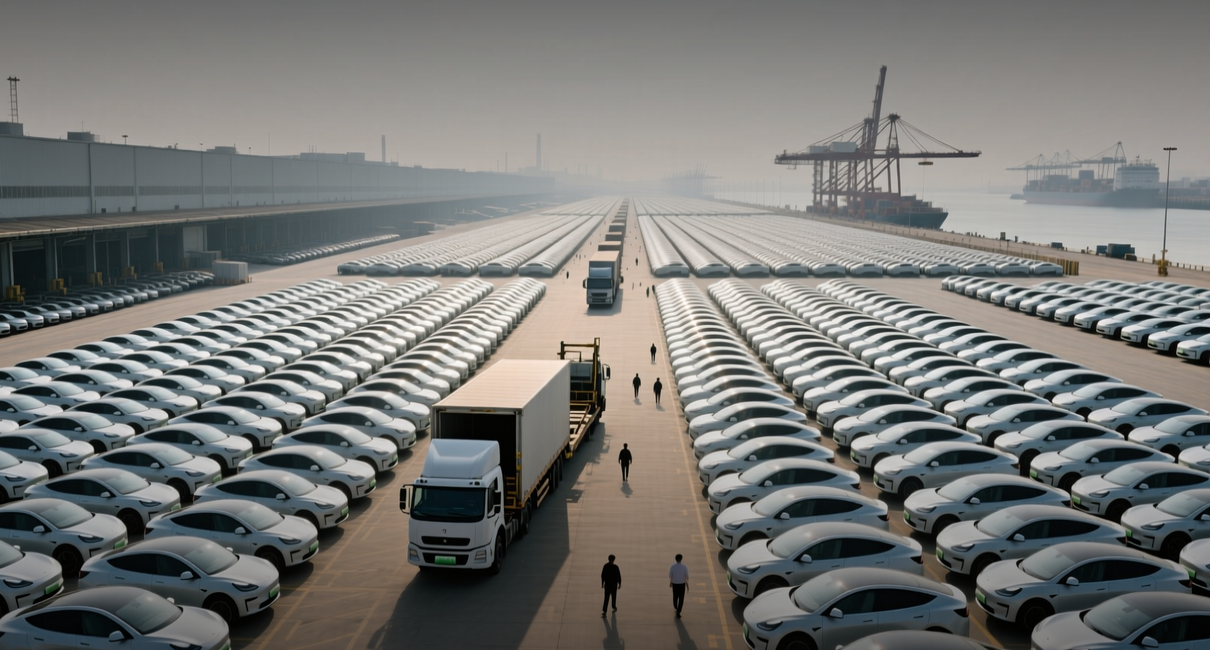
China's new energy vehicles are on track to capture 65.8 percent of passenger car sales this month, a record penetration that masks a shrinking home market where exports now absorb the production overhang.
"Dealers and manufacturers are grappling with retail sales falling short of expectations, leaving the industry under significant inventory pressure," Cui Dongshu, secretary-general of the China Passenger Car Association, said.
The CPCA's preliminary estimate puts total narrow passenger vehicle sales at about 1.58 million units this month, with NEV retail near 1.04 million. That follows a July in which domestic passenger sales fell roughly 20 percent year-on-year to about 1.47 million units while exports jumped nearly 90 percent to close to 1 million vehicles.
The split is redrawing the competitive map. Domestic brands captured more than 70 percent of retail sales for the first time, while joint ventures and luxury marques saw July production slump 35 percent and 21 percent respectively, per CPCA data.
Chinese automakers are leaning on overseas buyers to keep factories running. In the first half of 2026, Chinese companies shipped about 2.4 million electric vehicles overseas, nearly matching their full-year 2025 total, according to CPCA figures. Geely's first-half exports hit about 474,000 vehicles, up more than 150 percent year-on-year and already above its 2025 total, with the company lifting its full-year target to around 920,000 units.
The export surge has kept wholesale volumes stable even as domestic retail weakens. Passenger car production in July reached 2.222 million units, down 1.6 percent year-on-year, while wholesale sales of 2.252 million were roughly flat. Exports' share of manufacturer sales jumped from 21 percent a year ago to 41 percent, filling a gap that domestic demand no longer covers.
Yet the inventory picture remains strained. Total industry inventory stood at 3.22 million units in July, with days sales of inventory at 55 days, while the China Automobile Dealers Association's warning index held at 61.1 percent, above the boom-bust line. The CPCA's forecast team put its optimism for the August market at just 12 percent, a historically low level.
The pressure on foreign automakers is two-sided. In China, German brands such as Volkswagen, Mercedes-Benz and BMW are losing share in a bruising EV price war as the overall market contracts. Several Western carmakers now face the same problem General Motors ran into before winding down Chevrolet in China: heavy investment, falling volumes and local rivals that undercut on price.
Those exports are landing in markets that were once comfortable ground for legacy players. Chinese EVs are reshaping Europe's sales charts, and brands that depend on global volume to fund future lineups must now budget for thinner margins. BYD, NIO, Li Auto and XPeng are pressing the advantage at home, while battery supplier CATL rides the same adoption curve.
For investors, the 65.8 percent penetration figure confirms that electric vehicles are now the structural majority of China's passenger car market, not a growth niche. That is bullish for BYD and CATL, which dominate domestic supply chains, but it pressures traditional automakers' China earnings and forces faster global EV platform spending. The question is whether exports can keep buying time until domestic demand recovers — the CPCA's 12 percent August optimism suggests the market is not counting on it.
This article is for informational purposes only and does not constitute investment advice.
