
ByteDance raised $29.6 billion in a syndicated loan at record-low pricing for Chinese tech, funding an AI infrastructure buildout that could lift 2026 capital spending to $70 billion.
ByteDance raised $29.6 billion in a syndicated loan at record-low pricing for Chinese tech, funding an AI infrastructure buildout that could lift 2026 capital spending to $70 billion.
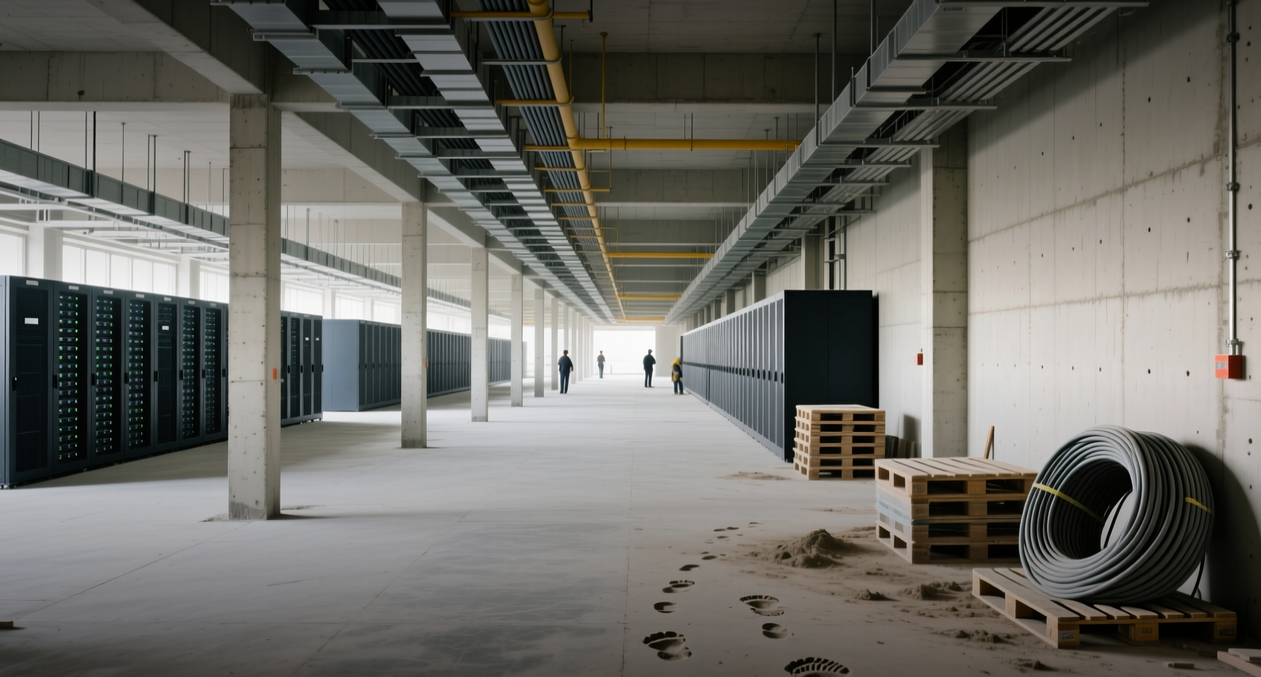
ByteDance's $29.6 billion syndicated loan, Asia's second-largest dollar deal this year, backs an AI infrastructure buildout that could push 2026 capital spending to $70 billion, more than double last year's outlay.
Bankers had questioned whether "lenders can take large holds at that level" given the tighter pricing, according to IFR, before order books swelled past $30 billion — forcing the TikTok parent to upsize the facility from an initial $20 billion target.
Citigroup and JPMorgan coordinated the three-year facility, extendable to five, which opens at 68 basis points over the Secured Overnight Financing Rate. That marks the tightest spread on a Chinese technology company's offshore borrowing, compressing 17 basis points from the roughly 85 basis points ByteDance paid on its $10.8 billion 2024 facility. Proceeds are earmarked mainly for general corporate purposes, according to people familiar with the matter.
The financing sits at the center of a global AI infrastructure spending race. ByteDance is weighing plans to lift capital expenditure to as much as $70 billion in 2026 and potentially $100 billion in 2027 for data centers and AI infrastructure, according to Bloomberg. Across the Pacific, Amazon, Alphabet, Microsoft and Meta have combined 2026 capex plans of $725 billion, concentrated on AI data center equipment.
The 68-basis-point spread over SOFR reflects a notable shift in lender appetite for Chinese technology credits. ByteDance's previous offshore facility in 2024 raised $10.8 billion from roughly 20 international and Chinese banks at 85 basis points over SOFR. The new deal nearly triples that amount at a tighter margin, a combination that shows how far credit conditions have moved for the sector.
The transaction also provides a rare bright spot for Asia's loan market, which posted its weakest first half in 16 years, according to Bloomberg data. Only SoftBank Group's $40 billion bridge loan, signed in March, tops ByteDance's facility as Asia's largest dollar-denominated borrowing this year. The order book oversubscription — demand exceeding the original $20 billion target by more than 50 percent — suggests institutional appetite for AI-infrastructure-linked credit remains strong even as broader regional lending activity has slowed.
ByteDance's expansion mirrors the spending trajectory of US hyperscalers, who are directing hundreds of billions into AI compute. Amazon, Alphabet, Microsoft and Meta together plan $725 billion in 2026 capital expenditure, with the bulk aimed at AI data center equipment. The scale of these commitments — combined with ByteDance's plans and Korea's recent $919 billion pledge for an 18.4-gigawatt data center buildout by 2035 — points to an infrastructure cycle with few historical parallels.
For ByteDance, the financing provides dry powder to compete in an AI arms race where compute capacity increasingly determines product capability. The company has been folding its Trae and Coze coding tools into its Doubao assistant as it presses a consumer AI push, and the data center expansion underpins those ambitions. The scale of ByteDance's planned outlay — $70 billion in 2026, potentially $100 billion in 2027 — would place it among the largest corporate capital spenders globally, rivaling the biggest US hyperscalers on an annual basis.
The deal has not yet formally signed, with banks still confirming their allocation shares, according to people familiar with the matter. ByteDance's last entry into the global loan market was in 2024, when it raised $10.8 billion through roughly 20 international and Chinese banks. The nearly threefold increase in borrowing capacity reflects both the company's accelerated AI ambitions and the willingness of global lenders to back Chinese technology credits at increasingly favorable terms.
For investors tracking the AI infrastructure supply chain, the financing points to sustained demand for data center equipment, power infrastructure, and networking hardware well into 2027. Companies supplying GPU clusters, cooling systems, and data center construction services stand to benefit from the multi-year capex commitments now visible across ByteDance, the US hyperscalers, and regional players such as Korea's planned buildout. The key question is whether equipment supply can keep pace with the scale of announced spending — and whether the compute capacity being built translates into revenue growth fast enough to justify the debt load.
This article is for informational purposes only and does not constitute investment advice.
