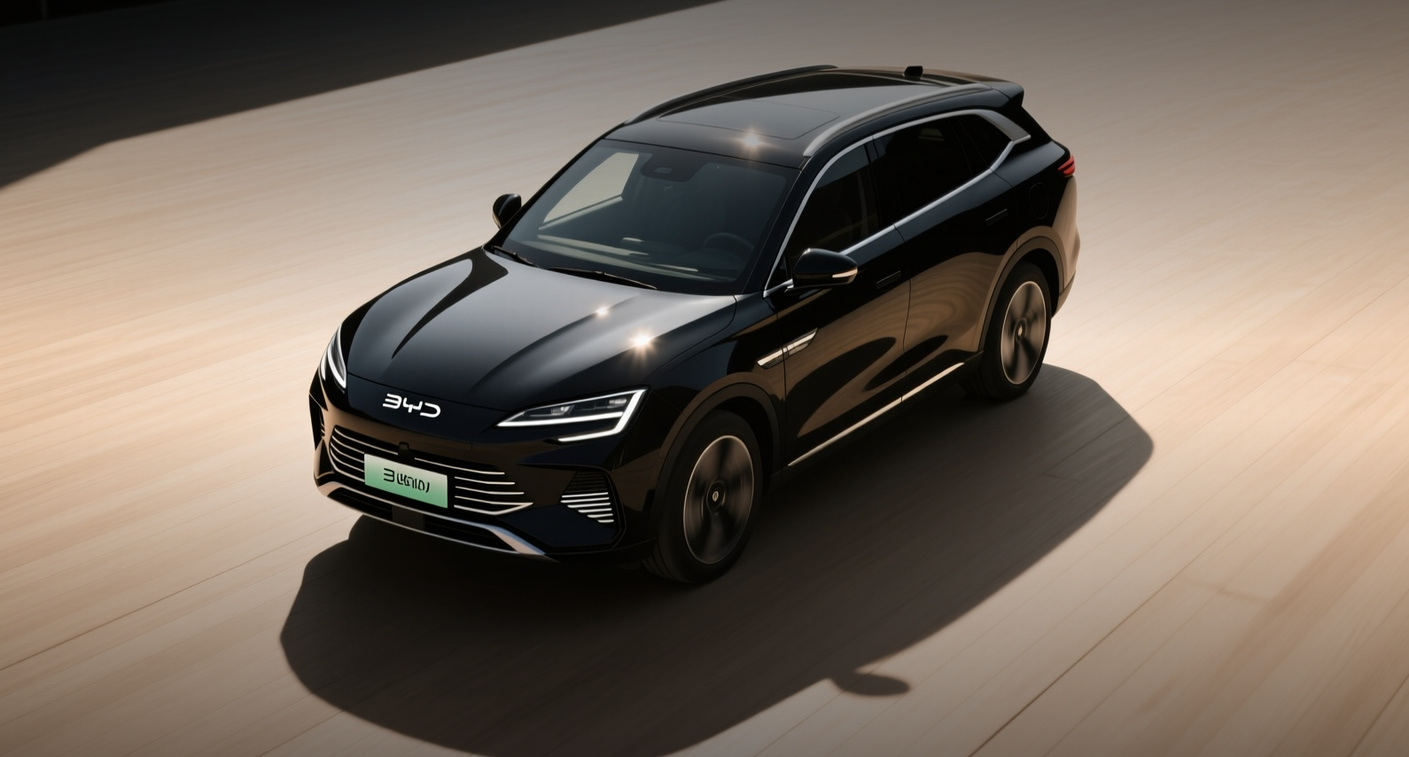
An aristocratic English estate became the battleground for China's most ambitious automotive challenge yet — BYD pitting its latest EVs against Ferrari, Lamborghini and Porsche in a documentary that signals how far the Shenzhen-based automaker has come from its battery-cell origins.
"China has moved from being a follower to a leader in EV technology, and that shift is now reaching the highest end of the market," said Tu Le, managing director at consultancy Sino Auto Insights. "European luxury brands can no longer assume their heritage alone will protect them."
BYD sold 4.25 million passenger vehicles globally in 2025, up 42% from a year earlier, according to company filings. Its Denza and Yangwang sub-brands target price points above 300,000 yuan ($41,400), directly competing with entry-level offerings from BMW, Mercedes-Benz and Audi. The company's Blade battery, using lithium iron phosphate chemistry at an estimated $56 per kilowatt-hour — roughly half the industry average for nickel-manganese-cobalt packs — gives it a structural cost advantage that European rivals struggle to match.
The competitive pressure is already reshaping the industry. Volkswagen Group, Europe's largest automaker, warned staff in a July memo that it faces a "theoretical loss" of 50,000 additional jobs on top of 50,000 already planned for Germany by 2030, bringing total potential cuts to 100,000. Chief Executive Oliver Blume told employees that VW's costs are 20% higher than key competitors, according to the memo reviewed by news.com.au. The group's operating profit plunged to €8.9 billion ($14.6 billion) in 2025 from €22.6 billion in 2023, while global sales fell to 4.7 million vehicles from 6.3 million in 2019.
China's price war hits home
China, once Volkswagen's most profitable market, has become its biggest liability. Sales there fell 26% in the first six months of 2026 as local manufacturers including BYD, Geely and Nio won over buyers with lower prices and faster EV technology cycles. The pain extends beyond China: VW's US sales slipped more than 7%, partly due to tariffs on imported vehicles, while Australian deliveries dropped to 28,970 in 2025 from more than 60,000 a decade ago.
BYD's upmarket push comes as the broader Chinese EV market enters a consolidation phase. More than 20 brands have exited or been acquired since 2023, according to the China Passenger Car Association, as price competition squeezed margins across the industry. BYD's gross margin per vehicle held at roughly 20% in 2025, above the industry average but below the 25%-plus margins that Ferrari and Lamborghini command on each unit sold.
The documentary, filmed at an undisclosed estate in England, shows BYD's Yangwang U8 — a plug-in hybrid SUV priced at 1.1 million yuan ($152,000) — competing against European supercars in acceleration and handling tests. The U8 can reach 100 kilometers per hour in 3.6 seconds, comparable to a Porsche Cayenne Turbo GT, according to BYD's published specifications.
For investors, the question is whether BYD can replicate its mass-market success in the luxury segment without diluting margins. The company trades at roughly 18 times forward earnings, a discount to Ferrari's 35 times but a premium to Volkswagen's 5 times, reflecting the market's bet that BYD's growth trajectory will continue. Sino Auto Insights' Le said the real test will come when BYD launches a dedicated supercar platform, expected by late 2027, that could directly challenge Ferrari's core product lineup.
This article is for informational purposes only and does not constitute investment advice.